
A balanced mix of technical expertise and interpersonal abilities can often be the key to success. Understanding the difference between them is crucial for career growth and academic performance. This is why we have made a comparative analysis between hard skills vs soft skills.
Hard skills are measurable and teachable abilities like coding, accounting, or laboratory techniques. Soft skills include communication, teamwork, problem-solving, and emotional intelligence.
Whether you are a student or a working professional, combining hard skills is essential. It can help you build strong relationships and ensure efficiency.
Hard Skills Vs Soft Skills: Benefits
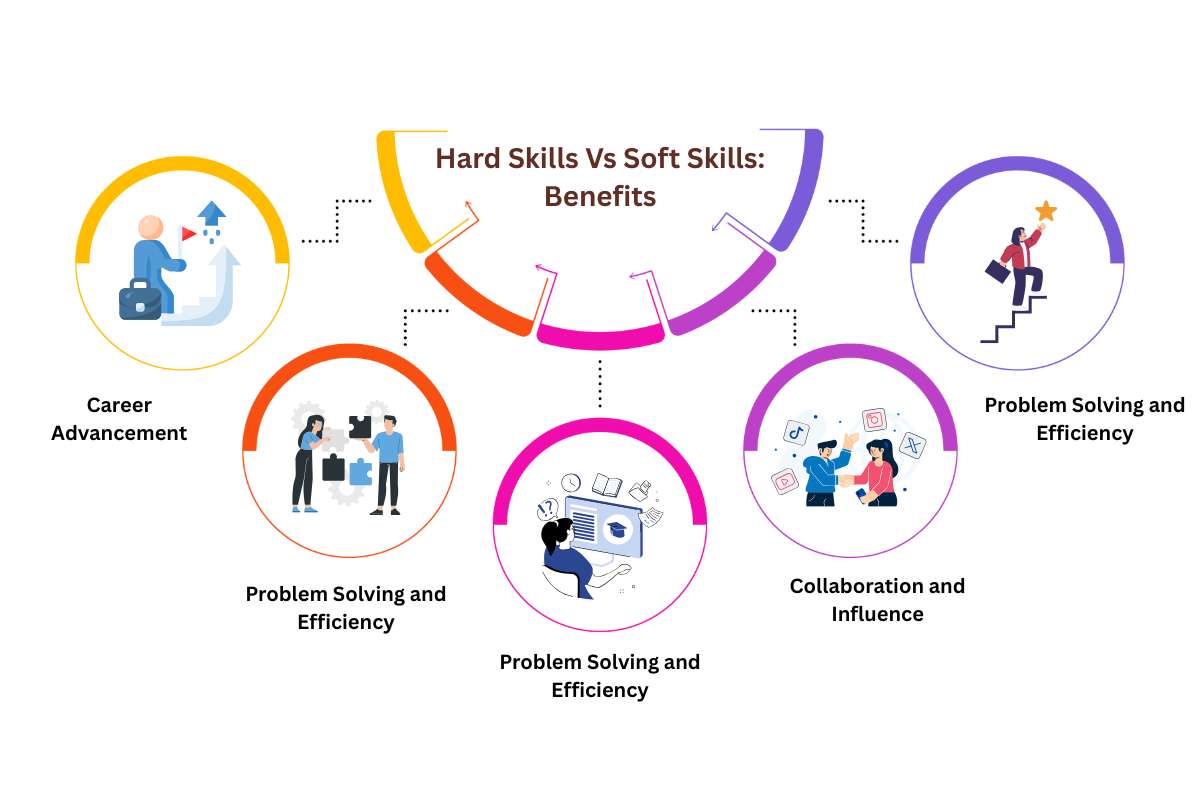
There are many ways in which hard skills and soft skills can help you in your life. They are the basic foundations of your academic and career growth. Hence, cultivating both types of skills is necessary. Here is why:
1. Career Advancement
The debate of hard skills vs soft skills goes out of the window when it comes to your career. Hard skills are directly measurable. They are important for qualifying for specific roles. Mastery of technical tools and knowledge can open doors to new opportunities. These skills demonstrate the ability to perform concrete tasks effectively. Because they are quantifiable, they provide credibility.
Soft skills enhance interpersonal effectiveness and influence. They ensure that ideas are recognized, relationships are maintained, and objectives are achieved. They foster trust and motivation. They are as important as technical abilities.
2. Problem Solving and Efficiency
Hard skills allow for structured, technical approaches to solve complex problems. Proficiency in technical areas reduces errors and increases productivity. These skills empower individuals to contribute measurable outcomes and implement best practices.
Soft skills enhance collaboration and adaptability. Soft skills make problem-solving more sustainable. It allows groups to leverage collective knowledge. They can now achieve solutions in a cooperative environment.
Also Read: Here Are 18 Books for Communication Skills to Improve Conversations Instantly
3. Learning and Adaptability
Hard skills create a foundation for learning new procedures. These skills make adapting to changing requirements easier. Mastery of a field allows for expanding expertise as industries evolve. This leads to continuous improvement and effectiveness.
Soft skills enhance flexibility and openness to change. They make transitions smoother. Hard Skills Vs Soft Skills together ensure that growth is not just technical but also relational and behavioural.
4. Collaboration and Influence
Hard skills enable mentorship, training, and guidance. They can position someone as a technical authority, providing credibility and specialized knowledge. It ensures that teams have a reliable foundation for achieving objectives.
Soft skills are crucial for building relationships and motivating others. Leadership, empathy, and negotiation can improve morale. It can also build trust. While Hard Skills Vs Soft Skills prove competence, soft skills ensure harmony and engagement.
5. Confidence and Personal Growth
The main benefit of the battle between hard skills vs soft skills comes down to how it affects the individual. Hard skills instil confidence in performing specific tasks. It demonstrates expertise and authority in a field.
Soft skills build different interactions. They help individuals present different ideas. They support growth beyond technical ability.
To Summarize:
| Benefits | Hard Skills | Soft Skill |
| Career Advancement | Opens opportunities and builds credibility. | Enhances relationship-building for broader growth. |
| Problem Solving and Efficiency | Provides a structured approach to problem-solving. | Supports creative and adaptive solutions to problems |
| Learning and Adaptability | Provides a foundation for learning new tools | Improves flexibility and ability to adjust to change. |
| Collaboration and Influence | Establishes credibility and technical authority. | Helps motivate and influence others |
| Confidence and Personal Growth | Instills confidence in performing specialized tasks | Enhances interpersonal confidence and leadership |
Drawbacks Of Hard Skills vs Soft Skills
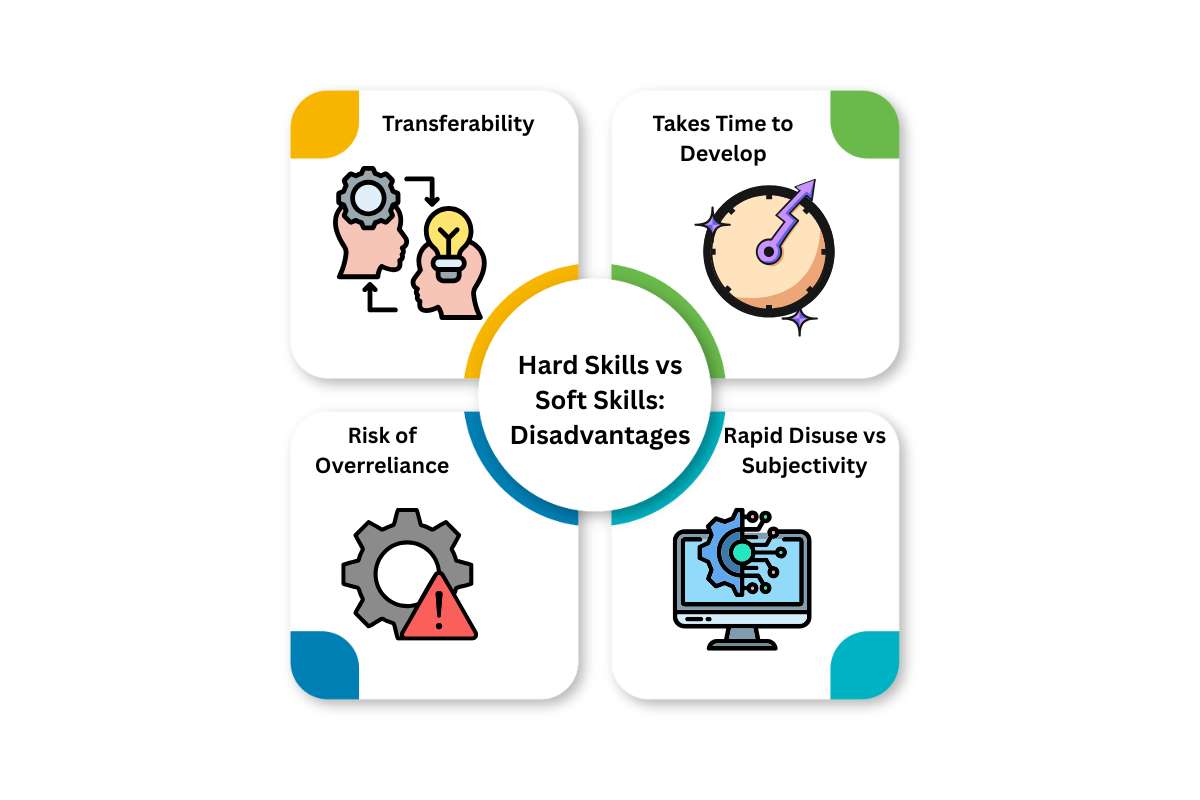
Hard and soft skills both have many disadvantages. Building these skills can help you in many areas of your life, but there are instances where they fall short.
1. Transferability
Hard skills are often specific to industries or tools. Meaning, they may lose value when technologies evolve or career paths change. For example, a programming language or software may become outdated. This specialization can limit flexibility. So, without continuous learning, hard skills can become obsolete.
Soft skills are harder to measure and demonstrate. Because they lack clear benchmarks, individuals may struggle to prove their competence. Soft skills don’t directly qualify someone for specific roles. This can limit opportunities. This is especially true if they are not paired with measurable expertise.
2. Takes Time to Develop
Gaining proficiency in hard skills can require significant time, effort, and financial investment. Learning advanced technical skills often involves formal training along with years of practice. This creates barriers for those without access to education or resources.
Developing soft skills can be gradual and less structured. This can make it harder to track progress. Unlike hard skills, few standardized courses might guarantee proficiency. But this slower learning process can be frustrating.
3. Risk of Overreliance
Overemphasizing hard skills can lead to neglecting interpersonal growth. Someone highly skilled technically may struggle in teamwork, leadership, or client-facing roles. This can, in turn, lead to miscommunication and limit advancement.
Relying too much on soft skills without technical expertise can hinder credibility. Strong communication may not compensate for a lack of knowledge in specialized areas.
4. Rapid Disuse vs Subjectivity
Hard skills are starting to fade away rapidly. Industries like IT, medicine, or engineering constantly evolve. This can make yesterday’s expertise less relevant. According to an article published in the Harvard Business Review, the “half-life” of technical skills will soon fall below 2 years. “Half Life” is the time for half of the knowledge to become obsolete. This creates pressure to keep learning.
Soft skills face the challenge of subjectivity. Qualities like empathy, leadership, or communication can be perceived differently. This inconsistency makes it harder to measure effectiveness
To Summarize:
| Drawbacks | Hard Skills | Soft Skills |
| Limited Transferability | It can become obsolete when technology evolves | Hard to demonstrate |
| Takes Time to Develop | Requires training and effort | Develops gradually through experience |
| Risk of Overreliance | May limit interpersonal effectiveness. | Without technical expertise, influence may lack credibility. |
| Rapid Disuse vs Subjectivity | It can become outdated quickly | Perceived differently depending on context |
The comparison of hard skills vs soft skills is completely dependent on their benefits and disadvantages. Overall, having some of these skills can do wonders for your growth.
How to Develop Hard and Soft Skills?
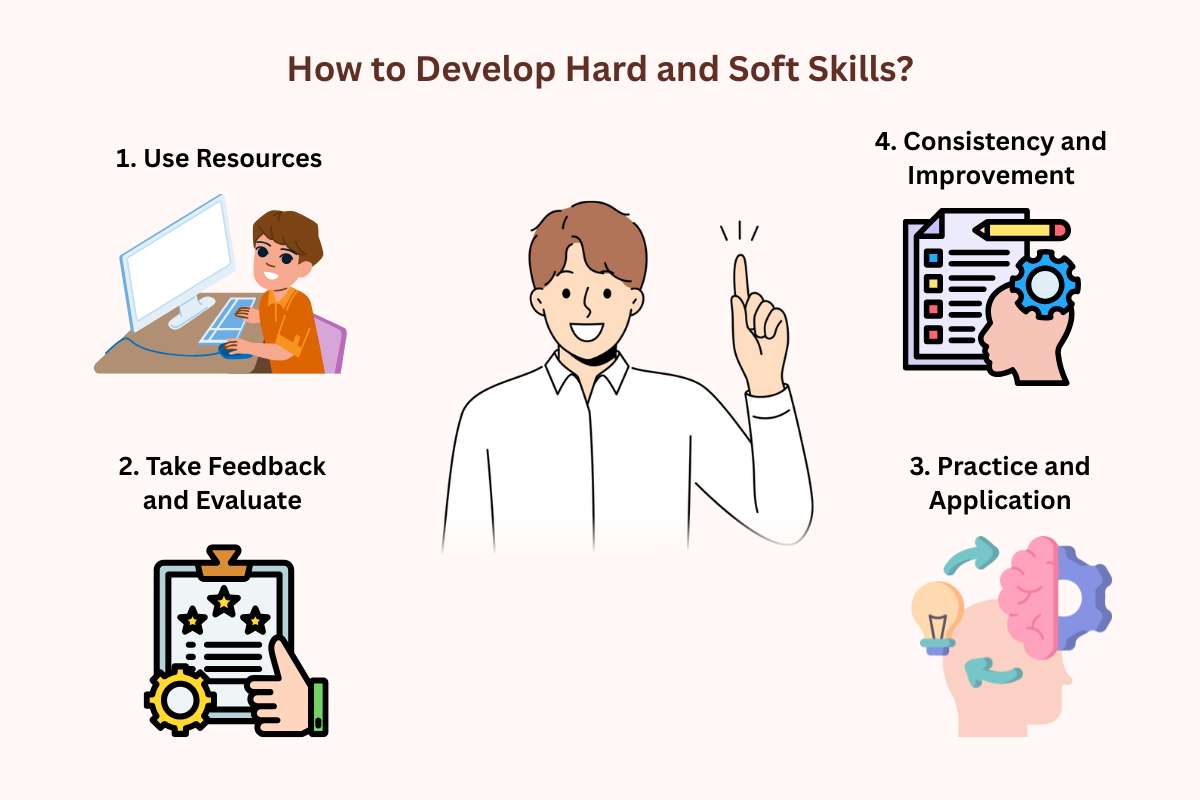
Improving Hard Skills Vs Soft Skills is a lifelong journey. Here is how you can start:
1. Use Resource
Hard skills are best developed through structured learning. This can involve formal education, online courses, and certifications. These methods provide clear frameworks to measure progress. Consistent study and application can ensure improvement over time.
Soft skills develop through interactions in the real world. Feedback from peers and mentors is crucial in developing interpersonal behaviours. Growth relies on self-awareness, emotional regulation, and active listening.
2. Take Feedback and Evaluate
When comparing hard skills vs soft skills, this is a common factor. You must be open to change and feedback. Feedback is straightforward for hard skills. Performance can be measured. Regular assessments provide room for growth. It can also keep you accountable.
Feedback for soft skills is more subjective but equally essential. Growth here is less quantifiable. So, reflection and openness to feedback play a vital role in ensuring improvement.
3. Practice and Application
Try to apply hard skills in practical scenarios. Real-world application bridges the gap between theory and execution. Repetition in practical settings ensures long-term retention. It can also improve problem-solving capacity and help reinforce learning.
Soft skills grow stronger when applied in diverse social contexts. Active practice in listening, persuasion, or negotiation builds confidence. Exposure to varied environments fosters flexibility. This makes it easier to adjust one’s style to different individuals and situations.
4. Consistency and Improvement
Hard skills require consistent practice and periodic upskilling to remain relevant. Constant evolution of technology and applications requires adaptability. Hence, discipline and repetition are key to sustaining mastery.
Soft skills improve with mindful consistency. Reading about emotional intelligence and engaging in public speaking can accelerate growth. Continuous self-improvement, combined with adaptability, ensures progress over time.
Hard Skills vs Soft Skills: How They Affect Academic and Professional Life

The usage and effectiveness of these skills can vary depending on a lot of factors. So, it is necessary to know how these can affect your life.
1. How do Hard Skills Affect Students and Workers?
For students, hard skills form the foundation of academic and career readiness. Mastery of technical subjects can impact their performance in exams. These skills also increase eligibility for internships and early job opportunities. They establish a clear career trajectory for students.
For professionals, hard skills ensure relevance and competitiveness in their chosen fields. These skills can lead to promotions and better opportunities. They can increase efficiency and make an individual indispensable to the team.
2. How do Soft Skills Affect Students and Workers?
Students apply soft skills to navigate academic challenges and social environments effectively. Communication and teamwork help them collaborate. They can then build networks and relationships with their peers and mentors.
Professionals rely heavily on soft skills to succeed in dynamic workplace environments. Leadership, negotiation, and empathy are crucial for management. Soft skills can often differentiate leaders from those who remain in technical roles.
Conclusion:
Balancing hard skills vs soft skills is essential for success in both academic and professional environments. Students can develop both skill sets and enhance employability. They can prepare themselves for real-world challenges. On the other hand, working professionals can ensure productivity and build effective relationships. These skills are the pillars on which you can stand and achieve your life goals.
Also Read: Digital Education in 2025 Opens New Doors for Students!