
Key Points:
- Students gain portable, digital credentials they can use across schools and future pathways.
- Luvia’s mobile app and school platform connect classroom learning with verified records.
- A Ministry-backed Hanoi pilot will test the system before nationwide expansion.
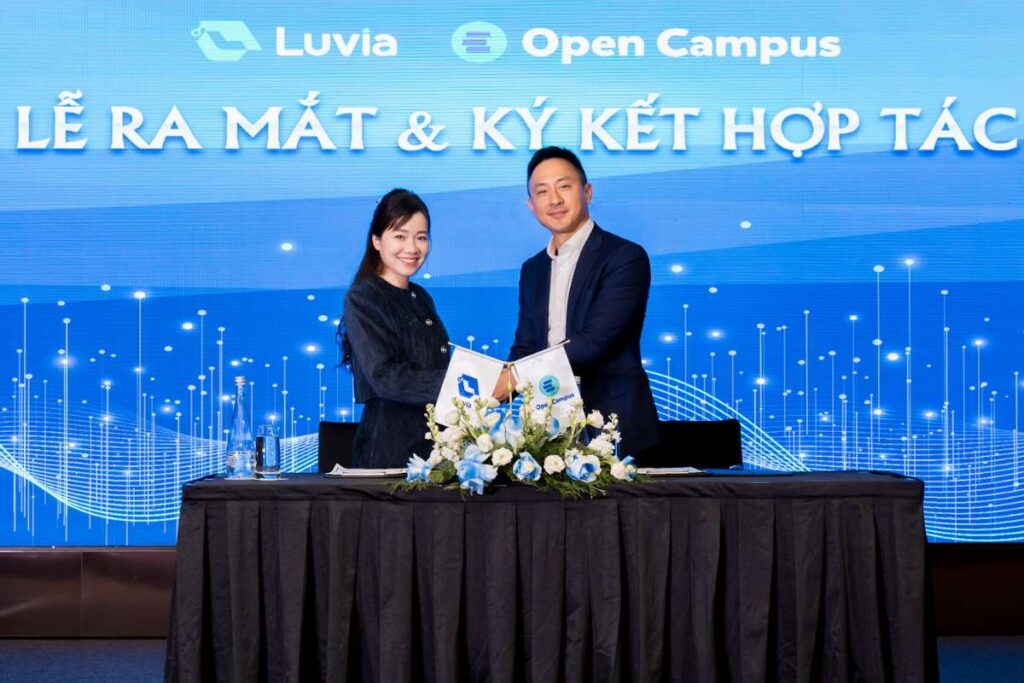
A new education technology partnership is set to introduce portable and verifiable student credentials for learners across Vietnam. Luvia and Open Campus have announced a collaboration that combines a mobile learning application with a school focused platform supported through a Ministry backed pilot in Hanoi. The initiative reflects a broader effort to modernize how student learning records are created, stored, and shared across education systems.
The program aims to give students greater control over their academic records while helping teachers and schools manage learning progress more efficiently. By linking classroom learning with digital credentialing, the partnership highlights a shift toward skills visibility and record portability within the education sector.
Mobile Learning App and School Platform Rollout
Luvia currently operates a mobile learning application available on iOS and Android devices. The app, launched in November 2025, is designed for high school and university students and is already being used across a large network of partner schools. It organizes the national high school curriculum into structured modules and offers personalized practice assessments to support daily learning.
According to the company, the app currently reaches close to two hundred thousand learners. Its focus remains on helping students track academic progress while giving teachers insight into learning patterns and performance gaps.
In early 2026, Luvia plans to introduce an in-school learning management platform through a pilot program in selected Hanoi schools. The pilot has backing from the Ministry of Education and Training and will test how digital systems can support classroom instruction and school administration. The platform is expected to assist with communication between teachers, parents, and students, while also reducing manual administrative work.
A key feature of the school platform is the ability to issue Verifiable Student Credentials that reflect completed coursework and demonstrated learning outcomes. These credentials are designed to follow students as they move between schools or education levels. By the end of 2026, Luvia expects to expand the platform to schools and universities nationwide, potentially reaching millions of learners across the country.
Verifiable Credentials and Digital Learning Records
The partnership integrates Open Campus ID into both the mobile app and the school platform. Open Campus ID provides students with a persistent digital identity that links verified learning achievements across systems. As students complete lessons, assessments, or classroom activities, they earn credentials that are recorded as Verifiable Student Credentials and can be reused when needed.
These credentials form a digital learning record that reflects academic progress over time. For students, this creates a single place to store achievements from different institutions or learning environments. For teachers and schools, it offers a clearer view of student development and verified outcomes.
Education officials have described the Hanoi pilot as a way to evaluate whether digital credential systems based on Verifiable Student Credentials can improve efficiency and learning transparency. The focus of the pilot is on practical classroom use, data accuracy, and ease of adoption for teachers and administrators.
Beyond school use, the partners say that verified credentials could support future education pathways. Possible applications include admissions review, education financing, and employer screening. Discussions are also taking place with local financial institutions to explore how verified learning records might support student related services.
For students and teachers, the initiative represents a step toward clearer recognition of learning progress. By combining everyday classroom activity with Verifiable Student Credentials, the partnership seeks to make student achievement easier to demonstrate and easier to understand across the education ecosystem