
Key Points:
- University College London settlement resolves claims from about 6,000 students over pandemic-related disruption to in-person teaching while full tuition fees were charged.
- The case is part of a wider action involving 170,000+ students across 36 UK universities seeking compensation for the shift to online learning.
- Although UCL admitted no liability, the outcome may impact how universities structure and communicate future course delivery.
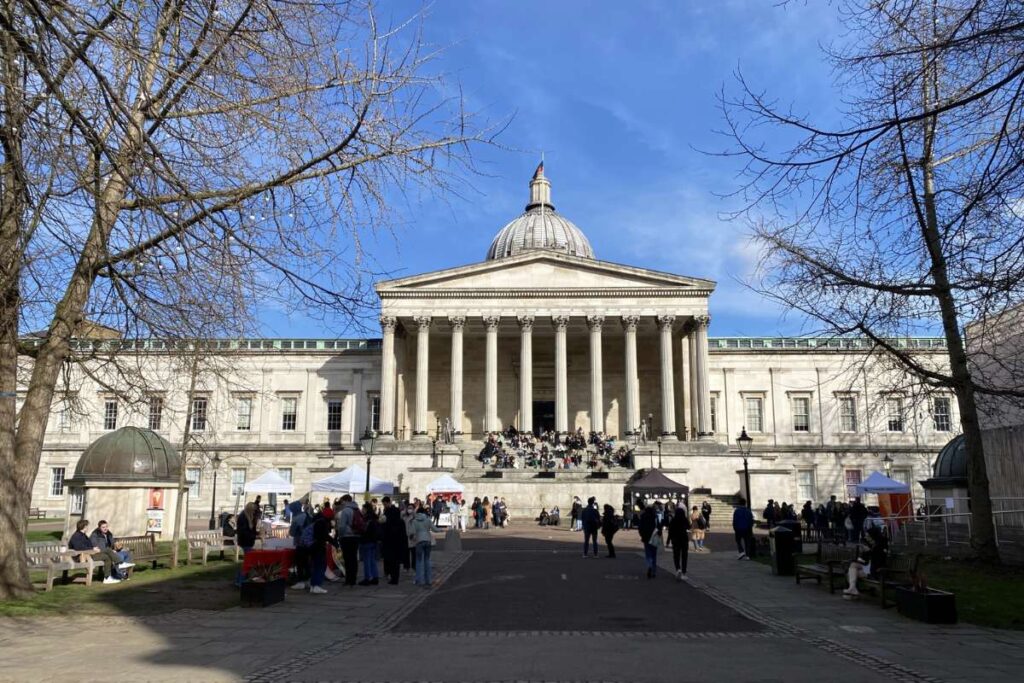
University College London has reached a confidential settlement with around 6,000 current and former students who brought claims related to the disruption of in-person education during the COVID period and episodes of industrial action. The University College London settlement resolves claims that students did not receive the campus learning experience they expected when paying full tuition fees.
The university did not admit liability as part of the settlement. Details of the financial terms have not been disclosed.
Claims Centered On Shift To Online Teaching
The students involved argued that from March 2020 onward, teaching moved online and access to campus facilities was limited. Undergraduate tuition fees for domestic students remained at 9,250 pounds per year, with higher fees for postgraduate and international students. Claimants stated that the transition to remote learning altered the nature of the educational experience while fees remained unchanged.
The University College London settlement forms part of a wider coordinated action known as the Student Group Claim. More than 170,000 students are pursuing claims against 36 universities across the United Kingdom. The group seeks compensation linked to the difference between in-person and online delivery models.
Law firms representing the group are handling cases on a no win no fee basis. Estimates shared by the group suggest that domestic undergraduates could seek compensation of around 5,000 pounds each, with higher figures possible for postgraduate and international students.
UCL stated that during the pandemic, it followed public health guidance and sought to maintain academic standards under difficult conditions. The university also noted that some students had already received compensation through internal complaints processes and through the Office of the Independent Adjudicator.
Broader Impact On Higher Education Sector
The University College London settlement has drawn attention from across the higher education sector. Several institutions are named in the wider group action, including the University of Bath, the University of Birmingham, the University of Bristol, Cardiff University, Imperial College London, King’s College London, the University of Manchester, the University of Warwick, and the University of York.
For students and teachers, the case raises questions about how universities define and communicate the learning experience they offer. Many institutions include clauses in student agreements that allow for adjustments to teaching delivery in exceptional circumstances. The balance between flexibility and student expectations has become an area of closer scrutiny.
The scheduled trial for the UCL case had been expected to examine how university terms apply when teaching methods change significantly. With the University College London settlement now in place, those questions remain unresolved in court.
As universities continue to invest in digital learning tools and blended teaching models, the outcome of similar claims may influence how institutions structure future course delivery and communicate with students. The UCL agreement brings closure for those involved, but discussions around value, access, and educational experience are likely to continue across the sector.
Visit Future Education Magazine to read more.