
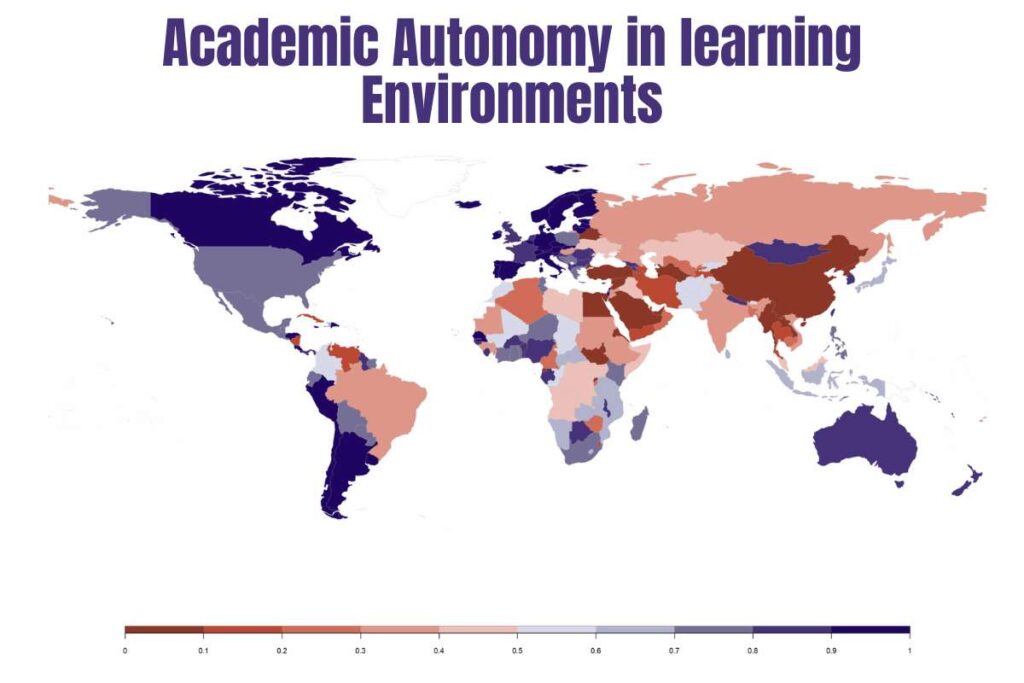
Key Points:
- Academic freedom decline is seen globally, with 50 countries reporting a drop.
- Limits on teaching and research are reducing open academic discussions.
- Strong institutional autonomy helps maintain better academic freedom.
A new global report on academic freedom presents a detailed view of how universities are evolving across different regions. The findings show that institutional autonomy plays a key role in shaping how freely scholars can teach, research, and share ideas within academic spaces.
Academic Freedom Decline Across Many Countries
The report finds that academic freedom has declined in many parts of the world over the past decade, highlighting a growing academic freedom decline. Data shows that 50 countries have seen a drop in academic freedom, while only 9 countries have recorded improvements during the same period.
The most common areas of decline include individual freedom to research and teach, along with campus integrity. These areas affect how students and teachers interact, share ideas, and build knowledge within universities. When these aspects weaken, it can limit open discussion and reduce opportunities for academic growth.
Institutional autonomy, which refers to the ability of universities to make independent decisions, has remained more stable in comparison. However, the report highlights that even small changes in autonomy can have a strong impact on academic environments. When universities have less control over their internal decisions, it can affect both teaching quality and research output.
The data suggest that countries with higher levels of institutional autonomy tend to provide better support for academic freedom. In such systems, educators can explore topics more openly, and students can engage in learning without unnecessary restrictions. This connection shows how governance within universities shapes everyday academic experiences and helps limit academic freedom decline.
Institutional Autonomy And Its Role In Learning Environments
The report also examines how institutional autonomy has changed over time in different regions. Between 2015 and 2025, a decline in autonomy was observed in 43 countries. Many of these countries are located in regions known for strong higher education systems, including parts of Europe and North America.
This trend highlights the importance of protecting decision-making within universities. When institutions manage their own policies, they can respond better to academic needs and maintain consistent standards in education. Strong autonomy also helps universities support diverse ideas and research areas, reducing the impact of academic freedom decline.
A detailed section of the report focuses on changes in the United States. The data shows a noticeable drop in institutional autonomy over a short period. The score declined from 2.4 in 2024 to 1.7 in 2025 on a scale of 0 to 4. This marks a sharp change compared to earlier years when the country maintained higher levels of autonomy.
Earlier data shows that the score stood at 3.3 in 2019, indicating a stronger academic environment at that time. The recent decline highlights how quickly conditions can change within higher education systems. It also shows how important it is for institutions to maintain stable governance structures.
The report also compares these trends with other countries that have experienced gradual changes over longer periods. In these cases, shifts in academic freedom have taken place over several years rather than in a short span.
Overall, the findings provide valuable insights for students and teachers. They show how academic freedom and institutional autonomy are closely linked and how both shape the quality of education. By understanding these trends, academic communities can better adapt to changes and address the challenges of academic freedom decline while continuing to support open learning environments.
Visit Future Education Magazine For The Most Recent Information.