
Key Takeaways
- Jensen Huang says AI expands access to technology for students across skill levels.
- The graduates face rising competition due to AI-driven hiring changes.
- The AI skills increase employability across technical and non-technical roles.
- The entry-level unemployment reached a 4-year high in 2026.
- The AI enables faster creation of projects and learning for students.
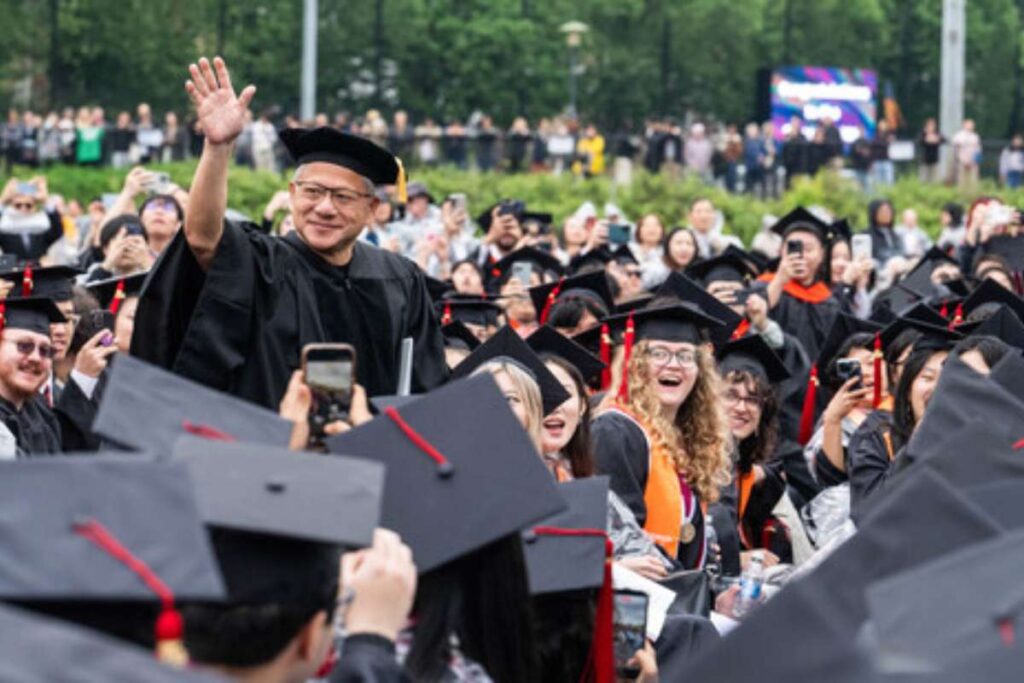
Jensen Huang addressed graduates at Carnegie Mellon University and stated that current conditions offer strong opportunities for students entering the workforce. He emphasized that artificial intelligence is expanding access to technology and enabling wider participation in innovation.
AI Expands Learning Access And Reduces Technology Barriers
Jensen Huang stated that artificial intelligence is reducing the gap in access to advanced tools. Students can now build software, analyze data, and create applications with fewer technical barriers. This shift allows individuals without deep engineering backgrounds to participate in technology development.
He noted that this change increases the number of students who can create functional products. The ability to use AI tools reduces dependence on traditional coding skills and accelerates project development. This creates more opportunities for students across academic disciplines.
Jensen Huang also highlighted that AI tools support faster learning cycles. Students can test ideas, receive feedback, and improve outputs in shorter timeframes. This improves both academic outcomes and practical skill development.
Job Market Data Reflects Both Growth And Competition
The address comes at a time when employment conditions for new graduates show mixed trends. The unemployment rate for new graduates reached a 4-year high at the start of 2026. At the same time, companies are increasing the use of artificial intelligence to improve efficiency.
Several organizations have cited AI-driven productivity gains while reducing workforce size. This has increased competition for entry-level roles. Students entering the job market now face longer hiring processes and higher skill expectations.
Jensen Huang stated that artificial intelligence is unlikely to replace individuals directly but emphasized that those who use AI effectively will have an advantage. This highlights the importance of skill development in AI-related tools for students.
He also pointed to the long-term impact of AI adoption. Over time, increased use of AI is expected to create new roles and demand for updated skills. Students with the ability to adapt to these changes may benefit from emerging opportunities.
Jensen Huang, aged 61, has a background in electrical engineering and founded Nvidia in 1993. He referenced the timing of previous technology shifts and compared current AI growth to earlier digital expansion phases.
The address focused on measurable trends, including access to tools, employment data, and skill requirements. It highlighted the need for students to develop practical AI skills to remain competitive in changing job conditions.
The discussion reflects ongoing changes in education and employment driven by artificial intelligence. Students and educators are expected to adapt learning methods and curricula to align with these developments.