

Everyone wants to improve something about themselves.
You may want better habits. Or more confidence. Or more money. Maybe you just want to feel less stuck.
So, you search for self-improvement books. But there are thousands of them. The global personal development market continues to grow each year. Most lists repeat the same titles. Many of the lists fail to explain which book would suit you. After a while, it feels confusing.
This guide keeps it simple.
We have grouped the best self-improvement books by goal. Want better habits? There’s a section for that. Need confidence or social skills? You’ll find clear picks. Looking for money growth or deeper meaning? We cover that too.
You’ll see classic books that shaped the world. You’ll also see modern, research-backed books that fit today’s life. For each book, we explain who should read it and why. Whether you want better habits, stronger confidence, or deeper purpose, this list will help you choose the right book for you.
Why do Self-Help Books Still Matter?
Self-help books are not a trend. They are a steady part of the publishing world.
In the United States alone, self-improvement books generate over $800 million in annual sales, according to industry reports from NPD BookScan and major publishers. The global personal development market is valued at over $40 billion, and it continues to grow.
People still buy self-improvement books because they want clarity. They want structure. They want something deeper than a short social media post.
There is also research behind why books work. Studies in learning science show that active reading and written reflection improve retention and understanding compared to passive consumption. When people write notes, summarize ideas, and apply what they read, the impact increases.
Self-help books matter because they slow you down. They give you space to think. They offer frameworks instead of quick dopamine hits.
The best self-improvement books are not popular because they are trendy. They stay relevant because people continue to look for change.
15 Essential Self-Improvement Books, Sorted by Life Goals
| Subsection | Sr. no | Book | Best For | Difficulty | Key Takeaway |
Building Habits | 1 | Atomic Habits | Building daily habits | Easy | Small systems create big results |
| 2 | Tiny Habits | Starting change without overwhelm | Easy | Start tiny to build lasting habits | |
| 3 | Deep Work | Improving focus and productivity | Moderate | Deep focus produces high-value work | |
Mindset & Mental Strength | 4 | Mindset | Developing a growth mindset | Easy–Moderate | Abilities grow with effort |
| 5 | Grit | Long-term perseverance | Moderate | Passion + persistence drives success | |
| 6 | The Obstacle Is the Way | Handling setbacks | Easy | Obstacles can become opportunities | |
Confidence & Social Skills | 7 | How to Win Friends & Influence People | Social skills & influence | Easy | Make others feel valued |
| 8 | Emotional Intelligence | Emotional awareness & leadership | Moderate | Emotions shape success | |
| 9 | Quiet | Confidence for introverts | Moderate | Quiet strengths matter | |
Wealth & Career Growth | 10 | The Psychology of Money | Financial mindset | Easy | Behavior drives wealth |
| 11 | So Good They Can’t Ignore You | Career strategy | Moderate | Skill mastery creates freedom | |
| 12 | The Almanack of Naval Ravikant | Wealth & life philosophy | Easy | Leverage and ownership build wealth | |
Purpose & Meaning | 13 | Man’s Search for Meaning | Finding purpose | Moderate | Meaning sustains resilience |
| 14 | The Power of Now | Mindfulness & inner peace | Moderate | Live fully in the present | |
| 15 | The Untethered Soul | Emotional freedom | Moderate | You are not your thoughts |
These self-improvement books are not random picks. This list is carefully curated based on long-term impact, credibility, and relevance across different areas of life.
We have organized the books by goal, starting with habit building and productivity, then moving into mindset, confidence, wealth, and purpose. The order is intentional. It follows a natural progression from daily action to deeper personal growth.
Best Self-Improvement Books for Building Habits
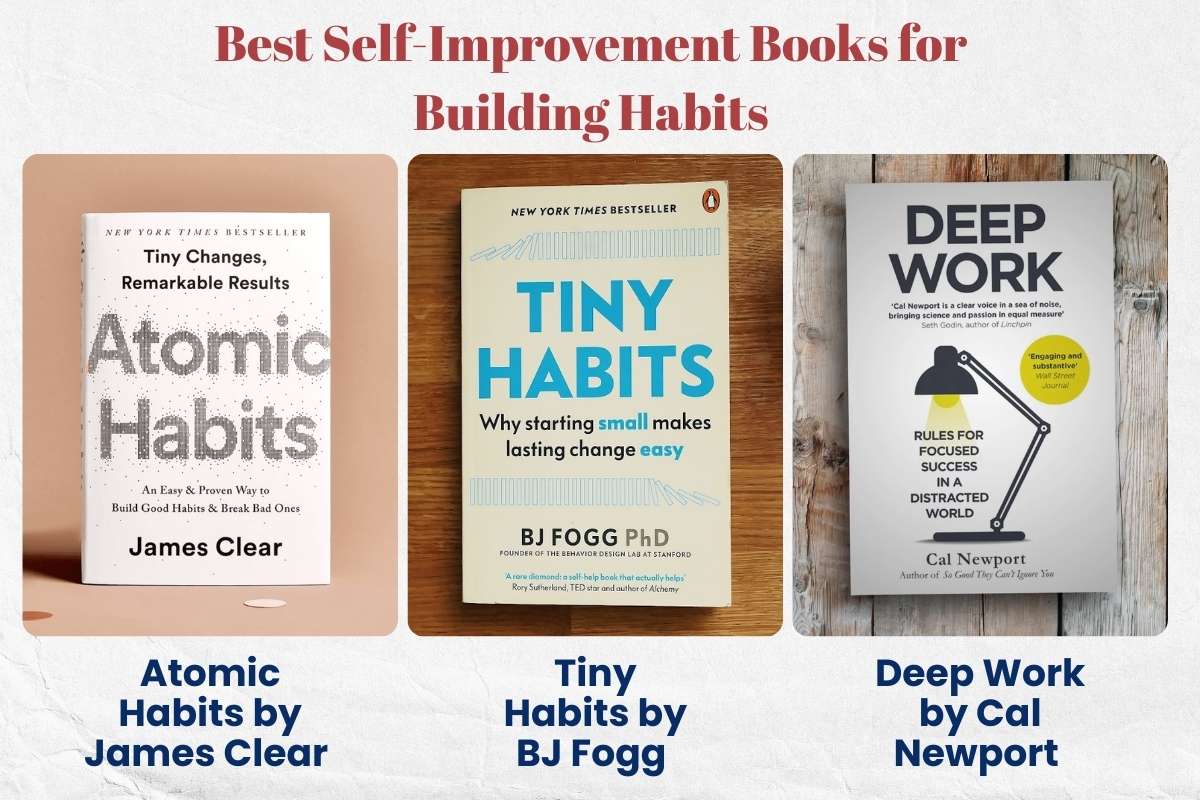
1. Atomic Habits by James Clear
This book explains why small daily actions matter more than big goals. Instead of pushing motivation, James Clear shows how habits are shaped by systems and environment. He breaks down behavior into simple steps that anyone can apply. The writing is clear, practical, and backed by behavioral science.
Rather than telling you to “try harder,” the book teaches you how to make good habits easier and bad habits harder. It helps improve consistency, focus, health routines, and long-term discipline without feeling overwhelming.
- Who Should Read This: Anyone who struggles to stay consistent or wants a practical starting point for personal growth.
- Core Principle: “You do not rise to the level of your goals. You fall to the level of your systems.”
2. Tiny Habits by BJ Fogg
BJ Fogg, a Stanford behavior scientist, argues that lasting change does not begin with motivation. It begins with simplicity. Instead of setting big goals, he teaches readers to start with actions so small they feel almost too easy. Over time, those tiny actions grow naturally.
The book shifts how you think about change. It reduces guilt and builds momentum. It helps improve self-trust, habit consistency, and emotional stability when working toward goals.
- Who Should Read This: People who start strong but quit quickly, or anyone who feels overwhelmed by big habit goals.
- Core Principle: Change should feel easy first, not intense.
3. Deep Work by Cal Newport
In a world full of notifications and distractions, this book makes a bold claim: the ability to focus deeply is becoming rare and valuable. Newport explains how constant shallow work reduces creativity and impact. He then outlines how to train your mind for uninterrupted concentration.
This book helps improve productivity, attention span, and career performance. It is especially powerful for professionals who rely on thinking, writing, or problem-solving.
- Who Should Read This: Students, professionals, creators, and anyone who feels distracted most of the day.
- Core Principle: Deep focus creates high-value work.
You may also like: Use these 15 Growth Mindset Examples to Turn Setbacks Into Lessons
Best Self-Improvement Books for Mindset & Mental Strength
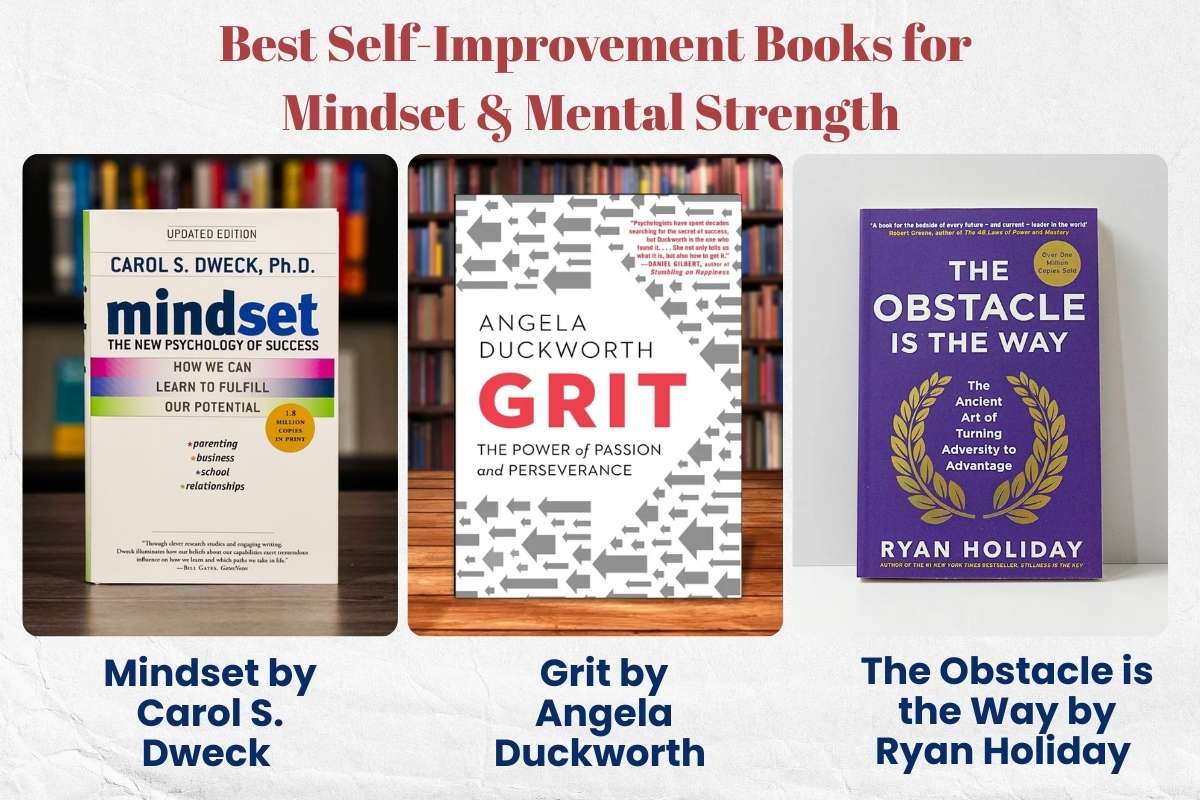
4. Mindset by Carol S. Dweck
Based on decades of research, Carol explains the difference between a fixed mindset and a growth mindset. A fixed mindset believes abilities are permanent. A growth mindset believes skills can improve through effort and learning.
The book shows how this belief shapes success in school, sports, relationships, and business. It helps improve resilience, learning ability, and confidence when facing failure.
- Who Should Read This: Students, parents, leaders, or anyone who doubts their ability to grow.
- Core Principle: Abilities can be developed through effort and strategy.
5. Grit by Angela Duckworth
Angela Duckworth explores why talent alone does not guarantee success. Through research and real-world examples, she shows that passion combined with long-term perseverance matters more.
This book helps improve discipline, long-term commitment, and mental endurance. It is especially useful for readers working toward ambitious goals that take years to achieve.
- Who Should Read This: Entrepreneurs, athletes, and anyone pursuing long-term dreams.
- Core Principle: Sustained effort over time beats raw talent.
6. The Obstacle is the Way by Ryan Holiday
Inspired by Stoic philosophy, this book teaches that challenges are not roadblocks but opportunities for growth. Ryan Holiday uses stories from history and business to show how mindset shapes outcomes. Instead of reacting emotionally, he encourages readers to slow down, assess clearly, and act with discipline.
The book does not promise quick success. It focuses on mental strength under pressure. It helps improve emotional control, resilience, and problem-solving when life becomes difficult.
- Who Should Read This: Anyone going through a setback or facing high-pressure situations.
- Core Principle: The obstacle itself can become the path forward.
Best Self-Improvement Books for Confidence & Social Skills
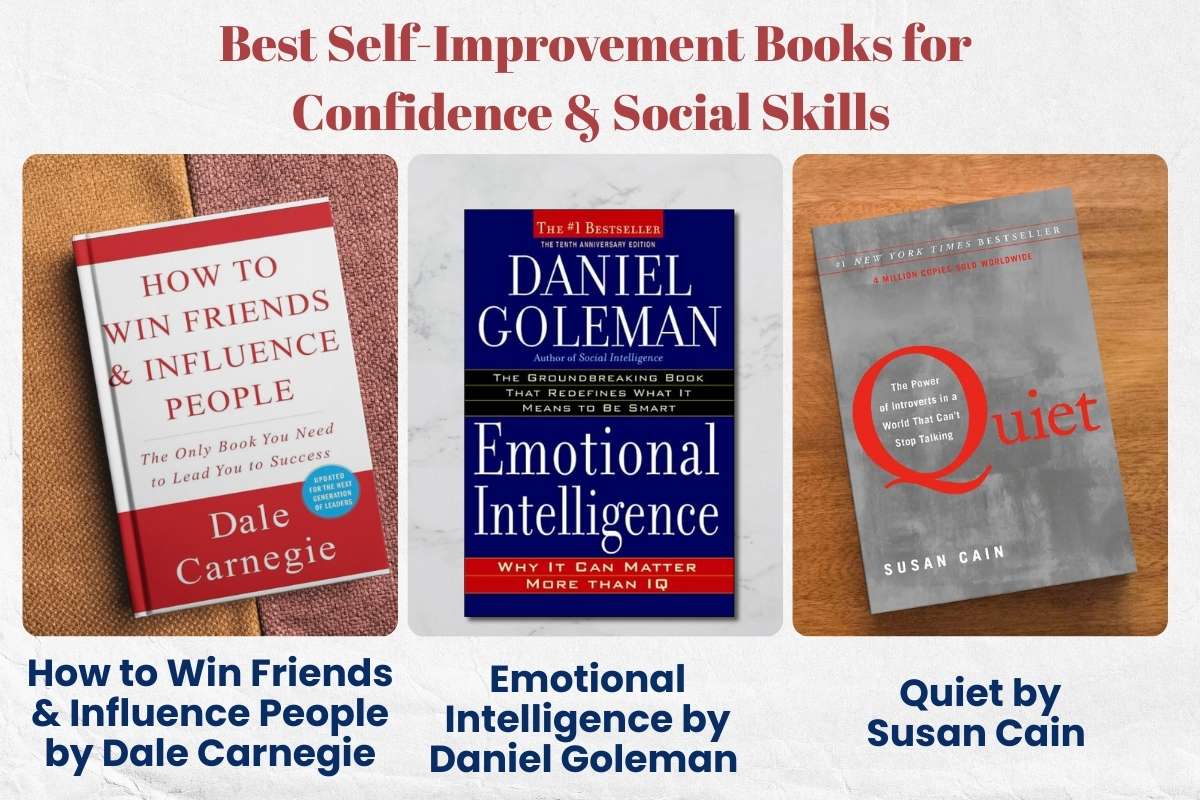
7. How to Win Friends & Influence People by Dale Carnegie
This classic focuses on practical communication skills that build trust and influence. Dale Carnegie explains that people respond positively when they feel heard, valued, and respected. Through simple examples, he shows how small changes in conversation can strengthen relationships.
Even though it was first published in 1936, its principles remain relevant in modern workplaces and social settings. It helps improve confidence in conversations, persuasion skills, networking ability, and leadership presence.
- Who Should Read This: Professionals, salespeople, leaders, and anyone who wants stronger people skills.
- Core Principle: People respond best to respect and sincere interest.
8. Emotional Intelligence by Daniel Goleman
Daniel Goleman explains that success is not only about IQ. It is also about understanding and managing emotions. He covers skills like self-awareness, self-control, empathy, and social skills, and shows how they shape decisions and relationships.
Using research and real examples, he argues that emotional intelligence often matters more than raw intelligence, especially at work. Learning to manage emotions can help you communicate better, lead with clarity, and handle pressure calmly.
- Who Should Read This: Managers, parents, team leaders, and anyone wanting stronger emotional control.
- Core Principle: Understanding emotions improves performance and relationships.
9. Quiet by Susan Cain
Susan Cain challenges the belief that confidence must look loud or dominant. She explores how modern culture often rewards extroversion while overlooking the strengths of introverts. Through research and case studies, she highlights how quiet thinkers contribute creativity, depth, and thoughtful leadership.
The book reframes personality differences as strengths rather than flaws. It helps improve self-acceptance, confidence for introverts, and a better understanding of communication styles.
- Who Should Read This: Introverts, socially anxious readers, and leaders managing diverse teams.
- Core Principle: Quiet strength is real strength.
Best Self-Improvement Books for Wealth & Career Growth
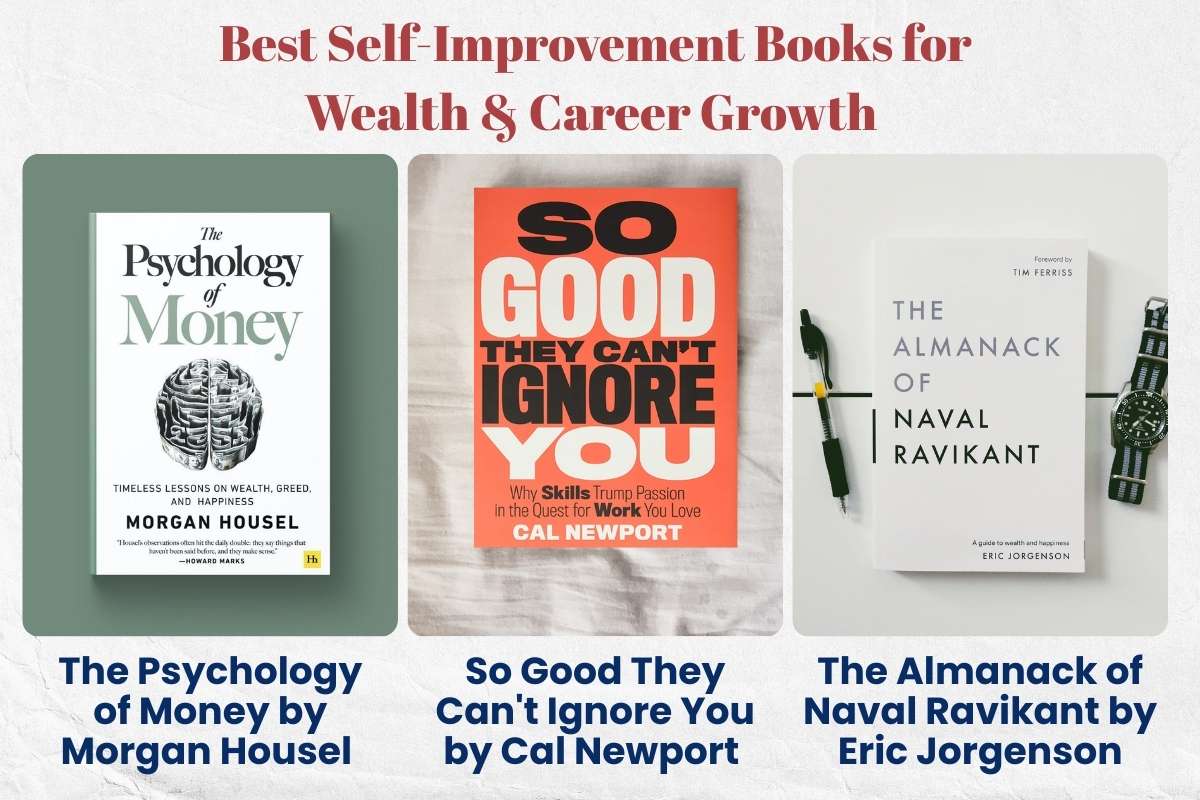
10. The Psychology of Money by Morgan Housel
Instead of focusing on complex financial strategies, this book explains how behavior shapes financial success. Morgan Housel shares short stories that reveal how patience, risk management, and long-term thinking build wealth. He emphasizes that financial decisions are emotional as much as logical.
The book makes money management feel human and realistic. It helps improve financial discipline, long-term planning, and awareness of emotional decision-making.
- Who Should Read This: Young professionals, investors, and anyone building long-term wealth.
- Core Principle: Good financial behavior matters more than complex strategy.
11. So Good They Can’t Ignore You by Cal Newport
Cal Newport pushes back against the popular advice to “follow your passion.” He argues that most people do not start with passion. Instead, they build it over time by getting really good at something valuable. Instead of chasing what feels exciting in the moment, Newport focuses on steady improvement and long-term thinking.
The message is simple: build skills first, and opportunities follow. Over time, that approach creates clarity, confidence, and more freedom in your work.
- Who Should Read This: Students and professionals seeking career direction.
- Core Principle: Build valuable skills first; passion often follows.
12. The Almanack of Naval Ravikant by Eric Jorgenson
This book brings together insights from entrepreneur Naval Ravikant on wealth, happiness, and how to think clearly about life. Instead of long chapters, it shares short ideas and reflections that make you pause and reconsider how you approach money, work, and freedom.
It does not read like a typical business manual. It feels more like a collection of hard-earned lessons about ownership, leverage, and independence. The book encourages you to think long-term and make decisions that create freedom rather than just income.
- Who Should Read This: Entrepreneurs and readers interested in long-term freedom over short-term success.
- Core Principle: Wealth comes from ownership, leverage, and clear judgment.
Best Self-Improvement Books for Purpose & Meaning
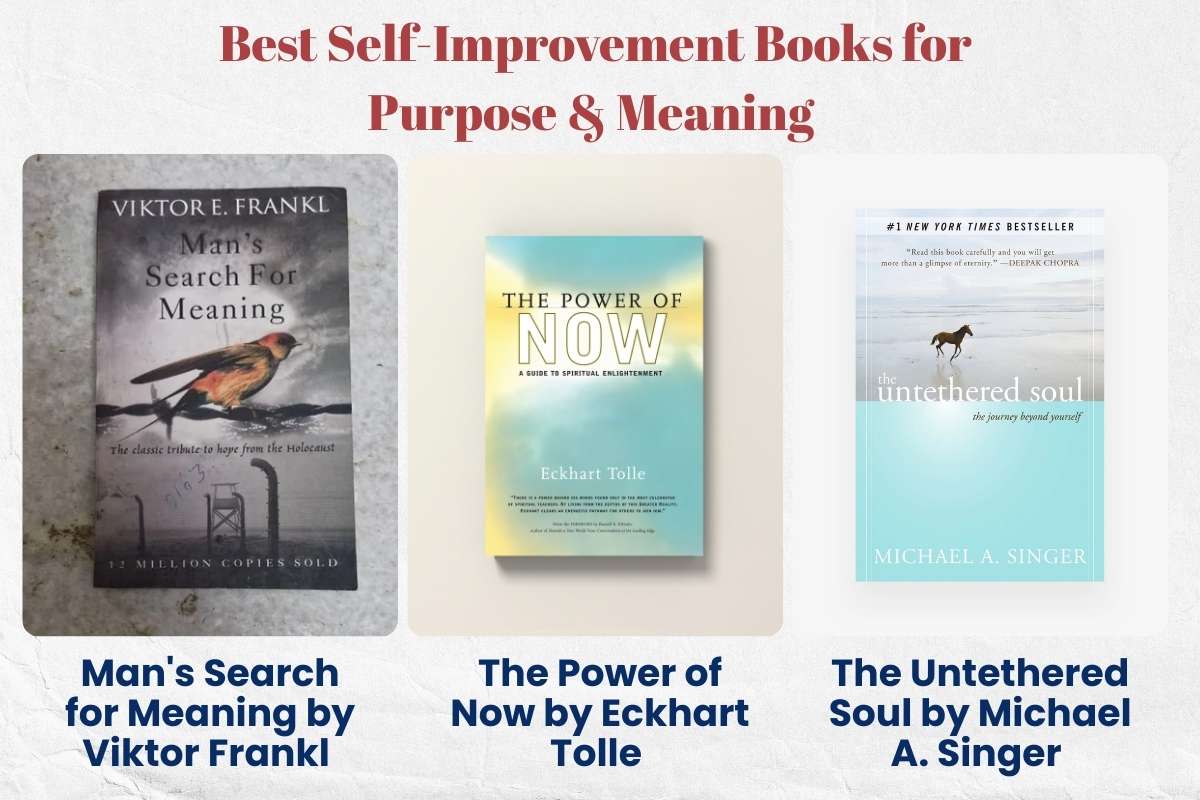
13. Man’s Search for Meaning by Viktor Frankl
Part memoir and part psychology, this book shares Viktor Frankl’s experience in Nazi concentration camps and the lessons he drew from extreme suffering. He introduces logotherapy, the idea that humans are driven by the search for meaning.
The book is thoughtful and honest without trying to be dramatic. It shows that even in difficult moments, people still have a choice in how they respond. Its message encourages resilience, perspective, and a deeper sense of purpose.
- Who Should Read This: Anyone going through difficult times or questioning their life direction.
- Core Principle: Life has meaning even in suffering.
14. The Power of Now by Eckhart Tolle
This book focuses on living fully in the present moment. Eckhart Tolle explains how constant mental focus on the past or future creates anxiety and stress. Through simple reflections, he guides readers toward awareness and mindfulness.
The tone is calm and reflective. It teaches you to notice your thoughts without immediately reacting to them. Over time, this can bring more mental clarity, emotional balance, and less stress.
- Who Should Read This: Overthinkers and readers seeking inner peace.
- Core Principle: Peace exists in the present moment.
15. The Untethered Soul by Michael A. Singer
This book explores the idea that you are not your thoughts or emotions. Michael A. Singer explains how much stress comes from clinging to internal stories. By learning to observe thoughts without attachment, readers gain emotional freedom.
The writing is thoughtful but easy to follow. It focuses on building real self-awareness instead of offering quick fixes. Over time, it helps you understand your emotions better and feel steadier within yourself.
- Who Should Read This: Readers exploring spirituality or deeper self-understanding.
- Core Principle: You can observe your thoughts without being controlled by them.
How to Choose the Right Self-Improvement Book?
With so many titles available, selecting the best self-improvement books can feel overwhelming. The most effective approach is to choose based on your current need, not popularity.
- If you struggle with discipline, begin with habit-focused books.
Many of the books in this category provide structured systems for building consistency and long-term behavioral change. - If you feel stuck or unmotivated, choose mindset-focused books.
Some of the books help reshape limiting beliefs and strengthen resilience, which is essential for sustained growth. - If you feel uncertain about direction, read purpose-driven books.
The books on meaning and perspective help clarify values and long-term priorities. - If your goal is faster income or career growth, focus on skill and strategy books.
Several of the books emphasize skill development, strategic thinking, and financial awareness rather than short-term motivation.
Self-improvement books are most effective when they align with your current stage of growth. Choosing with clarity leads to better results.
Beginner vs. Advanced Reader Guide
Not all readers are at the same stage. Some are just starting their growth journey, while others have already read several of the best self-improvement books and want something deeper. This quick guide helps you self-sort.
If you’re new to self-improvement, start with foundational titles that are practical, clear, and easy to apply:
- Atomic Habits: A simple framework for building better daily habits.
- The 7 Habits of Highly Effective People: A structured guide to personal and professional effectiveness.
- Mindset: A research-backed introduction to growth thinking.
These books form the core of many self-improvement book lists because they build strong fundamentals.
Beyond the Basics
If you are ready for more depth, strategy, or complexity, consider:
- Deep Work: A focused look at high-value productivity.
- Essentialism: A disciplined approach to prioritizing what truly matters.
- The Psychology of Money: A deeper exploration of behavior and financial decision-making.
Many of the self-improvement books at this level focus less on motivation and more on refinement, strategy, and long-term thinking.
You may also like: Here Are 18 Books for Communication Skills to Improve Conversations Instantly
Are Self-Improvement Books Actually Effective?
The best self-improvement books can truly help. But only if you use what you read. Reading alone does not create change. Action does.
Many people fall into the overconsumption trap. They move from one self-improvement book to the next, collecting ideas but never applying them. It feels productive, but real growth comes from practice.
To make self-improvement books effective, focus on implementation. After each chapter, write down one clear takeaway. Then choose one small action to try that week. Even small steps create momentum.
Note-taking also helps ideas stick. Instead of highlighting everything, write short summaries in your own words. This improves understanding and recall.
You can also build a reading habit through habit stacking. For example, read ten pages after your morning tea or before sleeping. When reading becomes routine, learning becomes consistent.
The best self-improvement books are not life-changing because you finish them. They become powerful when you apply them.
Conclusion
There is no single title among self-improvement books that will change everything at once. No book can instantly fix habits, confidence, money, and purpose. What these books can do is guide you. They offer ideas, structure, and perspective. The real change begins when you decide to act on what you read.
Some people read many self-improvement books each year but see little progress. Others read just one and apply it consistently. Over time, that one idea makes a real difference. Growth does not come from collecting insights. It comes from practicing them.
If this list helped you, choose one book that matches where you are right now. Do not overthink it. Start reading. Take simple notes. Apply one lesson at a time.
Progress is built slowly, through small actions repeated daily.
The best self-improvement books are not the ones you finish; they’re the ones you implement.
Frequently Asked Questions
1. What are the top self-improvement books of all time?
Some of them include Atomic Habits, The 7 Habits of Highly Effective People, and How to Win Friends & Influence People. These titles remain popular because they focus on habits, mindset, and relationships.
2. Which self-improvement book should I read first?
If you are new, start with one of the books on habits, such as Atomic Habits. It is practical and easy to apply.
3. Do self-improvement books really work?
They work when you apply what you learn. Reading alone is not enough. Consistent action creates results.
4. How many self-improvement books should I read in a year?
Quality matters more than quantity. Even two or three self-improvement books can create change if you implement the ideas.
5. Are modern self-improvement books better than classics?
Both have value. Classic titles focus on timeless principles, while newer best self-improvement books often include updated research and modern examples.