

Did you know that the average person loses 28% of their time due to interruptions and multitasking? Do you think you are one of them?
Between work, school, and personal commitments, missing deadlines can be really frustrating. It can be overwhelming and can leave you feeling unproductive. Add to it the feeling of falling behind everybody else.
The best way to counter this is by managing your time. And even though the daily chaos of life hinders our ability to do that, several time management tips can help.
Implementing these tips in your daily routine can help you stay on top of your goals and never miss a deadline. For this article, we have categorized these tips into four categories. These are school students, college students, working professionals, and business owners. So, what are they?
Use These 20 Time Management Tips to Get More Done in Less Time
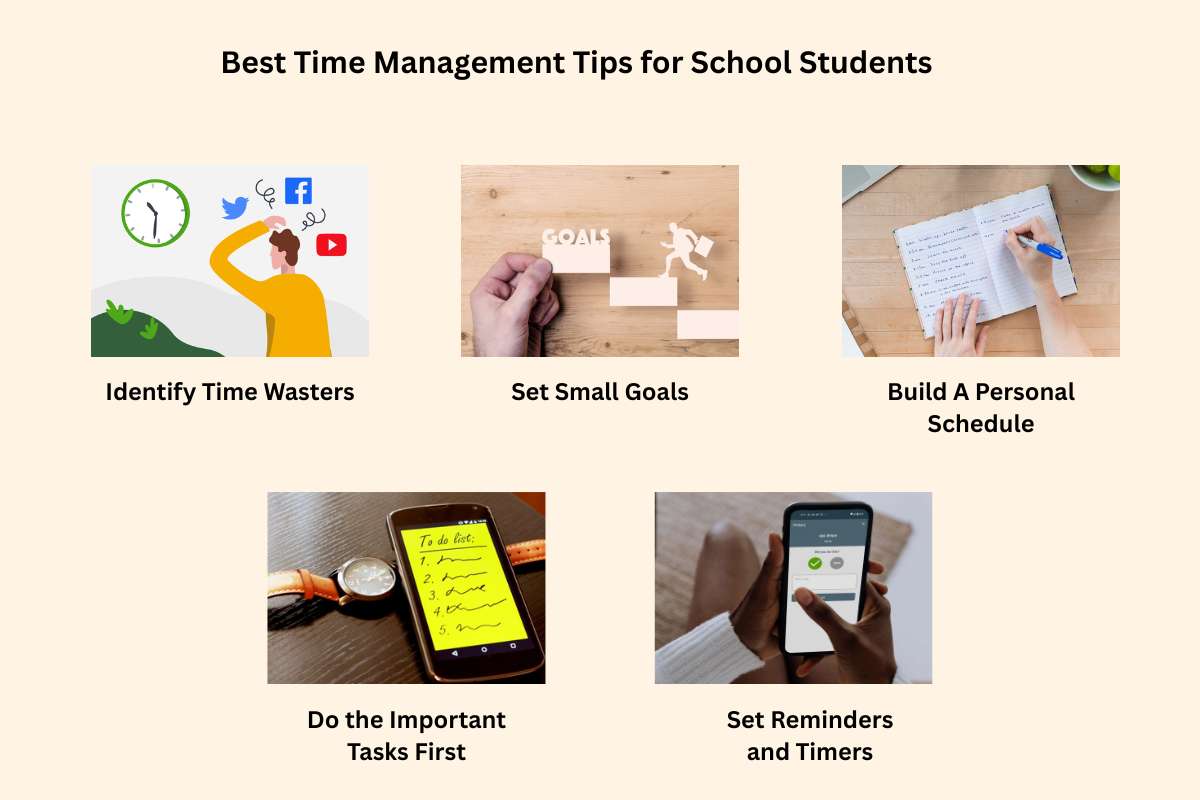
Best Time Management Tips for School Students
1. Identify Time Wasters
One of the biggest reasons for poor time management is the amount of distractions that are around you. It becomes easy to get distracted. So, it is important to identify the things that draw your attention away from assignments and studies. Do you have a habit of browsing the web or scrolling on social media? No matter what the cause of distraction is, set a goal to not engage with it during your study time.
2. Set Small Goals
Important examinations and large projects can often be overwhelming. It leads to students procrastinating, which in turn leads to anxiety as the deadline approaches. To tackle this, you can start with small tasks and items. Break down the project into smaller tasks. Focus on one task at a single time, and before you know it, you will have climbed the hill.
3. Build A Personal Schedule
Each individual’s daily life and habits are different. Hence, it is important to build a schedule that is tailored to your daily routine. Think about how you spend your day. When are you the most energized? If you feel productive in the morning, then aim to do most tasks during that time period. It is also important not to force yourself to do work when you are genuinely not up for it. Breaks are important too!
4. Do the Important Tasks First
This is one of the time management tips that is bound to make your life easier. It is plain and simple. Prioritize your tasks. Which assignment or project requires urgent attention? Which requires the most time? If you leave important tasks like studying for an exam till the end, you will quickly start feeling stressed. This technique is also known as the ‘Eat the Frog’ technique, created by Brian Tracy.
5. Set Reminders and Timers
It is important to give yourself reminders that can help you stay on track. Use reminders to stay updated on deadlines. When studying for an exam, delegate a specific amount of time for learning. You can do this using the Pomodoro technique. This technique breaks down work in 25-minute windows, allowing for short breaks.
Also Read: Identifying, Realising, and Breaking the Chain of Bad Habits for Students
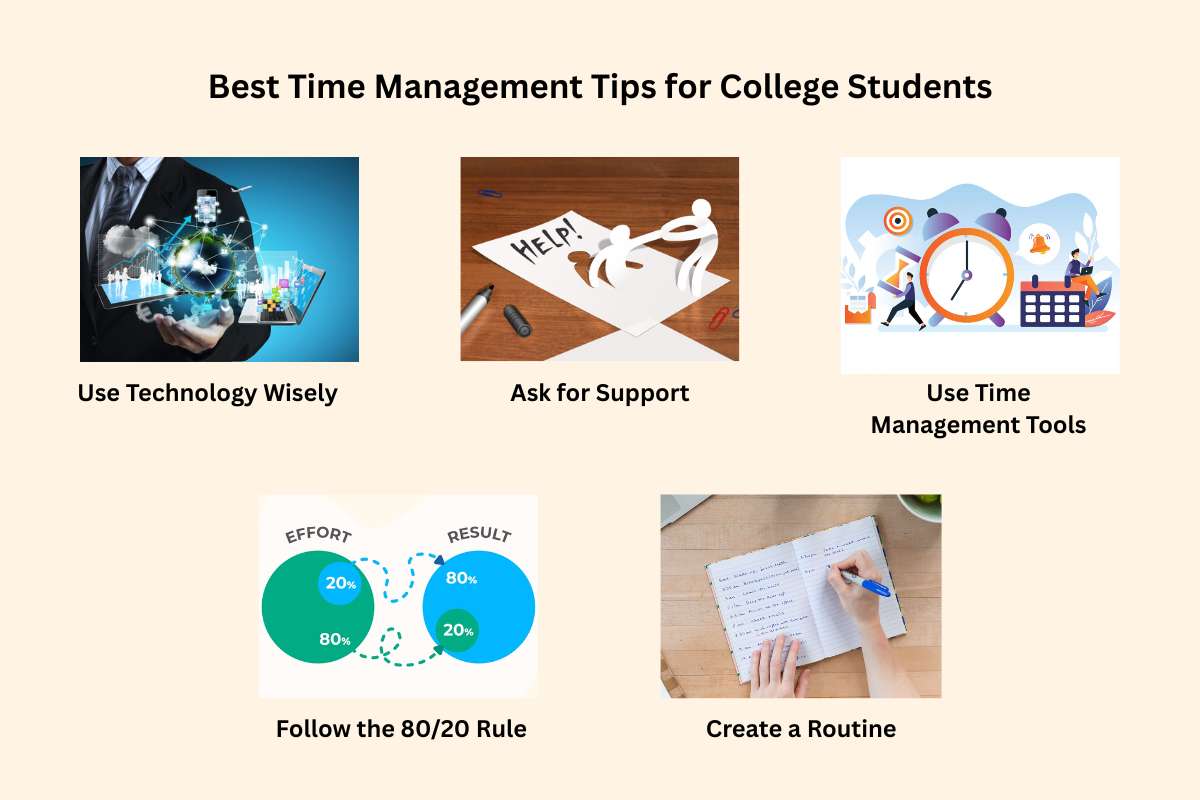
Best Time Management Tips for College Students
6. Use Technology Wisely
Most college assignments require extensive research. Today, there are many available sources online. And while technology is a valuable tool for students, it can also lead them into a trap. Being online can serve as a constant temptation for students to browse social media. Constantly receiving notifications is bound to leave you feeling distracted. Hence, one of the most important time management tips is to monitor your use of technology.
7. Ask for Support
If you are struggling with a project, then do not hesitate to approach your professor or advisor. Getting early clarity on what needs to be done will not leave you feeling stuck. If you are doing a group project, then make sure to keep each other in check. If you are studying for an exam, ask your roommate to give you time and space to focus.
8. Use Time Management Tools
There are many tools online that can help you manage various assignments. There are physical and digital planners that make staying organised easier. Planners can help keep track of longer deadlines like upcoming exams. There are scheduling tools that help you organize your day. You use digital note-taking tools during classes to help you stay on track.
9. Follow the 80/20 Rule
The 80/20 rule suggests that 20% of efforts produce 80% of results. It was created by Vilfredo Pareto and is also known as the Pareto technique. As a student, this means identifying which subjects or assignments contribute most to their grades or personal growth. Focusing energy on these key areas leads to better outcomes. You can also avoid any wasted effort on low-impact activities. This principle helps maximize academic results with less stress.
10. Create a Routine
Try to set a consistent routine. It is similar to building a personal schedule. If you are having trouble studying due to noises in your house, then try to allot study time to when it is quietest. Remember, the key to creating an effective routine is consistency.
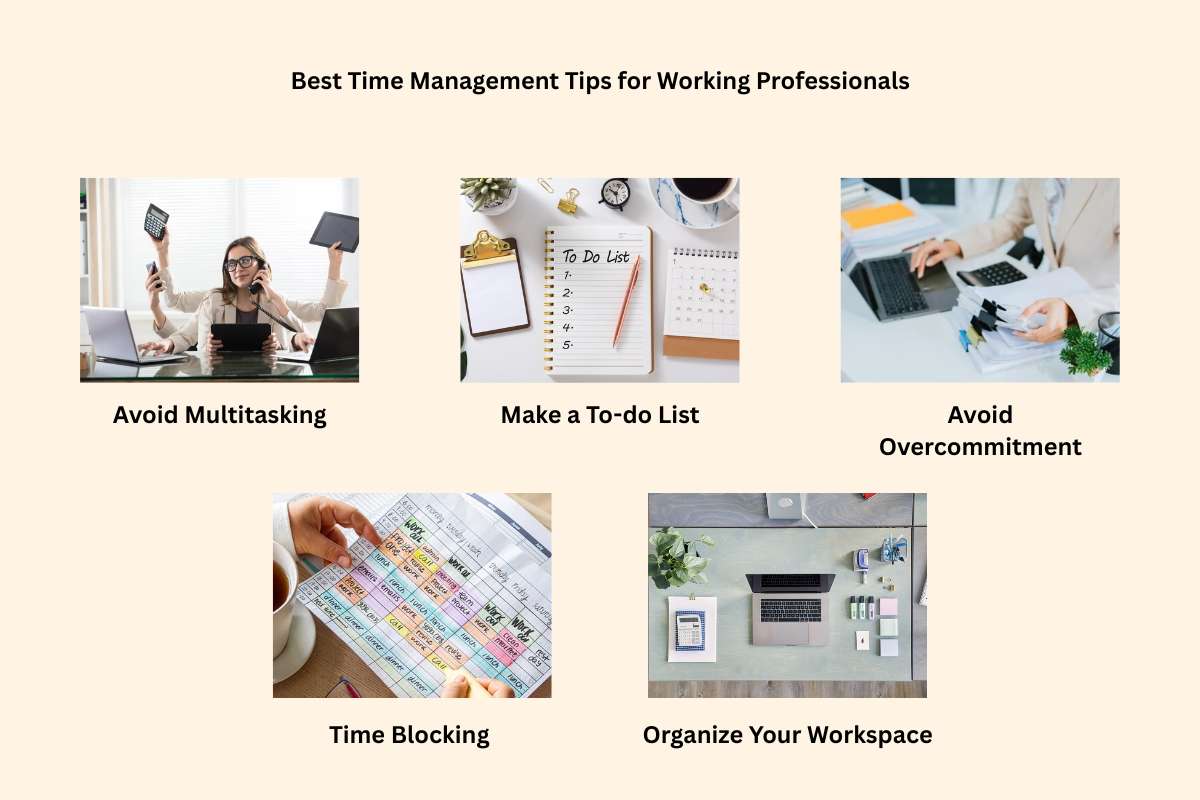
Best Time Management Tips for Working Professionals
11. Avoid Multitasking
In a professional setting, it is important to avoid multitasking. Doing two things at the same time will divert your attention in two directions. This means that you can end up struggling to do both things properly. Give one single task your full attention, then move on to the next thing. It might seem counterproductive, but that is why it is one of the best time management tips
12. Make a To-do List
Creating a to-do list will help you plan ahead. This is a major step in staying organised. Plan your day according to the deadline and when you need to complete your tasks. This gives you a set plan for the day along with a list of priorities. What’s more, the dopamine rush from crossing items off the list is sure to boost your productivity.
13. Avoid Overcommitment
Saying yes to every request can quickly lead to burnout and poor work quality. Professionals should evaluate new commitments based on priority and feasibility. Learning to say “no” when necessary ensures that their energy is spent on meaningful, high-impact tasks. This approach helps maintain work-life balance and allows professionals to focus on their goals.
14. Time Blocking
Time blocking involves dividing the workday into specific segments dedicated to particular tasks. For example, mornings can be reserved for deep, focused work, while afternoons may be for meetings or administrative tasks. This method reduces interruptions and ensures every task receives the attention it deserves. Over time, it increases efficiency and provides a structured workday.
15. Organize Your Workspace
The environment that you work in can massively affect your productivity. The smallest type of work environment is the space you work in. A clutter-free workspace boosts focus, efficiency, and creativity. This can apply to your digital workspace as well. Organize your files and folders neatly. This can help you find any document you need without wasting time searching for it.
Best Time Management Tips for Business Owners
16. Establish Boundaries Between Work and Personal Life
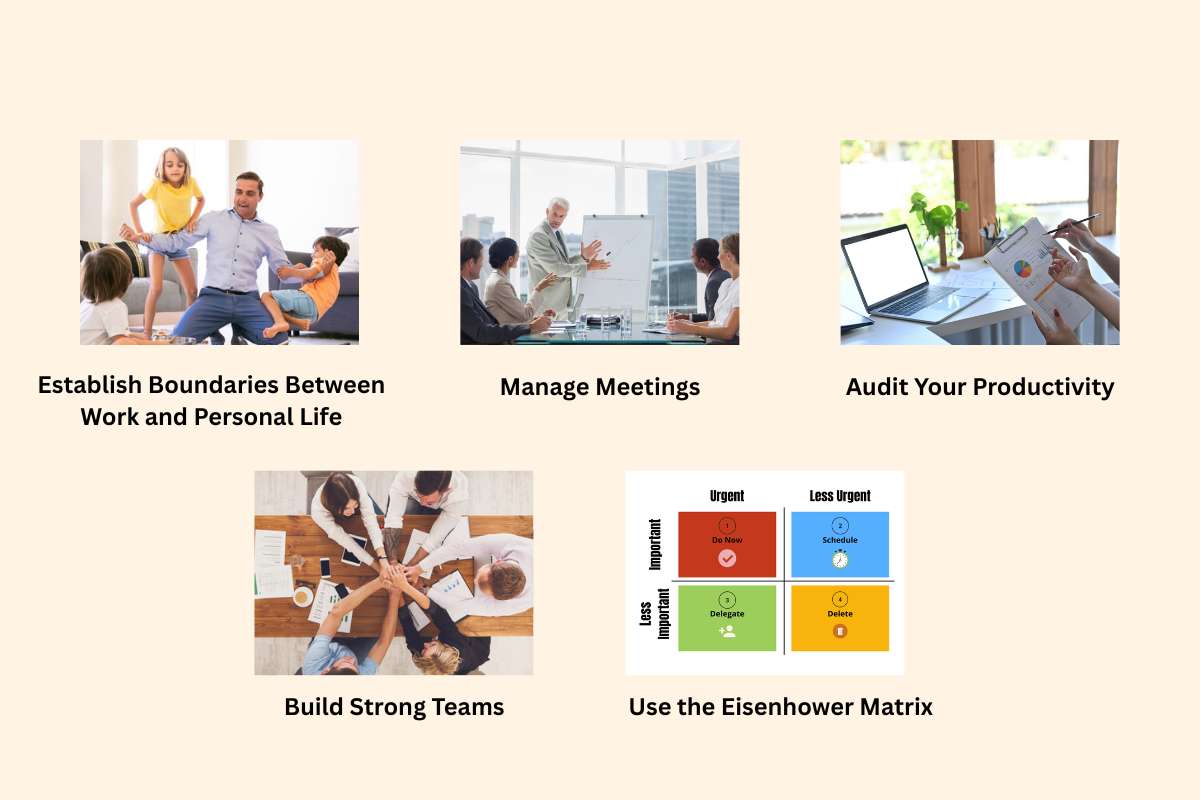
Owning a business often blurs the line between professional and personal time. Setting firm boundaries, such as defined working hours or no-work weekends, helps maintain balance. This practice prevents burnout, ensures quality rest time, and preserves long-term productivity. Business owners who respect boundaries model healthy work habits for their teams. They can do this while keeping their energy levels sustainable.
17. Manage Meetings
For business owners, meetings can be both essential and time-consuming. To maximize value, meetings should have a clear agenda, a set time limit, and only include necessary participants. This reduces wasted hours and keeps discussions action-oriented. By streamlining communication, you can focus more on operations, innovation, and client relationships. You can do this while still keeping teams aligned.
18. Build Strong Teams
A successful business owner cannot handle everything alone. Hiring capable employees ensures smoother operations. It reduces the owner for daily tasks. By trusting and training teams, you can save valuable time to focus on leadership, innovation, and expansion strategies. A strong team is the backbone of long-term business efficiency and growth.
19. Use the Eisenhower Matrix
The Eisenhower Matrix can help you decide which tasks are important based on urgency and importance. It was founded by Dwight D. Eisenhower. It allows you to break down your to-do list into four quadrants: Do, Schedule, Delegate, and Delete. This is one of the best time management tips for making a to-do list.
20. Audit Your Productivity
It is important to assess your productivity, especially as a business owner. Audit your productivity on a weekly or monthly basis. Identify obstacles that lead to delays in meeting deadlines. Use technology to automate mundane tasks. A timely review can help you analyze whether implementing time management tips is beneficial or not. There are many more little ways in which you can improve your time management. But can using these techniques be truly beneficial? What are the actual benefits of time management
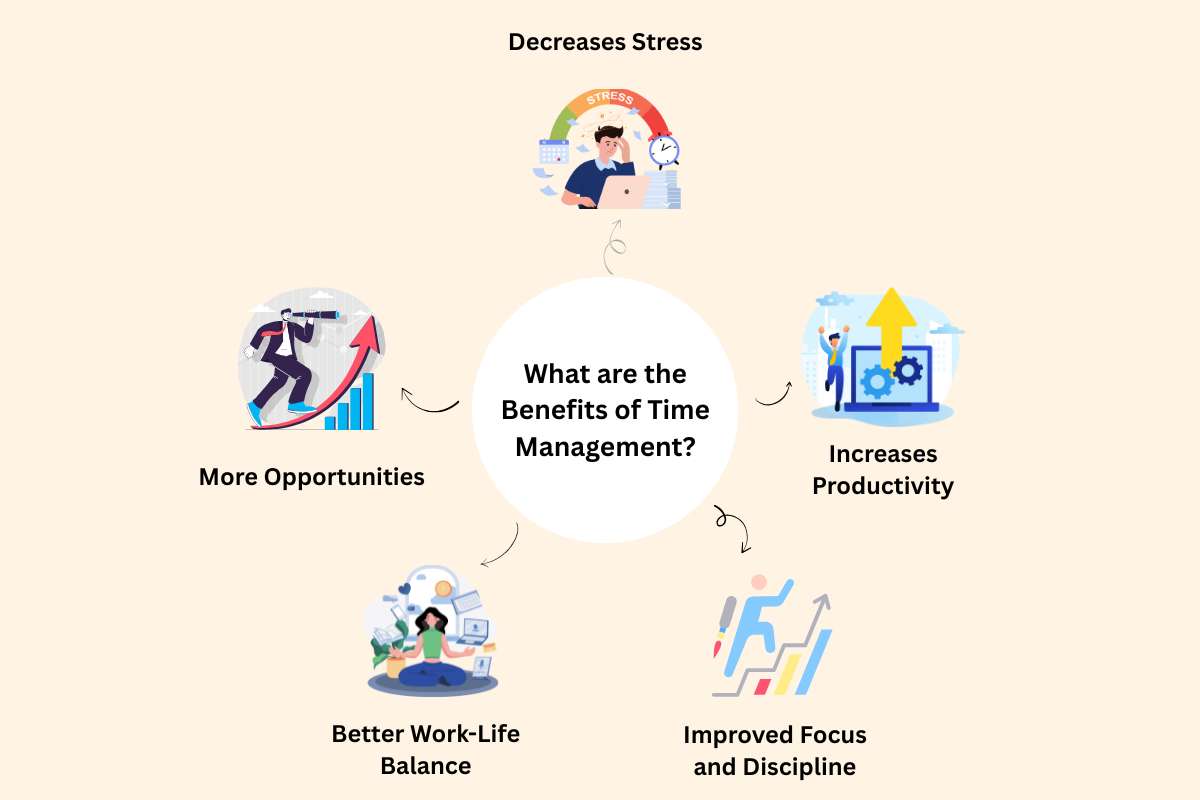
What are the Benefits of Time Management?
1. Decreases Stress:
One of the main benefits is the reduction of stress in daily life. When you are overwhelmed with deadlines, it is very easy to be stressed. Having clear methods to manage time means you won’t fall behind on your tasks.
2. Increases Productivity:
Time management allows you to get more done in less time. By prioritizing tasks and eliminating distractions, you work smarter rather than harder. Increased productivity boosts performance at school, college, and work. It also provides a sense of accomplishment and control over your schedule.
3. Improved Focus and Discipline:
Using time management tips can increase concentration. This is done by ensuring tasks are completed without unnecessary distractions. Structured routines promote discipline, making it easier to stick to goals. Over time, this sharpens focus and boosts efficiency.
4. Better Work-Life Balance:
You create space for both professional and personal activities. By prioritizing essential work and scheduling leisure, you prevent burnout. And maintain a healthier lifestyle.
5. More Opportunities:
Managing time effectively opens the door to new opportunities. By consistently meeting deadlines and staying organized, you build trust and credibility. This reliability attracts teachers, employers, or clients. They can also recommend you for leadership roles, promotions, or collaborations.
Conclusion:
In the end, using these time management tips creates balance and work with focus and intent. By applying simple time management tips, you can accomplish more without feeling overwhelmed. Ultimately, it’s about being purposeful with every task and decision. Start small, stay consistent, and you’ll soon see how the right approach to time can transform your daily routine and long-term success.