
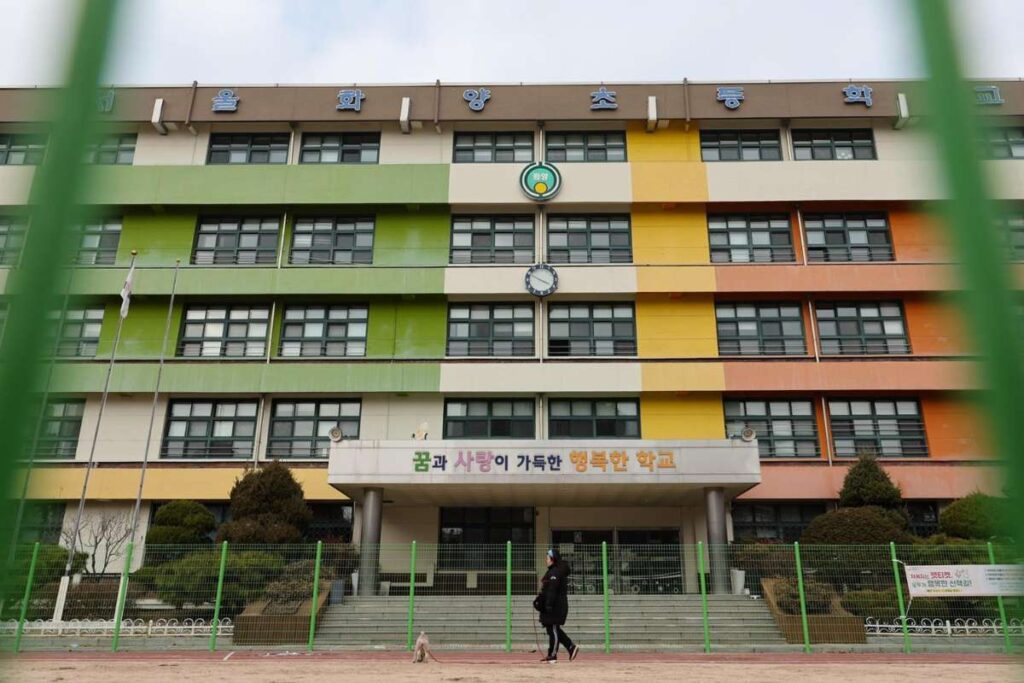
South Korea’s education system is undergoing a major structural shift as thousands of institutions shut down due to declining student enrollment. New data shows that more than 4,000 elementary, middle, and high schools nationwide have closed over time, a trend often described as south korea school close, reflecting long‑term changes in population patterns and school‑age demographics. These closures are reshaping how education is delivered, particularly for students and teachers in smaller cities and rural communities.
A total of 4,008 schools have closed so far. Elementary schools make up the largest share, with 3,674 closures. Middle schools account for 264 closures, while 70 high schools have also shut their doors. These figures highlight how falling birth rates and shrinking local populations are affecting the foundation of the school system.
Over the past five years, 158 institutions have shut down under the trend of south korea school close. Projections indicate that another 107 schools could close within the next five years if current enrollment declines persist. Education officials warn the pace of closures may accelerate in regions where student numbers fall more sharply than expected.
Regional Patterns and Long Term Impact
The pattern of south korea school close is not evenly distributed across the country, with provinces outside major metropolitan centers facing the greatest pressure. North Jeolla Province is projected to experience the highest number of future closures, with 16 schools expected to shut down. South Jeolla Province follows with 15, while Gyeonggi Province and South Chungcheong Province are also anticipated to see notable declines.
The regional differences tied to south korea school close reflect broader shifts in where families live and raise children. Urban centers continue to attract younger populations, while many rural areas struggle to maintain enough students to keep local schools operating. For students, this often results in longer commutes and fewer nearby learning options, while for teachers it can mean reassignment, class consolidation, or reduced teaching positions.
Among the schools that have already closed, many remain unused. Out of the 4,008 closed schools, 376 are currently not being utilized. Of these, 266 have been left unused for more than 10 years. Another 82 school buildings have remained abandoned for over 30 years. These empty spaces raise questions about how former school facilities could be repurposed for learning, training, or community education programs.
Changes Inside Classrooms and Teaching Roles
Falling student numbers are also affecting teaching staff and classroom structures. Earlier this year, the Education Ministry announced a reduction in teaching positions for the 2025 academic year. A total of 2,232 teaching posts were cut nationwide. Elementary schools saw a reduction of 1,289 teachers, while middle schools experienced a decrease of 1,700 positions.
To adapt, local education offices have introduced short term measures to keep schools running efficiently. Some schools have reduced class sizes to as few as 10 to 15 students. Others have adjusted the number of classes offered, combining grades or subjects where possible. These steps aim to maintain learning quality while adjusting to lower enrollment.
For teachers, smaller class sizes can offer more individualized instruction, but they also come with challenges. Limited peer interaction for students, fewer extracurricular options, and reduced resources can affect the overall learning environment. Teachers may also face uncertainty as staffing needs continue to change.
For students, the closures mark a shift in the traditional school experience. Access to nearby schools is becoming less common in some regions, and educational planning now requires greater flexibility from families and educators alike.
The scale of south korea school close highlights how demographic change is reshaping education across the nation. With student numbers continuing to decline, educators and administrators are focused on maintaining stable learning environments, supporting teachers through transitions, and finding meaningful uses for former school spaces. These shifts will influence how students learn and how teachers work for years to come.
Sources: