

We all love a success story, especially when it involves the collective power of the human mind. Across the globe, some communities have turned learning into a way of life, building schools that feel like second homes and nurturing a deep curiosity in every child. By examining how these nations solve problems and generate ideas, we learn what it means to be the smartest country in the world.
It isn’t just about high scores on a test or a list of famous inventions. It is about how a society supports its people, ensuring everyone has the tools to think clearly and dream big. The journey to becoming the smartest country in the world needs persistence and care. Exploring these leaders helps us understand how we can all grow a little wiser together.
Which 10 Nations Lead Global Intelligence Based On 2025–2026 Metrics?
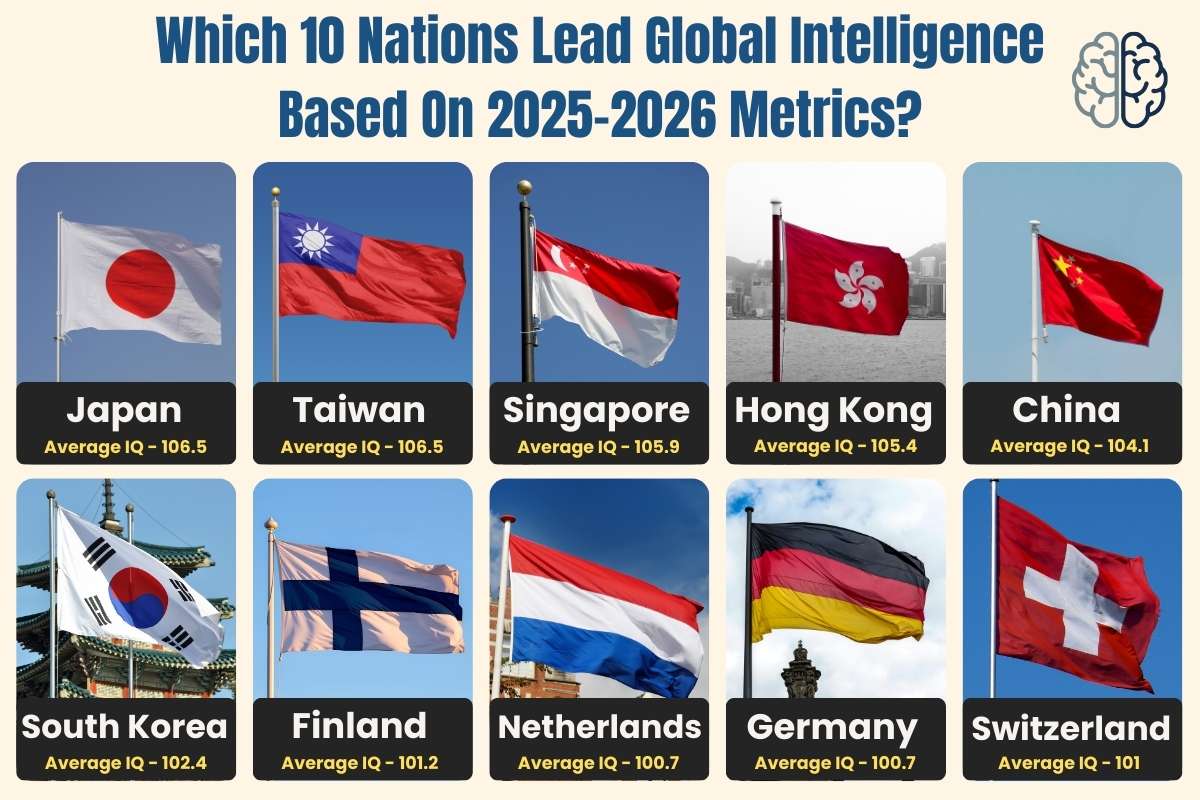
These rankings draw from recent 2025-2026 data aggregating average IQ, PISA scores, tertiary education rates, and innovation indices such as patents per capita.
Here’s what they are:
- Average IQ: Standardized cognitive test score (global mean 100, SD 15) measuring reasoning/problem-solving.
- PISA scores: 15-year-oldss proficiency in math/science/reading (OECD avg. 500); >500 = advanced.
- Tertiary rates: percentage of 25-64 yr-olds with post-secondary degrees, indicating a skilled workforce.
- Patents per capita: Invention filings per million residents, proxy for innovation output.
To curate this list, we took data from ITIF, WIPO, and OECD. And based on the data, these are the 10 smartest countries in the world according to Future Education Magazine:
| Rank | Country | Average IQ | Average PISA Score |
|---|---|---|---|
| 1 | Japan | 106.5 | 536 |
| 2 | Taiwan | 106.5 | ~540 |
| 3 | Singapore | 105.9 | 560 |
| 4 | Hong Kong | 105.4 | 520 |
| 5 | China | 104.1 | 579 |
| 6 | South Korea | 102.4 | 527 |
| 7 | Finland | 101.2 | 490 |
| 8 | Netherlands | 100.7 | 503 |
| 9 | Germany | 100.7 | 498 |
| 10 | Switzerland | ~101 | 508 |
1. Japan

| Metric | Value |
|---|---|
| Average IQ | 106.48 |
| Tertiary Attainment (25-64 yrs) | 57% |
| Patents per Million Pop | 1,913 |
| PISA Score (Avg) | 533 |
Japan consistently earns its place as the smartest country in the world through a beautiful blend of discipline and curiosity. Children learn the value of hard work and respect from a very young age, creating a solid foundation for lifelong learning. This culture of constant improvement drives their world-class technology and engineering sectors. Japan shows how a dedicated society can lead the global pack.
Global Impact:
- Dominates production/export complexity and PCT patents, powering global manufacturing (e.g., Toyota’s hybrid vehicles revolutionized automotive efficiency, reducing worldwide emissions).
- Leads in robotics and electronics (e.g., Sony’s innovations in consumer tech such as the Walkman and PlayStation shaped entertainment industries).
- High R&D drives semiconductors (e.g., key supplier for global chips via companies like Toshiba).
2. Taiwan
| Metric | Value |
|---|---|
| Average IQ | 106.47 |
| Tertiary Attainment | ~70% (high est.) |
| Patents per Million Pop | ~1,700 (est. strong) |
| PISA Score (Avg) | 533 |
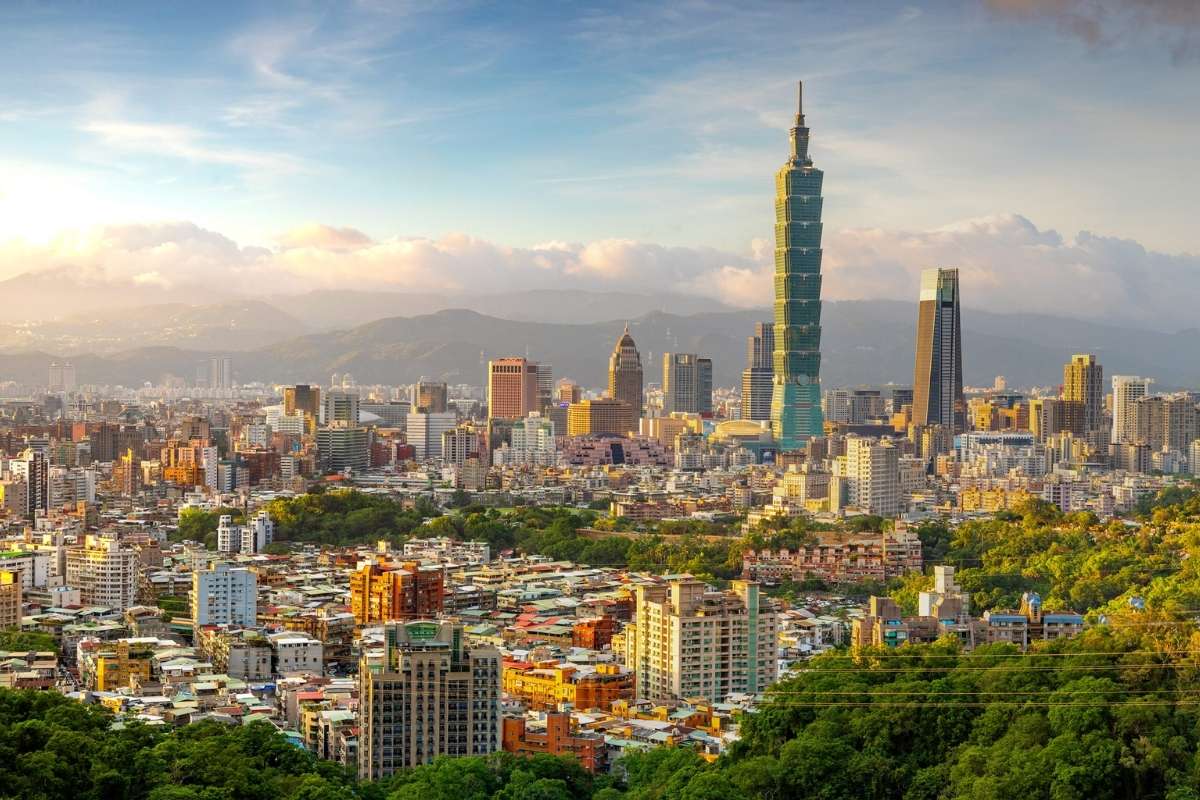
Taiwan stands as a true intellectual powerhouse, especially in the world of science and high-tech manufacturing. The nation invests heavily in its people, ensuring that students have access to top-tier resources and specialized training. Families prioritize education as the key to a bright future, which fuels a massive drive for innovation. This commitment to brainpower has turned the island into a vital hub for the global technology industry.
Global Impact:
- Excels in semiconductor manufacturing (e.g., TSMC produces 90%+ of advanced chips, enabling AI, smartphones, and computing worldwide).
- Strong in high-tech exports and STEM graduates (e.g., Foxconn’s assembly powers Apple products, boosting global supply chains).
- Leads in location quotients for tech industries, fueling U.S. and global tech ecosystems.
3. Singapore

| Metric | Value |
|---|---|
| Average IQ | 105.89 |
| Tertiary Attainment | 60%+ (high) |
| Patents per Million Pop | ~2,000 (est. top tier) |
| PISA Score (Avg) | 560 |
Singapore builds smart minds by treating education like a national treasure. The government designs every part of the school system to be efficient and forward-thinking, emphasizing deep understanding over simple memorization. Teachers receive incredible support and training to help every child reach their full potential. This small city-state proves that size does not matter when you have a clear vision for intellectual excellence.
Global Impact:
- Tops unicorn valuation, high-tech manufacturing, and GitHub commits (e.g., fintech hub with Grab, Southeast Asia’s Uber equivalent serving 700M users).
- Leads in 14 GII indicators, such as venture capital (e.g., Sea Limited’s Shopee dominates e-commerce in emerging markets).
- Global leader in the digital economy (e.g., port automation handles 20% of world shipping).
4. Hong Kong

| Metric | Value |
|---|---|
| Average IQ | 105.37 |
| Tertiary Attainment | 50%+ (enroll 100%) |
| Patents per Million Pop | ~1 000 (est.) |
| PISA Score (Avg) | 520 |
Hong Kong thrives on a unique mix of traditional values and a fast-paced, global outlook. Students here face an intense and competitive environment that prepares them for the high-pressure worlds of finance and trade. This focus on excellence produces a workforce that is incredibly sharp and adaptable. By merging Eastern dedication with Western educational styles, it remains a top contender for the title of the smartest country in the world.
Global Impact:
- Ranks 1st in high-tech imports and market capitalization (e.g., financial gateway for China’s tech IPOs like Alibaba, channeling billions in investments).
- Key in knowledge-intensive employment (e.g., biotech cluster attracts global R&D, advancing drug discoveries).
- Bridges East-West trade (e.g., logistics innovations speed global supply chains).
Also Read: These are the 10 Most Educated Countries in the World that Change Lives on a National Scale
5. China

| Metric | Value |
|---|---|
| Average IQ | 104.10 (up to 107 IIT) |
| Tertiary Attainment | ~45-50% |
| Patents per Million Pop | ~1,200 |
| PISA Score (Avg) | 535 (select regions) |
China is currently undergoing a massive transformation by expanding free education and modernizing its classrooms. The nation has built the largest school system on the planet, focusing heavily on math, science, and the arts. Recent reforms aim to make high-quality learning accessible to everyone, regardless of where they live. This huge investment in human potential is quickly turning the country into a global leader in new ideas and scientific discovery.
Global Impact:
- Leads in trademarks, utility models, industrial designs, and knowledge/technology outputs (e.g., Huawei’s 5G tech deployed in 170+ countries, accelerating global connectivity).
- Tops high-tech exports and creative goods (e.g., BYD electric vehicles outsell Tesla in some markets, pushing EV adoption).
- Massive R&D (e.g., AI firms like Baidu power facial recognition used worldwide).
6. South Korea

| Metric | Value |
|---|---|
| Average IQ | 102.35 |
| Tertiary Attainment (25-64 yrs) | 51% |
| Patents per Million Pop | 3,456 |
| PISA Score (Avg) | 527 |
South Korea fuels its growth through an incredible passion for learning, often called education fever. And due to this fever, South Korea remains an example of the smartest country in the world. Families and the government work hand-in-hand to ensure students have every possible resource to succeed. This intense focus has led to nearly universal high school graduation and a population that excels in math and science.
Global Impact:
- Leads R&D by business and researchers in the private sector (e.g., Samsung’s semiconductors and smartphones hold 20%+ global market share).
- Dominates patents globally (e.g., LG’s OLED displays revolutionized TVs and devices).
- Entertainment/tech fusion (e.g., K-pop/BTS via HYBE generates $5B+ economic impact).
7. Finland

| Metric | Value |
|---|---|
| Average IQ | 101.20 |
| Tertiary Attainment (25-64 yrs) | 44% |
| Patents per Million Pop | ~800 |
| PISA Score (Avg) | 490 |
Finland takes a gentle but highly effective approach to building a clever society. The school system prioritizes equality and play, ensuring that every child receives the same high-quality care regardless of their background. Teachers here must earn master’s degrees, treating their work as a highly respected craft. This focus on well-being and critical thinking rather than constant testing proves that a happy nation can also be the smartest.
Global Impact:
- Excels in university-industry collaboration (e.g., Nokia’s mobile tech pioneered smartphones, influencing modern devices).
- Leads low-carbon energy use (e.g., renewable innovations like Vaisala’s weather tech aid global climate monitoring).
- High efficiency in outputs (e.g., Supercell’s games like Clash of Clans generate billions).
8. Netherlands

| Metric | Value |
|---|---|
| Average IQ | 100.74 |
| Tertiary Attainment (25-64 yrs) | 49% |
| Patents per Million Pop | ~1,200 |
| PISA Score (Avg) | 503 |
The Netherlands stands out by encouraging students to find their own unique paths early in life. The Dutch system offers a variety of school types that match different talents, from creative arts to complex engineering. Most citizens speak multiple languages and possess a very open, international mindset. This flexibility and curiosity help the Netherlands consistently rank as a top contender for the smartest country in the world.
Global Impact:
- Strong in creative outputs and efficiency (e.g., ASML’s lithography machines produce 90% of the world’s advanced chips).
- Leads regulatory quality (e.g., Philips’ health tech like MRI scanners improves global diagnostics).
- Agri-tech (e.g., innovations in vertical farming boost food security).
9. Germany

| Metric | Value |
|---|---|
| Average IQ | 100.74 |
| Tertiary Attainment (25-64 yrs) | 32% (rising to 40%) |
| Patents per Million Pop | 1,000+ |
| PISA Score (Avg) | 498 |
Germany might be the smartest country in the world for its dual education system, which perfectly blends classroom theory with hands-on work experience. Many young people enter apprenticeships where they learn high-level technical skills directly from master craftsmen and engineers. This practical approach ensures the workforce stays sharp and ready to lead in manufacturing and green energy. Germany secures its reputation by valuing both the book and the tool.
Global Impact:
- High efficiency in innovation outputs (e.g., Volkswagen/Audi’s EVs and Siemens’ automation power Industry 4.0 worldwide).
- Leads in engineering (e.g., BioNTech’s mRNA vaccine with Pfizer saved millions during COVID).
- Mechanical engineering (e.g., Bosch sensors in 80% of cars).
10. Switzerland

| Metric | Value |
|---|---|
| Average IQ | 101.07 |
| Tertiary Attainment (25-64 yrs) | 46% |
| Patents per Million Pop | 3,500+ (world-leading) |
| PISA Score (Avg) | 508 |
Switzerland reaches the top by investing more in research and new ideas than almost any other nation. The country hosts some of the best universities on the planet, where students from all over the globe collaborate on scientific breakthroughs. Swiss culture prizes precision and quality, which shows in everything from their famous watches to their advanced medical technology.
Global Impact:
- #1 in GII 2025 for 15th year, tops creative outputs (e.g., Novartis/ Roche drugs treat global diseases like cancer).
- Leads PCT patents and IP receipts (e.g., Nestlé’s food tech innovations feed billions).
- Precision manufacturing (e.g., Swatch/Rolex precision influences luxury and tech watches).
Also Read: 10 Best Countries to Study Technology: A Guide to Global Education
10 Lessons for Nations from the Smartest Countries in the World.
When we look at the smartest country in the world, we can find lessons. Here are 10 things every nation can learn from these 10 countries:
- Rigorous STEM education: East Asian countries like Japan and South Korea prioritize math/science drills for top PISA scores.
- Elite teacher training: Finland requires master’s degrees and grants teachers full autonomy.
- Industry-academia links: Switzerland and Germany fund joint R&D for rapid commercialization.
- High R&D investment: South Korea spends 4.9% GDP on innovation, leading to patents.
- Centralized digital plans: Singapore’s GovTech drives nationwide tech adoption.
- Public-private tech ties: China partners with Alibaba for efficient e-government services.
- Event-driven innovation: Japan used the Olympics to accelerate smart infrastructure.
- Practical bilingual skills: The Netherlands teaches real-world application and languages.
- Equity-focused systems: Finland ensures access without high-stakes testing.
- Citizen co-creation: South Korea engages the public to rebuild policy trust.
Conclusion:
Being the smartest country in the world is about more than just high grades. It reflects how much a nation values the curiosity and growth of its people. Whether through discipline, hands-on training, or a focus on well-being, these leaders prove there are many paths to brilliance.
As our world changes, being the smartest country in the world will require more than just technical skill. It will demand creativity and the ability to adapt. By learning from these diverse nations, we can all find better ways to support the bright minds.
FAQs
1. Does a high IQ score mean a country is the smartest?
While IQ scores provide a helpful snapshot of problem-solving skills, they don’t tell the whole story. Many researchers argue that true intelligence also includes creativity, emotional strength, and how effectively a society uses its knowledge to improve daily life for everyone.
2. Why do East Asian countries often top these rankings?
Nations such as Japan and Singapore often lead due to a deep cultural respect for learning and significant government investment in schools. Their systems emphasize persistence and a strong foundation in STEM subjects, helping students excel in global academic comparisons.
3. Can a country’s ranking change over time?
Yes, rankings shift as nations update their teaching methods or invest more in technology and healthcare. For example, countries that prioritize early childhood nutrition and modern teacher training often see their standing as the smartest country in the world rise.