
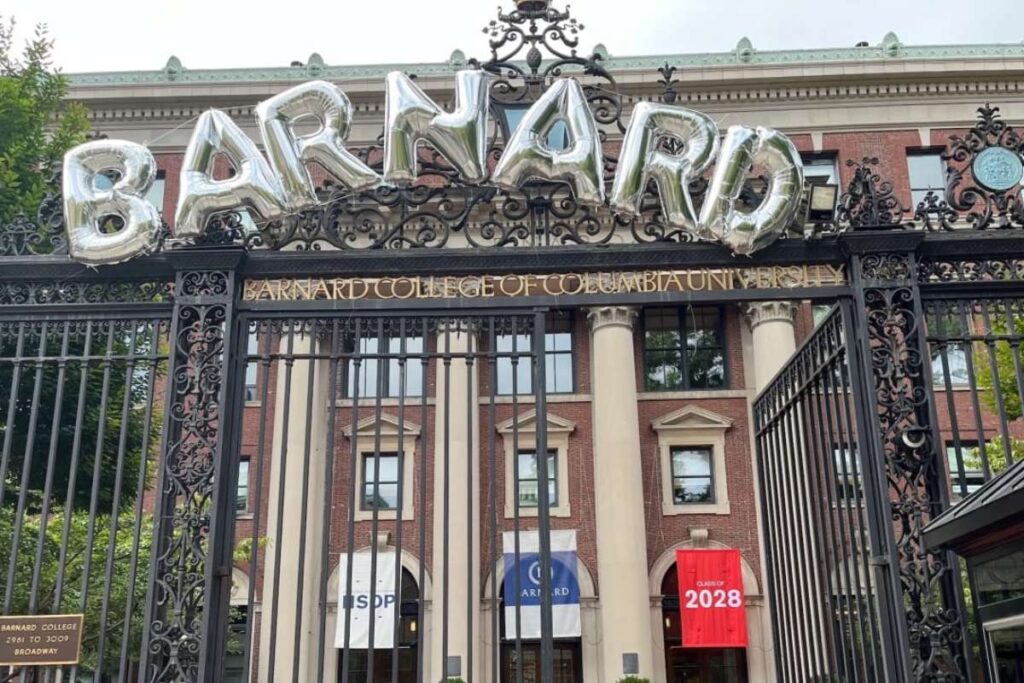
Barnard College, a prestigious women’s institution affiliated with Columbia University, has reached a comprehensive settlement in a lawsuit brought by Jewish and Israeli students who alleged the college failed to address a hostile campus climate following the October 7 Hamas attack on Israel.
Filed in February 2024 with support from advocacy groups Students Against Antisemitism and the StandWithUs Center for Legal Justice, the lawsuit accused Barnard of ignoring multiple incidents of intimidation and harassment targeting Jewish students. On July 7, 2025, the college agreed to a series of institutional reforms aimed at combating antisemitism and restoring safety on campus.
Central to the agreement is the creation of a new Title VI coordinator role tasked with monitoring and addressing discrimination based on race, color, or national origin. The coordinator will produce annual reports on antisemitic incidents and oversee a revamped grievance system. Barnard has also committed to issuing policy statements to the entire campus community, clearly articulating a zero-tolerance stance on antisemitic behavior.
Stricter Campus Protest Rules and Political Boundaries
As part of the settlement, Barnard College has introduced new restrictions on-campus demonstrations. Protest organizers will now be required to follow more structured guidelines, including advance notice and limits on the time, place, and manner of assemblies. Face coverings or masks intended to conceal identities during protests are now banned.
In a move drawing national attention, Barnard also pledged not to meet with or endorse the Columbia University Apartheid Divest coalition, a pro-Palestinian student group calling for divestment from Israel. Additionally, the college’s endowment has been barred from supporting political movements or targeting foreign governments through financial means.
The reforms echo broader trends in higher education as universities nationwide confront growing scrutiny over antisemitism and student safety. Columbia, Harvard, and NYU have faced similar legal and public pressure, with federal investigations and even temporary funding freezes.
Barnard College Mixed Reactions from Campus and Beyond
The settlement has received praise from several corners. Lead attorney Marc Kasowitz hailed it as a “blueprint” for universities tackling campus antisemitism. Barnard College President Laura Ann Rosenbury emphasized the college’s dedication to fostering an inclusive academic environment, stating that these measures are “rooted in our values of equity, inclusion, and safety for all”.
However, the response hasn’t been universally positive. Some faculty members and student activists argue that the agreement may inadvertently suppress academic freedom and stifle legitimate political discourse. Barnard history professor Nara Milanich cautioned that equating criticism of Israel with antisemitism risks undermining critical thinking in academic spaces.
Alongside policy changes, Barnard also plans to expand its educational offerings. Beginning in Fall 2025, students will have free access to courses at the Jewish Theological Seminary, and mandatory training sessions on Title VI protections and antisemitism will be instituted college-wide.
As Barnard implements these sweeping reforms, its actions could set a national precedent—highlighting how American colleges are navigating the difficult balance between free expression and safeguarding vulnerable communities.
Sources:
https://apnews.com/article/barnard-college-israel-protests-lawsuit-409301bcb85e80876da2967da492ad83
https://www.nytimes.com/2025/07/07/nyregion/barnard-college-antisemitism-lawsuit.html