
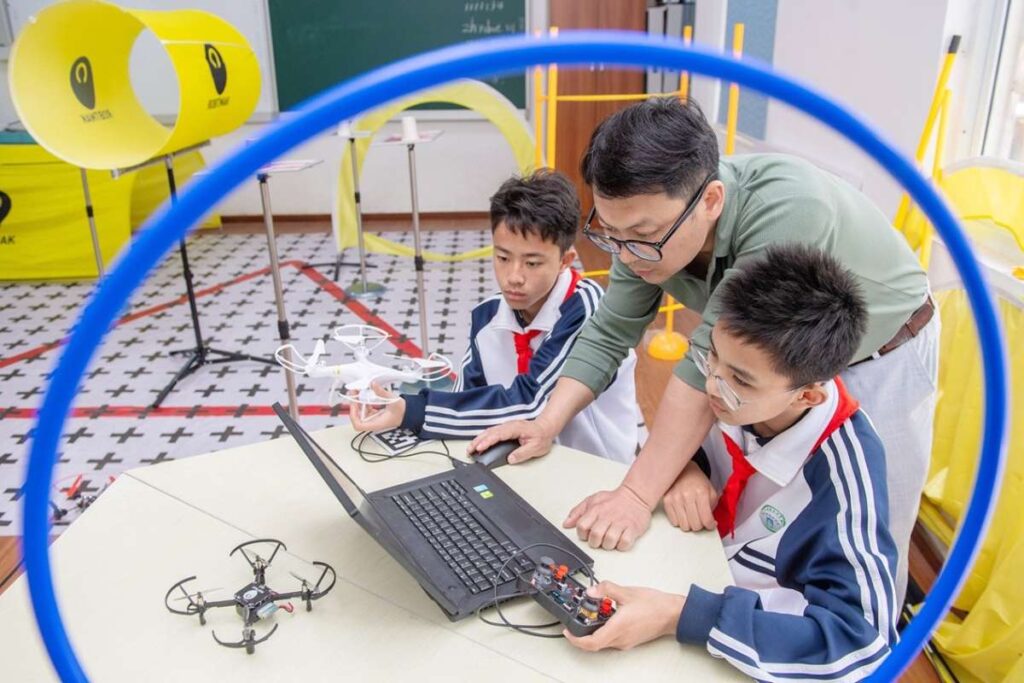
China is preparing to introduce artificial intelligence into classrooms at every level of education as part of the China AI education plan, which aims to build strong digital learning systems for students and teachers.
Early Introduction Of AI Learning In Schools
The China AI education plan focuses on creating a complete AI education system by 2030 that reaches students from primary school to higher education, while also extending learning opportunities to the wider public. The plan focuses on helping students understand and use AI from an early stage in their academic journey.
Schools will begin introducing dedicated AI courses while also including AI concepts across subjects. This means students may learn how AI connects with science, mathematics, and even creative subjects. The goal is to make AI a regular part of learning rather than a separate topic.
Teachers are also encouraged to expand AI learning beyond classroom lessons as part of the China AI education plan. After school activities and practical sessions, students will have more opportunities to explore how AI works in real situations. These activities can help students build confidence and develop problem-solving skills using technology.
The approach supports gradual learning. Younger students may begin with basic ideas, while older students will engage with more advanced concepts. This structure allows students to grow their knowledge step by step as they progress through school.
Universities Expand AI Across All Disciplines
At the university level, the China AI education plan takes a broader approach. AI will become part of the core curriculum for all students, not just those studying technology. Colleges are expected to create courses that combine AI with other fields such as business, healthcare, and engineering.
This interdisciplinary method helps students understand how AI applies to different careers. It also prepares them for workplaces where digital tools are becoming common. Universities will also review their academic programs and introduce new courses that match emerging industries and evolving job roles.
Alongside curriculum changes, AI will also support teaching methods. Digital tools will help teachers manage tasks such as grading assignments, answering student questions, and organizing coursework. This can reduce workload and allow teachers to focus more on teaching and student engagement.
AI systems may also be used to study classroom interactions. These tools can provide insights into how students learn and where they may need support. Teachers can use this information to adjust lessons and improve learning outcomes.
The China AI education plan also emphasizes updates to teacher training and certification. AI knowledge may become part of teacher qualification processes, ensuring that educators are prepared to use these tools effectively in classrooms.
Overall, the initiative reflects a growing focus on preparing students for a digital future. By integrating AI into education at every level, China aims to build skills that support learning, innovation, and adaptability in a technology-driven world.
Visit Future Education Magazine For The Most Recent Information.