
Key Points:
- Florida universities H1-B hiring is under review to prioritize local talent.
- Universities are encouraged to train domestic candidates.
- H1-B workers in STEM roles may see reduced hiring.
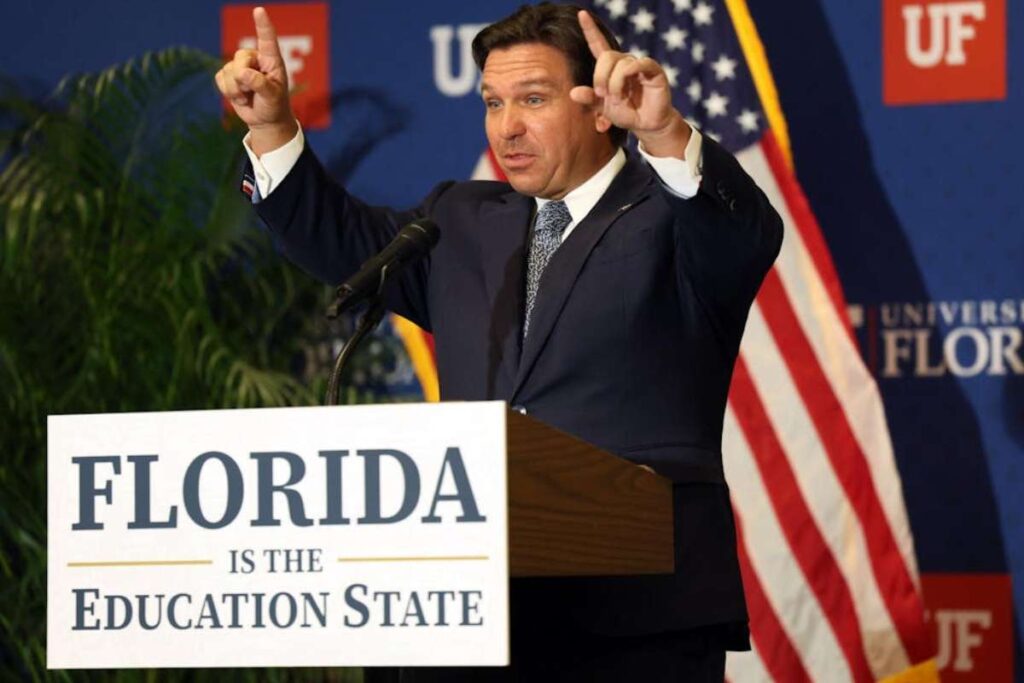
Florida Governor Ron DeSantis has directed the state’s Board of Governors to review Florida universities H1-B hiring. The move, announced Wednesday at a Tampa press conference, calls for limiting the hiring of foreign workers in academic and administrative positions across state institutions.
DeSantis stated that universities should focus on developing local talent and reducing reliance on foreign labor for specialized roles. The H1-B visa program allows skilled professionals from other countries to work temporarily in the U.S., commonly in education, healthcare, and technology.
Focus on Local Workforce Development
The governor’s announcement centers on encouraging universities to recruit and train domestic candidates for teaching and research roles. According to the U.S. Citizenship and Immigration Services (USCIS), as of June 2025, more than 7,200 H1-B visa holders were sponsored by Florida employers. Of these, about 677 were employed in the education sector, highlighting the scale of Florida universities H1-B hiring.
The University of Florida, University of Miami, and University of South Florida collectively accounted for more than 300 H1-B positions — mainly in research, medical, and technical departments. Many of these roles support fields like data analysis, engineering, and scientific research, which often require advanced expertise.
Education experts note that international professionals have long contributed to the state’s higher education system through research collaborations, academic innovation, and student mentoring. University administrators have also highlighted that specialized talent from abroad often fills skill gaps in programs with high global demand.
Data Highlights the Role of H1-B Workers in Education
Nationwide, H1-B visa holders play an important role in science, technology, engineering, and mathematics (STEM) education. According to federal data, thousands of foreign-born professors and researchers work in U.S. universities under the program, often leading studies in renewable energy, medical science, and computer engineering.
In Florida, universities have relied on H1-B specialists to advance programs in medicine, biotechnology, and data science. These professionals often work on federally funded projects, contributing to both research output and institutional rankings. This underscores the ongoing importance of Florida universities H1-B hiring in maintaining academic excellence.
While the review could lead to hiring changes, education officials emphasize that academic programs must continue meeting accreditation and research standards. Balancing workforce development with academic excellence will be a key focus in the coming months.
Next Steps for Florida Universities
The Board of Governors will examine employment data and assess how changes in Florida universities H1-B hiring could affect operations. Institutions may also increase partnerships with local colleges to build stronger pathways for students into teaching and research careers.
State universities could look to expand graduate assistantships, mentorship programs, and teacher training initiatives to cultivate more in-state talent. These efforts align with broader goals of making Florida’s higher education system more self-sustaining and responsive to local workforce needs.
Education observers say that as the review progresses, universities will need to balance the development of homegrown expertise with maintaining their competitiveness in research and innovation. The results of the Board’s assessment are expected to shape how Florida’s universities approach recruitment, talent development, and international collaboration in the future.
Visit Future Education Magazine for The Most Recent Information.