

Have you ever watched someone fail, smile, and try again, and wondered what gives them the strength? That quiet spark is a manifestation of a growth mindset at work. It shows up in small moments, like choosing practice over perfection or curiosity over fear. It feels real because we’ve all faced setbacks that asked us to decide: do we stop here, or do we take one more step?
When you look at real growth mindset examples, you see people choosing courage over comfort and learning over fear. You might notice these examples in a friend who keeps practicing, a coworker who asks for feedback, or a student who tries again after a mistake. They show that growth is something anyone can build with small, steady choices.
This guide shares simple, relatable growth mindset examples that can help you understand how it works in daily life and how you can use it too.
What is a Growth Mindset?
A growth mindset is the belief that people can improve their skills through effort, patience, and steady learning. It teaches people to view mistakes as steps, not failures. This mindset helps them stay open to feedback because they see advice as a guide, not a judgment. When someone chooses this belief, they learn to value progress over perfection.
A growth mindset also helps people stay calm when challenges appear. It reminds them that their abilities are not fixed and can change over time with practice. Many people use this mindset to handle stress, build confidence, and try tasks they once avoided. Over time, these choices shape their habits and help them grow in school, at work, and in daily life.
People with a growth mindset also notice small wins that others ignore. These wins keep them motivated. They understand that learning is a long path with many twists, but each step matters. This simple belief opens new doors that stay closed to people with a fixed mindset.
Growth Mindset Examples to Improve Your Student and Professional Life
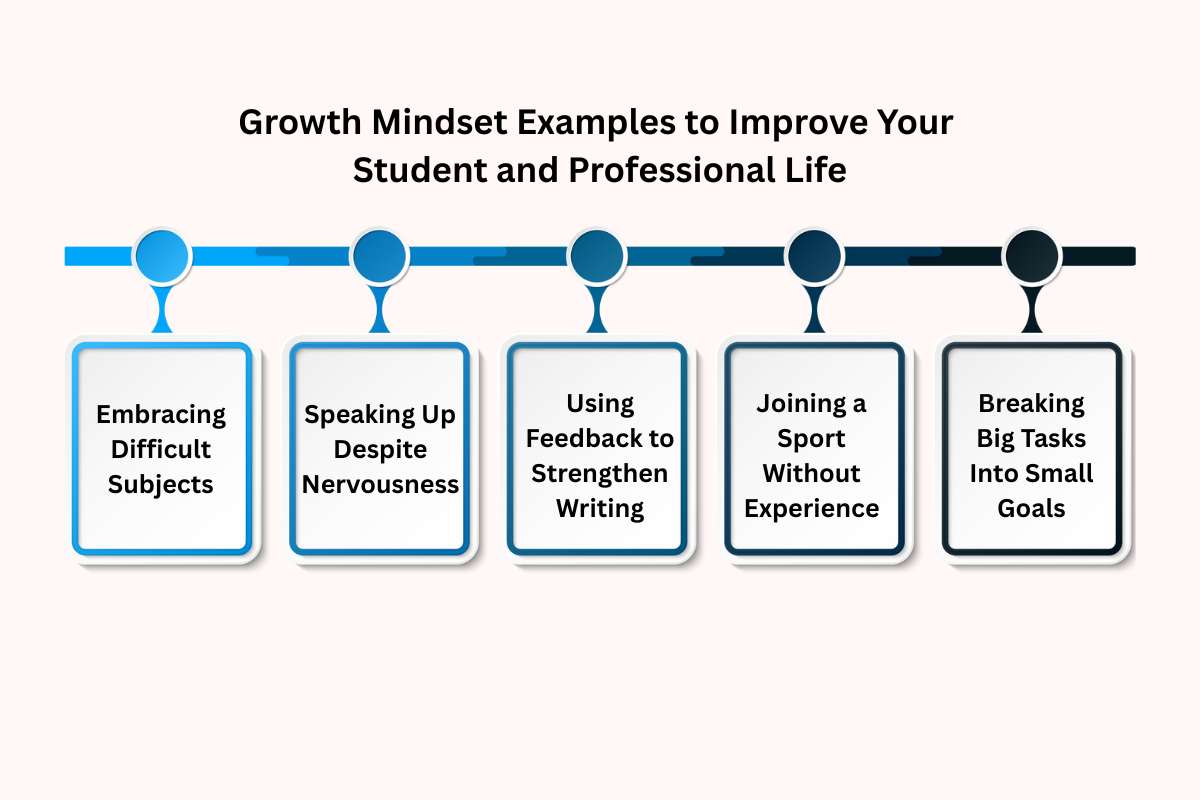
Below are some examples of Growth Mindset for students, working professionals, and everyday life. Each example includes a scenario and a short explanation of how it supports a growth mindset.
▶ Growth Mindset Examples for Students
Students face many moments where learning feels hard or confusing. A growth mindset helps them see these moments as chances to improve instead of reasons to quit. When they shift their focus from perfection to progress, they learn with more confidence and less fear. This mindset makes everyday challenges part of their growth journey.
1. Embracing Difficult Subjects:
A student receives a low score in math and feels upset. They decide to practice in short sessions and ask questions when stuck. They try new methods until one starts to make sense. Over time, they discover that progress appears when they stay engaged with the challenge.
2. Speaking Up Despite Nervousness:
A shy student chooses to give a class presentation. They practice at home and build confidence step by step. Their voice shakes at first, but they finish the talk. They walk away knowing that action, not comfort, leads to real growth.
3. Using Feedback to Strengthen Writing:
A student gets strong feedback on an essay. They rewrite the piece slowly, taking each suggestion one at a time. The second draft looks sharper and clearer. Moments like these teach them that improvement follows reflection and effort.
4. Joining a Sport Without Experience:
A student tries out for a sport they’ve never played before. Early practices feel awkward, but they observe teammates and copy simple drills. Small wins show up week by week. These early steps build trust in the learning process.
5. Breaking Big Tasks Into Small Goals:
A student feels overwhelmed with long study hours. They break the work into short blocks and track tiny wins each day. Studying becomes easier and less stressful. They begin to understand that steady steps move them farther than all-or-nothing efforts.
Also Read: Growth Mindset: The Path to Personal and Professional Development
▶ Growth Mindset Examples for Working Professionals
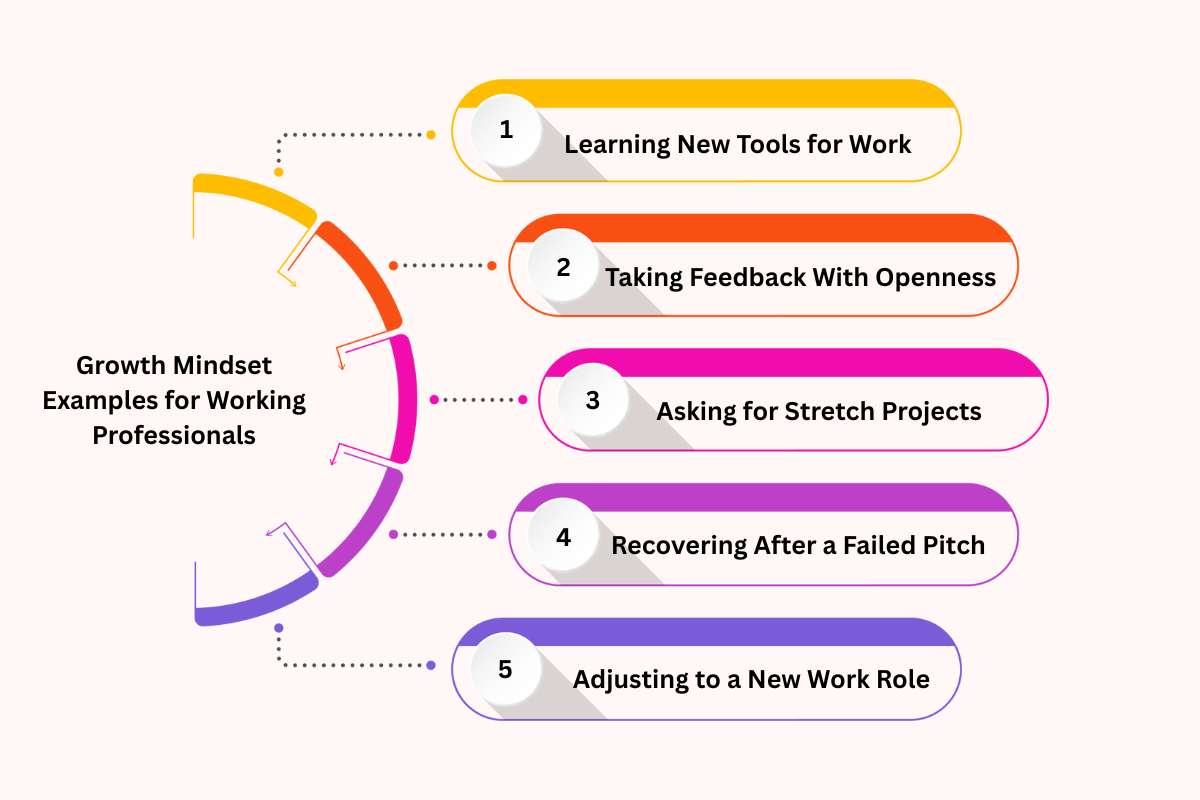
Working professionals deal with pressure, deadlines, and constant change. Growth mindset examples show how small shifts in thinking can make work feel more manageable and meaningful. When people focus on learning instead of perfection, they handle challenges with more clarity. This approach helps them grow their skills and stay confident in a fast-moving workplace.
1. Learning New Tools for Work:
An employee must learn new software for an upcoming project. They start with short tutorials and allow themselves to make mistakes. Slowly, the tool becomes familiar. They discover that patience and practice help them adapt to new demands.
2. Taking Feedback With Openness:
A manager hears that their directions feel unclear. Instead of shutting down, they simplify their messages and check in with the team. Over time, communication flows better. This shift shows them how listening can change results.
3. Asking for Stretch Projects:
An employee wants to grow in their role. They request tougher assignments that push their limits. The tasks feel uncomfortable at first, but they learn more than expected. These experiences show them that challenge is a path to new skills.
4. Recovering After a Failed Pitch:
A pitch to a client falls flat. A team member studies what went wrong and prepares a sharper version for the next meeting. The second attempt runs more smoothly. They begin to see setbacks as information that guides better choices.
5. Adjusting to a New Work Role:
A team member moves into a new position. The early days feel confusing, but they ask questions and learn one task at a time. Weeks later, the role feels natural. They start trusting their ability to grow into unfamiliar spaces.
Also Read: Power Of Growth Mindset: How Believing In Yourself Can Transform Your Education?
▶ Growth Mindset Examples in Everyday Life
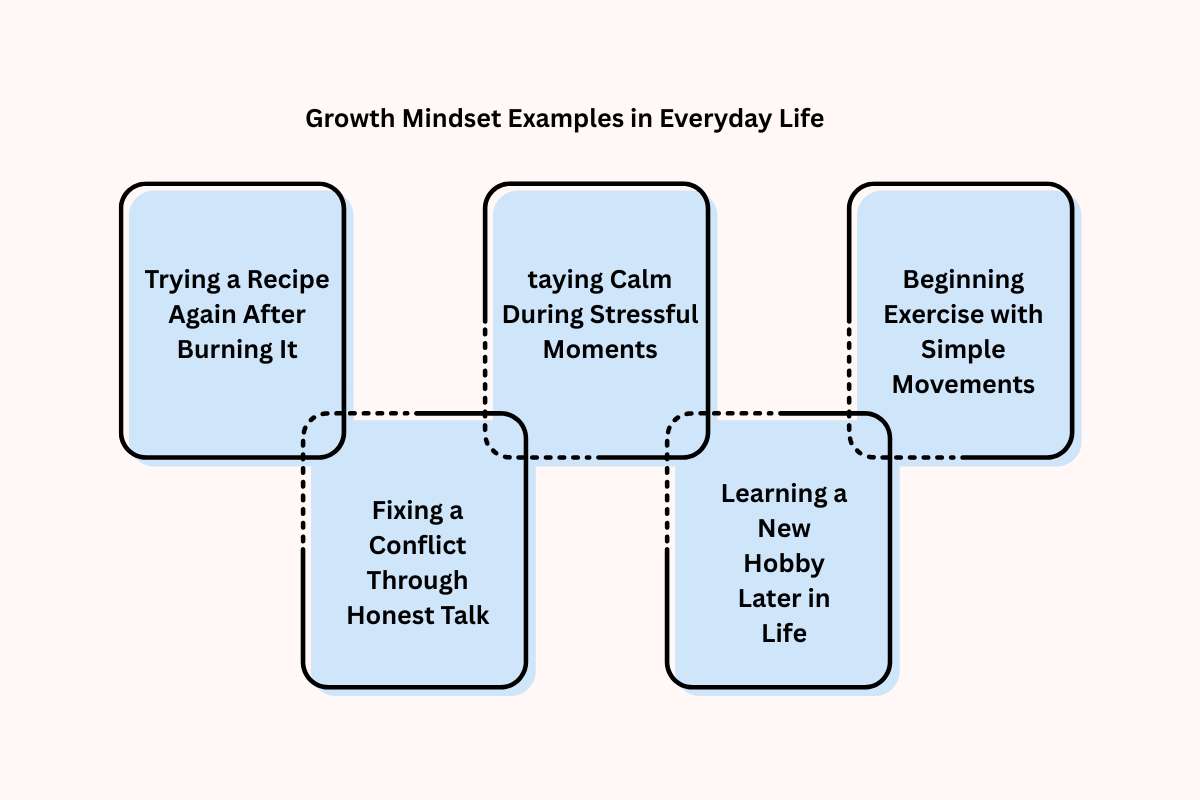
A growth mindset is not limited to school or work. It shapes the small choices people make each day, from handling routines to facing unexpected problems. When individuals stay open to learning, even simple moments become chances to improve. Learning from growth mindset examples can help you develop an attitude that makes daily life smoother, more balanced, and more fulfilling.
1. Trying a Recipe Again After Burning It
Someone burns a recipe on their first try. They watch a quick video and attempt it again. The next result tastes much better. They learn that skill builds through repeated attempts, not instant success.
2. Staying Calm During Stressful Moments
A parent feels overwhelmed during a busy morning. They pause, breathe, and keep routines simple. With practice, stressful moments feel easier to manage. They notice how control grows when they respond with intention.
3. Beginning Exercise with Simple Movements
A person wants to get fit but feels unsure where to begin. They walk for a few minutes each day and slowly increase the time. Their energy rises over the weeks. They see how slow, steady movement shapes long-term change.
4. Fixing a Conflict Through Honest Talk
Two friends argue and drift apart. One reaches out with honesty and listens with patience. The conversation helps them rebuild trust. They learn that relationships improve when people choose openness over silence.
5. Learning a New Hobby Later in Life
Someone dreams of learning guitar but thinks they are too old. They take simple lessons and practice basic chords each evening. Their progress grows with time. They realize that age does not set the limits on learning, but habits do.
What are the Benefits of Having a Growth Mindset?
There are countless benefits to developing a growth mindset. It changes the way people see progress, effort, and challenges. It turns setbacks into lessons and encourages steady improvement. When individuals adopt this mindset, they feel more capable and less stressed
1. Improves Confidence Over Time
A growth mindset helps people trust their ability to improve. When they see small wins, they feel encouraged. This confidence pushes them toward harder challenges without fear. They start to believe that effort leads to progress, which makes them more willing to try again after setbacks. Over time, this steady rise in confidence becomes part of how they handle new goals.
2. Helps People Handle Failure With Calmness
People with a growth mindset do not freeze when something goes wrong. They treat failure as feedback. This habit reduces stress and opens the door to better decisions. They learn to pause, study the problem, and make simple adjustments. This calm approach keeps small failures from turning into big frustrations. Growth Mindset examples like these can build stronger emotional control.
3. Encourages Continuous Learning
This mindset keeps people curious. They stay open to new skills and experiences. With this attitude, they avoid feeling stuck and keep growing with time. Because they enjoy learning, they explore new ideas more often and take on tasks that expand their abilities. This creates a steady cycle of skill-building that supports long-term growth.
4. Strengthens Problem-Solving Skills
A growth mindset teaches people to look for solutions instead of stopping at the first obstacle. This mindset helps them break problems into simple steps and move forward. They learn to test different ideas, adjust their approach, and stay patient during tough situations. A study published by the Organization for Economic Cooperation and Development (OECD) found a link between a growth mindset and higher test scores and general well-being. This flexible way of thinking helps them handle challenges in school, work, and daily life.
5. Improves Relationships
People with a growth mindset communicate better because they stay open to feedback. They listen with patience and fix conflicts with honesty. This creates healthier connections. They also become more understanding of others’ mistakes and give room for growth. This attitude builds trust and makes relationships stronger over time.
6. Builds Long-Term Discipline
This mindset teaches people to stay steady even when progress feels slow. With patience and consistency, they build habits that last. They learn to stick with routines, finish tasks, and stay focused during tough moments. This discipline helps them reach long-term goals without losing motivation.
7. Supports Career Growth
People who learn from growth mindset examples can try new tasks and learn new tools. This helps them move forward at work and stay strong in changing environments. They become more adaptable, more confident in new roles, and more willing to take on challenges. These qualities often lead to better opportunities and steady career progress.
Also Read: Fostering Growth Mindset: A Comprehensive Strategy for Student Success
Tips to Develop a Growth Mindset
Building a growth mindset takes steady practice, not sudden change. Small shifts in daily actions make a big difference over time. These are some tips from the above growth mindset examples that offer simple steps that help people think with more confidence and flexibility.
- Tip 1: Start small and break big goals into tiny actions.
- Tip 2:Ask simple questions when doubt appears.
- Tip 3: Study how others learn and grow.
- Tip 4: Use feedback one step at a time.
- Tip 5: Stay consistent even when change feels slow.
- Tip 6: Celebrate every small win.
- Tip 7: Focus on progress instead of perfection.
- Tip 8: Try new tasks that make you slightly uncomfortable.
- Tip 9: Replace negative thoughts with simple, helpful statements.
- Tip 10: Set learning goals instead of performance goals.
Conclusion:
A good mentality can change how people approach challenges, goals, and everyday moments. It shifts the focus from “Can I do this?” to “How can I learn this?” and that small change opens the door to steady progress. When you look at real growth mindset examples that are applicable at school, at work, or in daily life, you can see how simple habits make a big difference.
With practice, reflection, and patience, anyone can build this mindset. And once it becomes part of your routine, even small steps forward start to feel meaningful. Growth becomes less about speed and more about staying open, curious, and willing to improve one day at a time.
FAQ
1. How can I develop a growth mindset?
You can build it by taking on small challenges, viewing mistakes as learning tools, asking for feedback, and celebrating progress instead of only results.
2. Why are growth mindset examples helpful?
Examples make the idea easier to understand. They show how real people use this mindset in school, work, sports, and daily situations.
3. Is it possible to shift from a fixed mindset to a growth mindset?
Yes. Many people start with a fixed mindset in some areas. With awareness and consistent practice, they can learn to think more openly and adapt to challenges.