
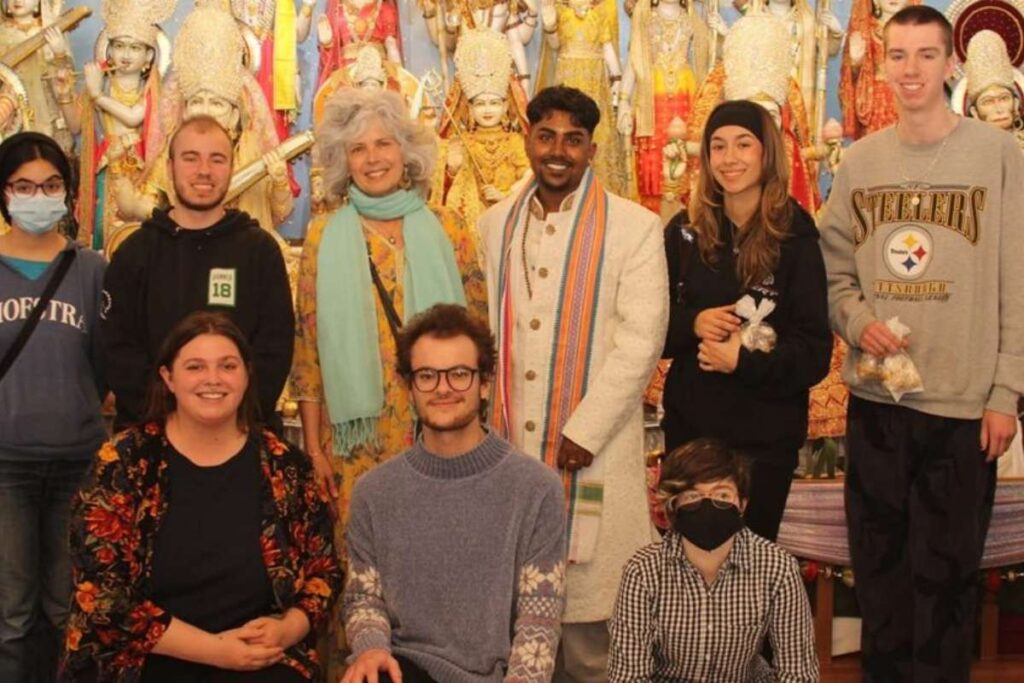
Hofstra University introduced a groundbreaking course, Mapping Religion in New York, during the spring 2025 semester, inviting students from across academic disciplines to broaden their cultural understanding through direct engagement with diverse religious communities. Developed by Dr. Julie Byrne and Dr. Ann Burlein of the Religion Department, the class has evolved from a research project for religion majors into an immersive, interdisciplinary experience.
What sets this course apart is its experiential format. While the initial weeks focus on classroom learning, the latter half of the semester brings students out into the community to visit various local houses of worship. These excursions are designed to deepen students’ appreciation for different faith traditions and foster skills essential for effective communication in multicultural environments.
“The students now know more about the diverse religious communities around them,” said Dr. Byrne. “They are learning how to interact and build bridges. This is useful in any profession, for relationships with coworkers, clients, or patients.”
Students Step Into New Roles and Perspectives
The Hofstra University course has provided transformative experiences for students, many of whom had limited exposure to different faiths before enrolling. Andrew Dyall, a biology major from Queens Village, NY, found the class increasingly engaging as the semester progressed. One of the most memorable experiences involved a visit to Shri Trimurti Bhavan, a Hindu temple in Queens. There, classmate Dylan Budhu, a Hindu priest and sophomore student from South Ozone Park, NY, shared his religious practices firsthand.
“Watching Dylan in action as a priest was so interesting, and the music was amazing,” said Andrew Sine, a junior double majoring in history and religion. These moments allowed students to go beyond textbooks, engaging with real people and rituals that brought religious traditions to life.
At the Greek Orthodox Cathedral of Saint Paul in Hempstead, NY, students were warmly welcomed and given small vials of holy oil. “Classes like this are instrumental in building understanding of different cultures and faiths,” said Fr. Elias Pappas, assistant priest at the cathedral. “When the students visit the actual place of worship, they can meet with the local religious leader and have an open and friendly dialogue.”
Hofstra University Building Bridges Through Education and Experience
Visits to institutions such as the Islamic Center of Long Island in Westbury introduced students to religious communities rich in cultural diversity. These firsthand encounters enhanced their understanding of global faith traditions without leaving their local area. Dr. Byrne likens each site visit to “a mini study abroad program,” allowing students to experience cultural immersion within their own city.
The course supports Hofstra University’s broader goals of student success and community engagement, aligning with the Hofstra 100 Strategic Plan. By promoting interfaith understanding and respectful dialogue, Mapping Religion in New York equips students with the empathy and cultural fluency necessary for leadership in an increasingly interconnected world.
Through a blend of classroom learning and real-world exposure, Hofstra students are gaining not just academic credit but a deeper appreciation for the religious and cultural diversity that surrounds them every day.