

“Contrary to the opinion of many people, leaders are not born. Leaders are made, and they are made by effort and hard work.”
Vince Lombardi
Do you struggle to take control of situations? Taking charge quickly and effectively can be the difference between success and failure, and as Lombardi said, you do not have to be a born leader. So what can you do?
Leadership Development Programs are special programs that help people become good leaders. They teach important skills like decision-making, communication, thinking strategically, and managing teams.
These programs are useful for students who want to be leaders in the future and for professionals who want to grow in their careers. In this article, we will explain all parts of a leadership program. First, let’s look at the types of leadership programs
What are the Types of Leadership Programs?
There are different ways in which people can approach developing leadership. Teaching these qualities is highly dependent on the ‘who’and the ‘why.’ Hence, different programs cater to different scenarios.
1. Executive Leadership Programs

Designed for senior managers and executives, these programs focus on strategic thinking, decision-making, and organizational leadership. Participants learn to guide large teams, manage resources, and drive long-term business growth.
2. Student Leadership Programs
Specifically for high school or college students, these programs teach leadership, project management, and community engagement. Students take part in workshops, simulations, and group projects to develop confidence and decision-making skills. Examples include Global Youth Leadership programs and Model UN initiatives.
3. Mentorship-Based Programs
These leadership development programs pair participants with experienced leaders who provide guidance, feedback, and career advice. Students or professionals learn practical leadership through personalized mentoring and real-world examples.
4. Experiential or Project-Based Programs
Participants engage in real projects, case studies, or simulations. Students might run clubs or organize events, while professionals work on company projects. This hands-on approach strengthens problem-solving, teamwork, and leadership in realistic settings.
Advantages and Disadvantages of Leadership Development
Leadership development programs help people learn the skills needed to guide teams. They also help you face challenges and reach your goals. They combine training, mentorship, and real-world experience to prepare participants for leadership roles. While these programs have many benefits, there are also some drawbacks to keep in mind.
Also Read: Unlocking Success: The Role of Education Leadership in Shaping Tomorrow’s Leaders
Advantages
1. Improved Decision-Making Skills

Leadership programs train participants to think critically and evaluate situations before taking action. They teach strategies for managing pressure. They help you make choices that align with organizational goals. This can lead to more confident and effective leaders. Leaders who can handle complex business situations with ease.
2. Better Team Performance
When leaders are well-trained, teams tend to perform better. Effective leaders understand how to motivate and encourage employees. They can resolve conflicts and maintain a positive work culture. Through leadership development, managers learn how to balance empathy with authority. This helps build trust and productivity within the team.
3. Increased Employee Retention
Organizations that invest in leadership development show employees that they care about them. This often leads to higher job satisfaction and lower turnover rates. Clear opportunities for advancement can make people stay longer.
4. Stronger Organizational Growth
Good leadership leads to better planning, communication, and execution. Trained leaders can identify business opportunities and drive innovation. Leadership programs help align personal goals with company objectives. This creates a shared vision that pushes the organization forward.
5. Boosted Confidence and Self-Awareness
Participants in leadership development programs can understand their strengths and weaknesses. This self-awareness helps them communicate better, manage stress, and lead with confidence. As a result, they become more adaptable and capable of handling leadership challenges effectively.
Disadvantages
1. High Cost of Implementation

Leadership programs often require significant investment. It is needed for training materials, expert instructors, and time away from daily work. For small businesses, these costs can be difficult to manage. Without proper planning, the return on investment may not meet expectations.
2. Uneven Results Across Participants
Not every participant benefits equally from leadership programs. Some individuals may struggle to apply what they learn, while others excel. Different learning styles, motivation levels, and experience can change how well someone does in a program. This makes it hard to measure if the program works for everyone.
3. Time-Consuming Process
Developing leadership skills takes time. Employees must balance training sessions with their regular work duties. This can lead to stress or reduced productivity. If the program is not well structured, participants may lose interest or fail to complete it.
4. Risk of Overdependence on Formal Training
Some organizations rely too heavily on structured programs and overlook informal learning opportunities. Real leadership often grows from experience, mentoring, and feedback. Without practical application, even well-designed programs may fail to create truly effective leaders.
Leadership development programs can shape skilled and confident leaders. The key lies in balancing structured training with real-world experience. Now, let us take a look at some examples of such programs.
Leadership Development Programs That Focus on Students
Leadership programs for students and recent graduates help them learn important skills. They focus on communication, teamwork, and making good decisions. Students get training, mentorship, and real-world experience.
1. Global Youth Excellence & Leadership (GYEL) Program
This program focuses on helping students build leadership and communication skills. It gives young people a platform to discuss global challenges and develop creative solutions.
Participants take part in workshops, debates, and projects related to real-world issues. The program encourages teamwork, empathy, and critical thinking. These skills are essential for future leaders. It helps students understand their role in creating positive change in society.
2. The Young Global Leadership Program (YGLP)
This is an international leadership initiative for students in high school and college. It combines research-based learning with hands-on leadership experience. Students join sessions on problem-solving, decision-making, and emotional intelligence.
The program also connects participants from different countries. It helps them share ideas and learn from each other’s cultures. Through YGLP, students gain the confidence and mindset needed to lead in their personal and professional lives.
3. Graduate Impact Leadership Program (GILP)
The Graduate Impact Leadership Program (GILP) is a unique opportunity for Indian students and recent graduates. It focuses on developing leadership through real-world exposure in areas like governance, policy-making, and social development. Participants work on projects related to nation-building while receiving mentorship from professionals and policymakers.
The program also includes internships and workshops that help students apply classroom learning to real challenges. By the end, they gain practical experience and leadership insight that can shape their future careers.
4. MEPI Student Leaders Program (MEPI)
The Middle East Partnership Initiative (MEPI) Student Leaders Program is designed for undergraduate students from the Middle East and North Africa. It is a six-week academic program held in the United States. Students attend lectures, cultural visits, and volunteer programs that focus on civic engagement and leadership. The experience helps them understand democratic principles, teamwork, and community building.
5. Emerging Leaders Program
The Emerging Leaders Program identifies talented young people in Uganda who want to contribute to democracy and social development. Students learn about ethical leadership, teamwork, and problem-solving while working on community-based initiatives. It aims to shape responsible and confident leaders who can bring positive change to society.
Also Read: Navigating the Path to Excellence: Exploring the Significance of a Masters in Educational Leadership
Leadership Programs That Focus on Working Professionals
Leadership development programs offer several advantages for working professionals. They enhance decision-making skills, allowing leaders to think critically and make informed choices under pressure. These programs improve team performance by teaching managers how to motivate, guide, and support their teams effectively. Participants gain career growth opportunities, as the skills learned prepare them for senior leadership roles.
Some of the best and most effective leadership programs for professionals include:
1. Harvard Business School Executive Education:
Offers programs on strategic leadership, negotiation, and innovation for senior professionals. Focuses on real-world case studies and global business perspectives.
2. Wharton Executive Leadership Program:
Helps mid to senior-level managers build strategic thinking, decision-making, and influence skills through interactive workshops and mentorship.
3. Dale Carnegie Leadership Training:
Focuses on communication, interpersonal skills, and team management for working professionals to become effective leaders in their organizations.
5 Tips for Implementing Leadership Development Programs
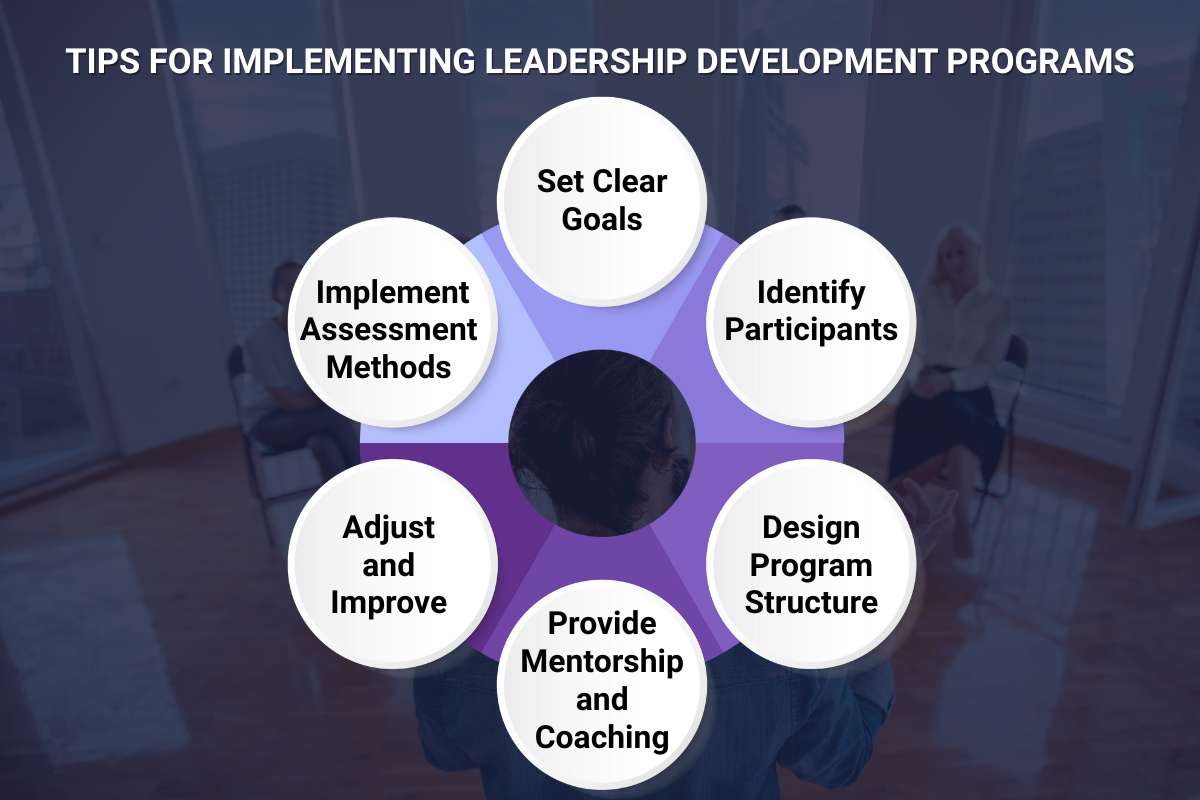
Creating a Leadership Development Program requires careful planning to ensure it builds essential skills like communication, decision-making, and team management. The steps to build a program include:
1. Set Clear Goals:
Define the skills and outcomes the program should achieve, such as decision-making, communication, or strategic thinking.
2. Identify Participants:
Decide who will benefit most, whether students, entry-level employees, or mid-career professionals.
3. Design Program Structure:
Combine classroom learning, online courses, and hands-on projects. Include experiential learning through simulations, case studies, or role-playing exercises.
4. Provide Mentorship and Coaching:
Pair participants with experienced mentors who can guide, give feedback, and support skill development.
5. Implement Assessment Methods:
Track progress using quizzes, project evaluations, and feedback from peers and mentors to measure growth and program effectiveness.
6. Adjust and Improve:
Refine the curriculum based on assessment results, introduce new learning methods, or provide additional support to maximize effectiveness.
Future Trends in Leadership Development
Leadership development programs are constantly adapting, especially with digital progressionOnline courses and virtual workshops are making training more accessible. Another trend is personalized learning. Programs are using data and assessments to identify individual strengths and weaknesses. According to a 2024 study done by Harvard Business, leadership behaviours are expanding beyond fixed leadership styles
Inclusive leadership is also gaining focus. Companies and programs are emphasizing diversity, equity, and inclusion. Finally, Experiential learning will continue to grow. Real-world projects, internships, and simulations give participants hands-on experience. Learning by doing helps leaders handle challenges confidently and make better decisions.
Conclusion:
Leadership Development Programs help people become better leaders. They teach important skills like teamwork, decision-making, and communication.
By joining these programs, students and professionals can learn how to guide teams, solve problems, and make smart choices. These programs give real experience and practical lessons. They help people grow confident and ready to succeed in their careers.
FAQ
1. Who can join leadership development programs?
These programs are open to students, professionals, and managers who want to grow their leadership abilities. Many organizations also offer internal programs to train employees for higher roles.
2. Can online leadership development programs be effective?
Absolutely. Many online programs offer flexible learning with interactive modules, live sessions, and mentorship, making them just as effective as in-person training.
3. Do leadership development programs include practical training?
Yes, most programs include workshops, group projects, role-playing, and mentorship sessions that allow participants to apply what they learn in real-life situations.
Also Read: A 7-Step Guide to Crafting a Successful Leadership Development Plan