
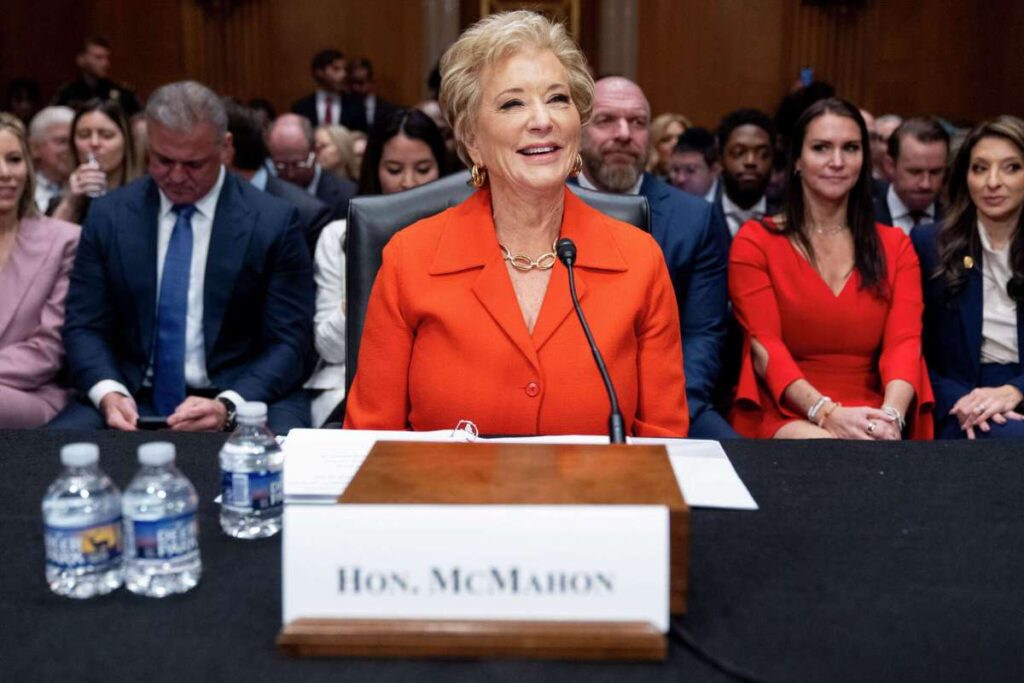
Key Takeaways
- Linda McMahon emphasized the expansion of vocational training fields like plumbing, electrical work, and automotive repair
- The event focused on federal funding, free speech, and post-high-school career pathways
- Discussion included views on reducing the federal role in education administration
Linda McMahon addressed students and attendees at Yale University during a campus event focused on education policy, workforce preparation, and structural changes in how education systems operate across the country.
Education Discussion Highlights Workforce Skills And Training Needs
During the event, Linda McMahon highlighted the growing importance of vocational and technical career paths. She pointed to roles such as plumbers, electricians, HVAC technicians, and automotive mechanics as essential parts of the modern workforce.
The discussion emphasized how education systems can better align with job market demands after high school. The focus included expanding awareness of non-university pathways and increasing support for skill-based training programs.
The event also covered topics such as federal education funding, academic freedom, and the role of schools in preparing students for employment. The conversation reflected a broader interest in how education systems balance academic and technical learning.
Attendees at the event represented a mix of viewpoints, with some expressing support for increased diversity of perspectives on campus discussions. Others focused on the importance of listening to different approaches to education planning and workforce preparation.
Policy Views And Education System Structure Discussed
Linda McMahon also spoke about efforts to shift certain responsibilities in education governance toward state-level administration. The discussion included perspectives on how education systems are structured and how resources are managed across different levels of government.
She referenced earlier school appearances that were later cancelled and described them as misunderstandings related to public perception of educational programs. The discussion touched on how education initiatives are received by communities and schools.
Attendees shared mixed reactions during the event. Some participants supported the emphasis on state-level decision-making and local control in education planning. Others expressed disagreement and remained skeptical of reducing federal involvement in education systems.
The event at Yale University was organized as part of a campus discussion series that brings speakers to engage with students on public policy and education topics.
Overall, the conversation highlighted ongoing debates around the future structure of education systems, with a focus on balancing academic pathways, workforce readiness, and governance models.
Visit Business Viewpoint Magazine to read more.