
Key Takeaways
- 96% of US schools issued student devices after 2020
- The Los Angeles district limits screens in early-grade classrooms to reduce Student Screen Time.
- $1.6 billion in education technology contracts under review
- 14 states propose laws limiting school screen exposure
Just a few years after the large-scale deployment of digital devices in classrooms, many US school systems are reassessing how technology is used in education. Schools that once prioritized one device per student are now introducing limits on Student Screen Time and digital learning tools.
Shift From Device Expansion To Screen Use Controls In Schools
Teachers and school administrators describe a major shift in classroom technology use compared with the early 2020 period. During that time, nearly all public schools issued digital devices to students to support remote learning and classroom connectivity.
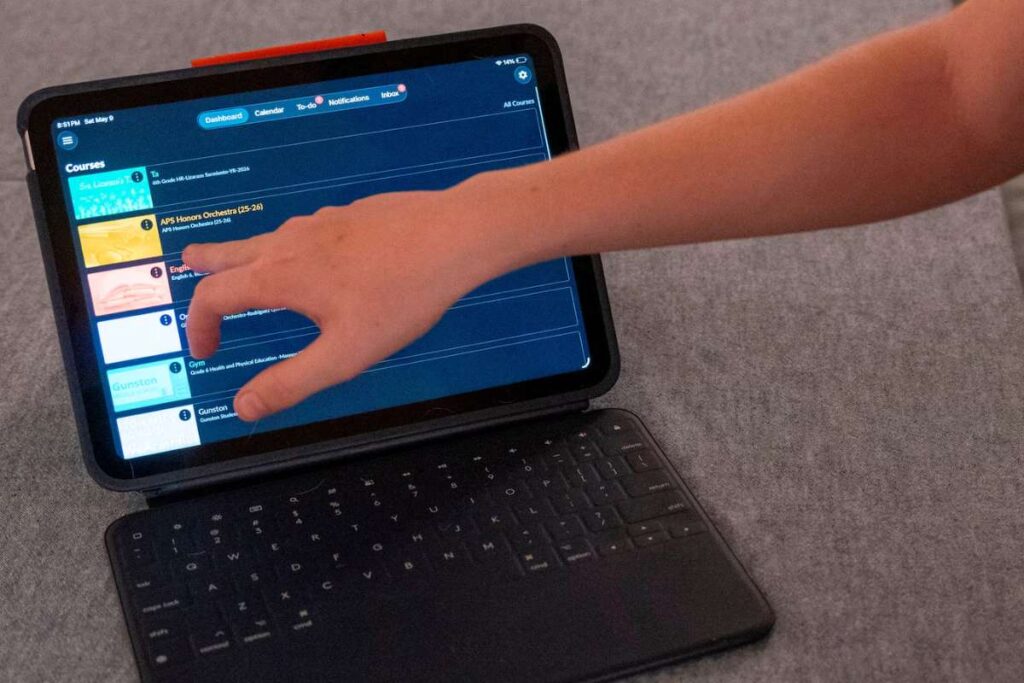
Data shows that 96 percent of US public schools provided devices to students who needed them during the expansion period. This rapid rollout significantly increased Student Screen Time through daily use of laptops and tablets in instruction.
Now, several districts are introducing restrictions on how and when devices are used. The Los Angeles Unified School District has implemented new rules that reduce device use in early grades and set limits on screen time across higher grade levels.
The district is also reviewing education technology contracts valued at 1.6 billion dollars. These contracts cover digital learning platforms, applications, and device management systems used in classrooms.
Schools are also placing limits on device use during school hours. These include restrictions during lunch, recess, and certain classroom activities in elementary and middle schools.
Growing Policy Response Across States And School Systems
The shift in classroom technology policy is expanding beyond individual districts. At least 14 states have proposed measures to regulate or limit Student Screen Time in schools.
Some districts are also moving away from sending devices home with students. In several cases, schools are returning to in-classroom device use only, while reducing at-home assignments that require screens.
Reports from multiple school systems show increased concern about student screen dependency and reduced focus during lessons. Teachers report that digital tools are often used for both instruction and non-academic activity during school hours.
Education systems are also reassessing how digital platforms are integrated into learning. This includes reviewing the balance between traditional materials such as textbooks and digital applications used for assignments and assessments.
The change reflects a broader evaluation of how technology impacts student attention, learning habits, and classroom interaction, and overall Student Screen Time. Schools are now adjusting policies to balance digital access with structured learning environments.
Districts across the country are also reviewing financial and instructional outcomes linked to education technology investments. Spending patterns show significant allocation toward digital tools, prompting reassessment of long-term educational effectiveness.
The evolving approach signals a shift from widespread device distribution toward more controlled and structured use of technology in education settings.