
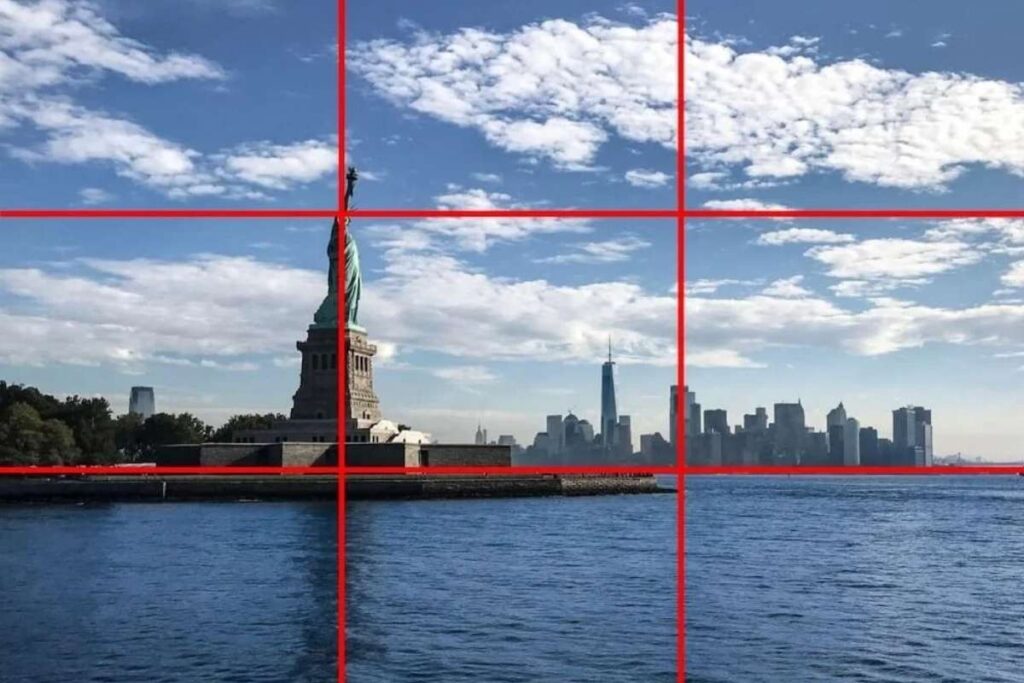
Have you ever looked at a faded photograph and felt a flood of memories? Photographs are much more than paper and ink. They are moments frozen in time that capture laughter, smiles. And maybe a little nostalgia. But imagine your memories could be more than just a photograph? A photograph could tell you more than a story. It reveals emotions that were hidden and brings you back to that moment with vibrant detail.
It’s not magic, but a skill of getting your images to speak without having to say a word. Within every powerful image is a secret language. A quiet soundtrack that puts the full weight of creativity and meaning behind a simple image. Turning it into an impactful visual statement. Do you want to learn the art of taking photographs that speak? The pictures that tell stories and create a strong emotional connection? Take a step closer and let’s talk about the powerful. They can be subtle. Yet completely transformative element known as “composition in a photograph.”
What is the Composition in a Photograph?

Whenever you take a photo, you’re constantly deciding what to include or leave out. And how to arrange everything within your shot. That’s what we call composition. It is simply the arrangement of elements in your photograph. While some define it more complexly. But it really just boils down to how that arrangement makes a photo succeed or fail. Composing well is not easy, but keeping it simple helps. If you’re stuck, remember your goal: arrange the elements in your photo effectively. Defined by Spencer Cox, he is a photographer who focuses on landscapes, travel, and nature. The photos taken by him have been exhibited worldwide. Such as at the Smithsonian Museum of Natural History in Washington, D.C.
Why is it Important to Study the Composition in a Photograph?
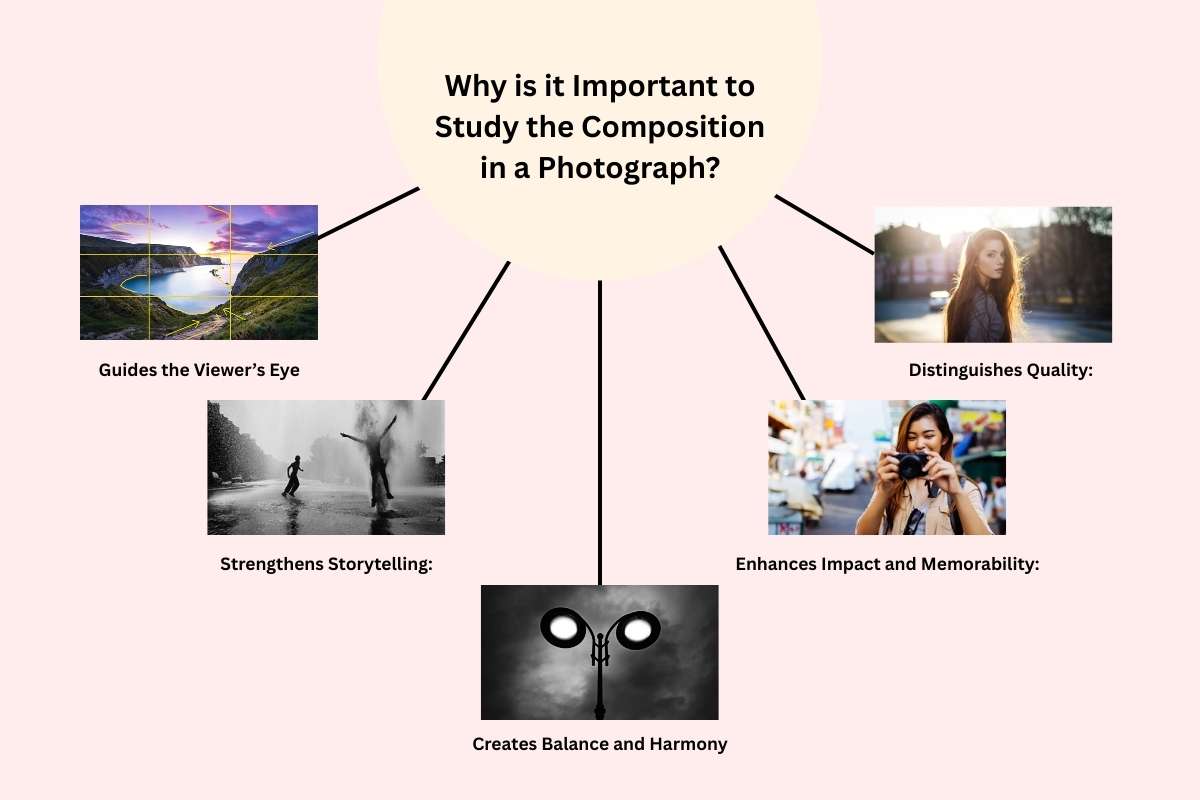
Studying composition in photography is vital. Because it determines how visual elements are arranged. This directly impacts the image’s storytelling. Along with aesthetic appeal, and ability to guide the viewer’s attention. Here are reasons highlighting the importance of studying composition in a photograph:
1. Guides the Viewer’s Eye:
Studying composition in photography is vital. Because it determines how visual elements are arranged. This directly impacts the image’s storytelling. Along with aesthetic appeal and the ability to guide the viewer’s attention. Here are the reasons highlighting the importance of studying composition in a photograph.
2. Strengthens Storytelling:
Effective composition conveys emotion, context, and narrative. It works by organizing subjects, background, and space to improve meaning and interpretation.
3. Creates Balance and Harmony:
A well-composed image combines elements like shapes, colors, and textures harmoniously. It helps in making the photograph visually pleasing and less cluttered or confusing.
4. Enhances Impact and Memorability:
Good composition elevates ordinary scenes into powerful images. Making the pictures more striking, memorable, and professional.
5. Distinguishes Quality:
Mastering composition differentiates standard snapshots from professional, compelling photographs. And it is fundamental to making high-quality work.
Benefits of Studying Composition in a Photograph
1. Frame Control:
Learn to decide what to include or exclude. Supporting your photographic purpose.
2. Creative Use of Rules:
Master compositional guidelines. For example, the rule of thirds, leading lines, symmetry, and negative space. And learn when and how to break them.
3. Evokes Emotion:
Use arrangement and framing to create specific moods and emotions.
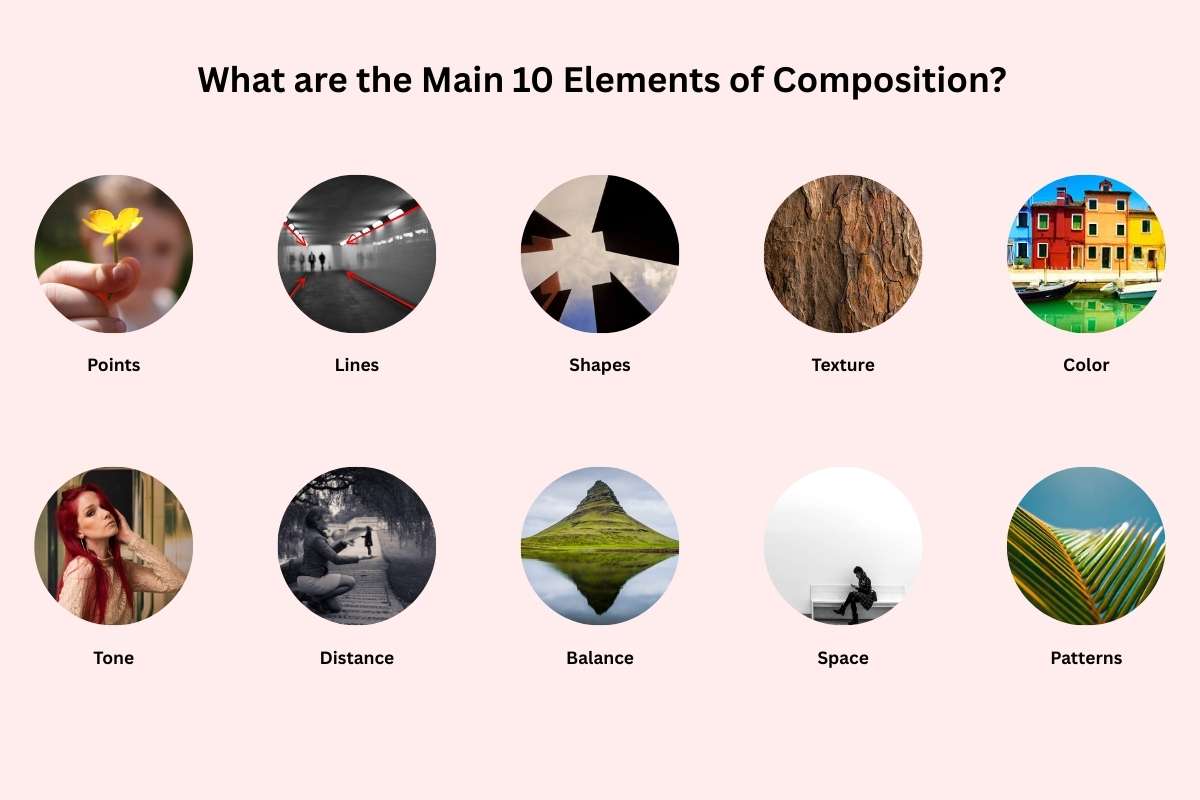
What are the Main 10 Elements of Composition?
Let’s simplify composition to its central. This guide will focus on ten fundamental elements vital to nearly every photo you take. Divided into two key categories: objects and their relationships. These are the building blocks of photographic creativity.
Objects
These are simply six different types of objects you might find in a photo, from simple to complex. They stand alone, independent of other elements or the frame’s borders. Every object in your photograph will exhibit these characteristics to some degree. Sometimes obviously, sometimes subtly.
1. Points:
The most basic compositional element is a point. A point may be mathematically zero-dimensional. But in photography, a point is simply a small point of interest or intersection. Points can be thought of as stars in the night sky, a blurred light source, or the point at which two mountains meet. Points are an important part of composition, because they are a basic way to grab attention. A point can also provide interest in your images.
2. Lines:
Lines in photography act as a visual path for the viewer’s eye or a boundary within the frame. Unlike geometric lines, they can be anything that stretches across your photo. This is from a curved road to the edge of a cloud. They connect elements, add structure, and can even be imaginary. They are subtly linking subjects like a child gazing at a toy. Lines are vital compositional tools, guiding attention and making your image feel intentional.
3. Shapes:
Shapes, whether obvious or abstract, are fundamental to compelling composition. Such as the circular sun and the subtle curve of a landscape. Each shape carries a unique emotional weight and commands attention. Simple shapes, especially those of humans and animals, are particularly powerful. They help in drawing the viewer’s eye. It gives your photograph its underlying structure. Keep an eye out for them and compose your shots thoughtfully to use their impact.
4. Texture:
Texture mainly impacts a photo’s emotional pull and how much attention it draws. Consider the mood awakened by smooth pebbles and sea mist. And jagged mountains in harsh light. While sometimes the texture is the subject. It often adds dimension to your main subject or fills the space between elements. Be mindful: too much texture in irrelevant areas can distract. However, strategically used, it can give your subject essential depth.
5. Color:
Colors strongly impact composition in a photograph and mood, carrying unique emotions. The key difference lies between warm colors (red, orange, yellow). They feel active and advance in an image. And cool colors (green, blue, violet), which appear calmer and recede. Understanding these color properties allows you to create impactful compositions. Whether through striking warm-cool contrasts or combined, dominant color schemes.
6.Tone:
Tone is a key compositional element.in Composition in a Photograph It refers to the brightness, darkness, and contrast within your photograph. Brighter and higher-contrast areas naturally draw the eye, guiding the viewer’s stare. Additionally, tone greatly impacts a photo’s emotion. Darker tones often awaken mystery, while brighter ones suggest optimism. You can skillfully manipulate tone both during shooting and in post-processing. This helps control visual flow and convey specific feelings.
Relationship
Beyond individual elements, composition also involves relationships. These four key aspects focus on how different parts of your photo interact with each other.
1. Distance:
The distance between elements is a fundamental aspect of composition. Too little space can create distracting overlaps. This is why giving subjects “breathing room” is important. Manipulating these distances also allows you to form basic compositional structures. Structures like lines and triangles, or even more complex arrangements. When you incorporate additional subjects.
2. Balance:
Balance in photography refers to the distribution of visual weight within your frame. Visual weight is simply how much attention an object attracts. Elements like faces, bright areas, and sharp details. Along with high contrast, vivid colors, and unusual objects. They carry more visual weight. A balanced photo feels stable. With visual weight evenly distributed, it often mirrors a seesaw. Where a smaller, distant object can balance a larger, closer one.
3. Space (Positive and Negative):
Positive space is the appealing part of your photo, drawing the eye with its visual weight or texture. Think of a noticeable subject. Conversely, negative space is the surrounding “filler,” less attention-grabbing but vital for balance. While too much of either can feel crowded or empty. Mastering their interplay allows you to evoke powerful emotions. From bustling energy to profound isolation. Simply by adjusting your subject’s size within the frame.
4. Patterns:
Patterns in photography are simply repeating elements. Whether it’s a texture, a reflection, or an architectural design. They create visual harmony, binding your photos together and giving them purpose. While often seen in man-made structures, patterns also appear in nature. For example, a bird’s feathers or ocean waves. Recognizing these repetitions can change a good photo into a powerful one.
5 Famous Examples of Composition in a Photograph with Techniques:
1. Steve McCurry’s “Afghan Girl” (1984)

- Composition Technique: Centered Composition and Symmetry
- The iconic portrait uses symmetry and places the subject centrally for dramatic impact. Drawing viewers directly to her intense gaze.
2. Henri Cartier-Bresson’s “Behind the Gare Saint-Lazare” (1932)
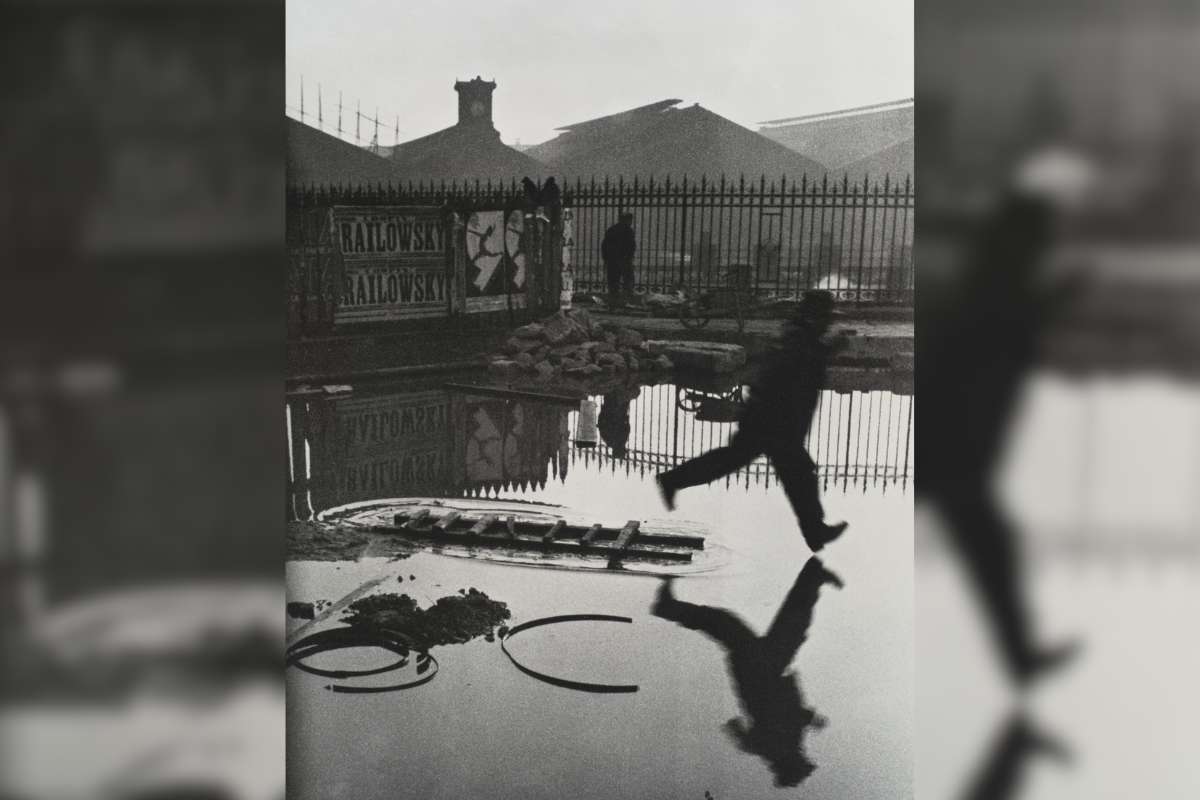
- Composition Technique: Timing and Leading Lines
- This decisive moment uses the reflection and the fence as leading lines. Guiding the viewer’s eye into the action at the perfect instant.
3. Ansel Adams’ “Moonrise, Hernandez, New Mexico” (1941)
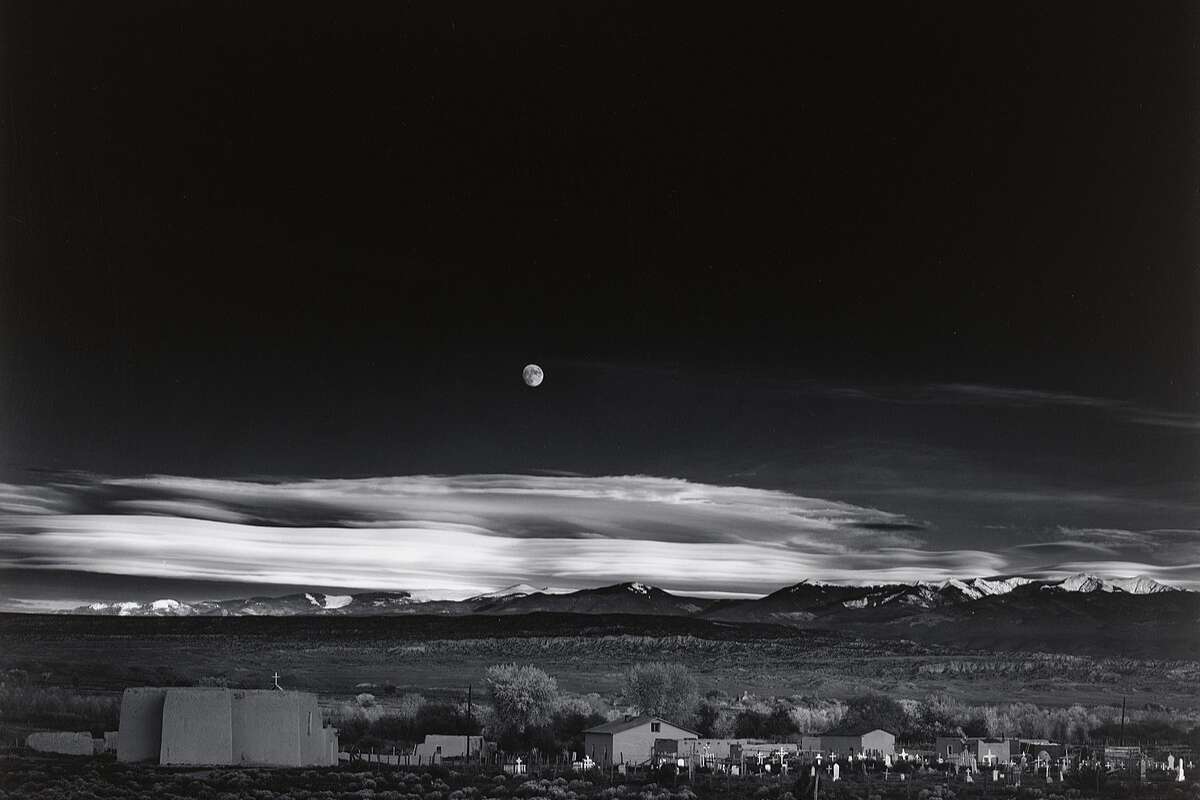
- Composition Technique: Rule of Thirds
- Adams positioned the horizon along the lower third of the frame. He is using the rule of thirds to create balance between sky and ground. Highlighting the moon and village.
4. Elliott Erwitt‘s “California Kiss” (1955)
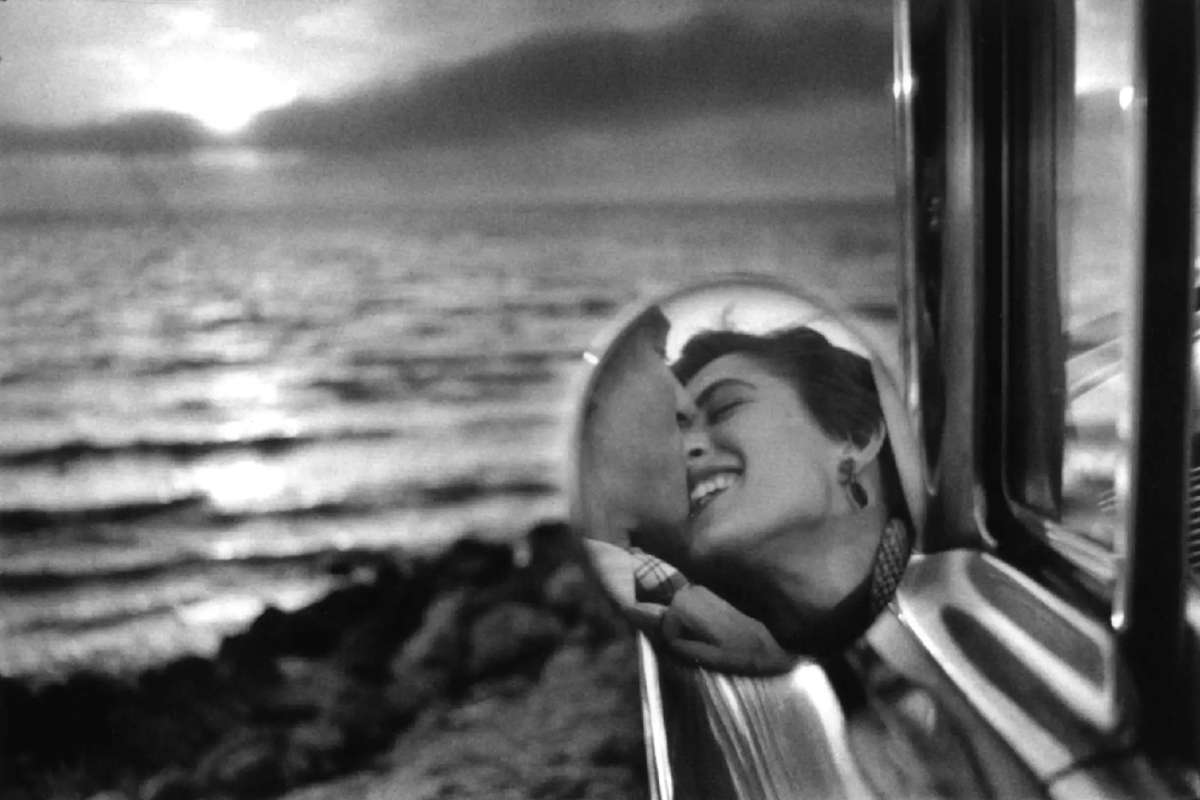
- Composition Technique: Frame Within the Frame
- Erwitt uses the car’s window as a natural frame. It draws attention to the couple kissing inside and adds depth to the image.
5. Nick Ut‘s “Napalm Girl” (1972)

- Composition Technique: Foreground Interest and Depth
- The powerful photo places the fleeing children in the foreground. Along with onlookers and soldiers behind enhances emotional impact and sense of depth.
Conclusion:
Composition in a photograph is far more than just arranging elements. It is the very soul of a compelling image. It is the silent storyteller that guides the viewer’s eye. It also amplifies emotion and changes a simple snapshot into a timeless piece of art.
From understanding the fundamental objects like points, lines, and colors. Along with mastering the complex relationships of balance and space. Every decision you make shapes the narrative and impact of your frozen memory. You have to study and apply these principles well. So you can craft visual legacies by taking pictures.
So, pick up your camera, experiment with these powerful tools. Get ready to unlock the true potential of your photographic vision. What story will your next photograph tell?
FAQ:
1. What is the golden ratio of photography and in Composition in a Photograph ?
You can calculate the Golden Ratio by dividing a line into two parts. The longer part (a) divided by the smaller part (b) is equal to the sum of (a) + (b) divided by (a), which both equal: 1.61803398875 (Phi).
2. How does composition affect the photo?
The composition of your image will help you direct the attention of your target audience. It also conveys emotion through your image. Photographers take the most time perfecting the composition. Because they know it plays a central part in the narrative experience.
3. What is the size of the composite image?
Composites range in size from 16”x20” to 50”x73”. It depends on how many people appear on the composite. Along with your chapter’s space requirements. Composites are a way to preserve your chapter’s history. This is why it is essential to be able to view and read each person’s photo, name, and title.
Also Read :- Can Student-Centered Learning Really Replace Traditional Classroom? The Answer Will Surprise You!