
Key Takeaways
- NIH Director Harvard funding dispute emerges after Jay Bhattacharya reportedly refused Trump’s demand to cut Harvard research funding.
- Trump reportedly plans a political board to oversee NIH grant approvals.
- Court rulings have blocked several Trump administration efforts targeting Harvard’s federal funding.
NIH Director Jay Bhattacharya refused President Donald Trump’s demand to cut Harvard University’s federal research grants during a Friday Oval Office meeting, Politico reported, amid continuing legal and political disputes over the university’s federal funding.
Bhattacharya Rejects Harvard Funding Directive
Bhattacharya, who leads the National Institutes of Health, declined to comment Saturday when reached by The Harvard Crimson. NIH records confirm he has served as the agency’s director since April 2025.
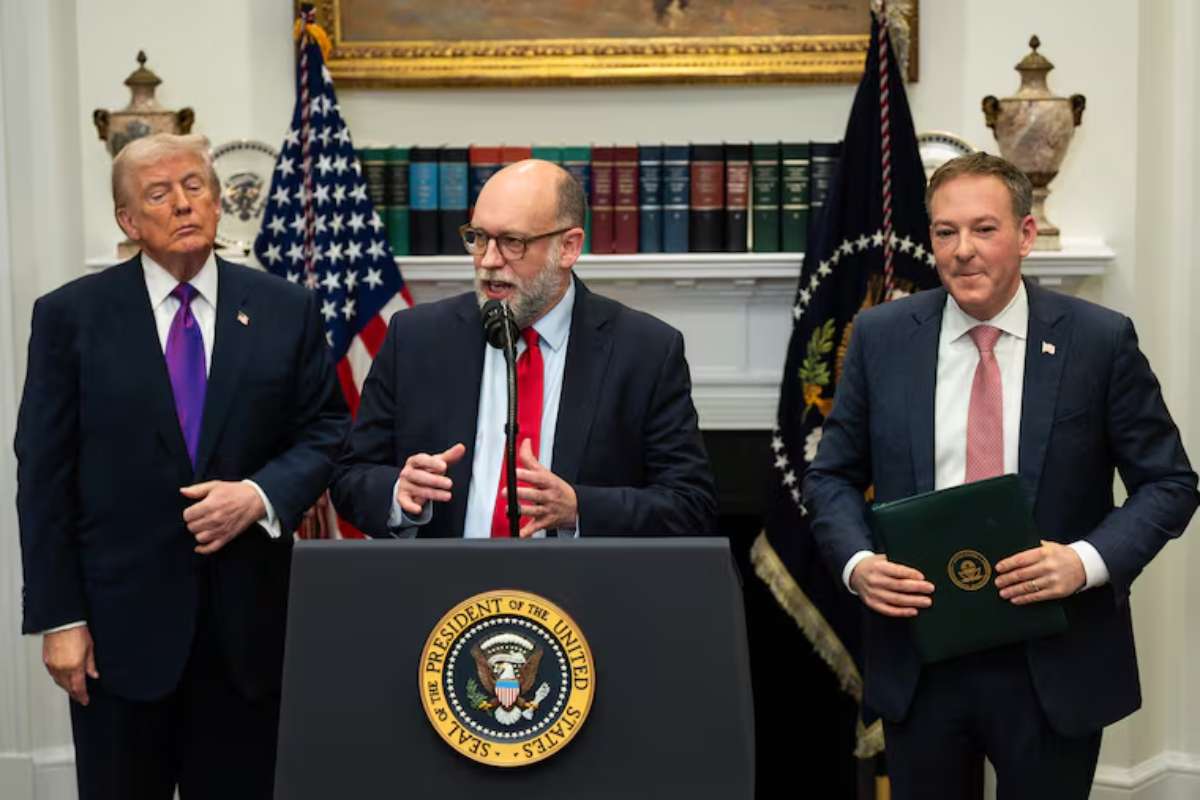
Politico also reported that Trump is seeking to create a board of political appointees to oversee NIH grant approvals. The proposed board would include Bhattacharya, amid the NIH Director Harvard funding dispute, and Russell Vought, director of the Office of Management and Budget, and would require unanimous approval for grants. Reuters separately reported the proposed structure and said the administration had not commented on the plan.
The reported confrontation comes after the Trump administration cut nearly $2.7 billion in federal funding to Harvard last year, including hundreds of millions of dollars in NIH funding, according to The Crimson. The administration has argued that its changes are intended to address concerns about how federal research money is allocated.
Bhattacharya previously worked at Stanford University with Harvard President Alan M. Garber. Garber praised Bhattacharya after his selection as NIH director, describing him as a “serious and dedicated researcher,” according to The Crimson.
Harvard Ties Shape Funding Dispute
Ashish K. Jha, former dean of Brown University’s School of Public Health, said he was not surprised by Bhattacharya’s reported refusal to cut Harvard’s funding.
“My conversations with people who are speaking directly with him are that he is starting to realize that he has gone too far, that he has acquiesced too much,” Jha told The Crimson. “I do think that has started happening in the last couple of months.”
Jha also said Bhattacharya, amid the NIH Director Harvard funding dispute, worked behind the scenes last year to help negotiate a settlement between Harvard and the White House that could have restored the university’s federal funding.
Bhattacharya testified before the Senate Appropriations Committee last year that he had pushed to preserve funding for Harvard-affiliated hospitals, according to The Crimson.
Court Rulings Complicate Trump’s Harvard Push
The administration’s latest reported demand follows several court setbacks involving Harvard’s federal funding. A federal judge ordered the government to restore Harvard’s research funding last year, while another judge dismissed a Justice Department lawsuit seeking to recover nearly $1 billion in research funding.
Both cases remain under appeal in the U.S. Court of Appeals for the First Circuit, according to The Crimson.
The NIH terminated more than $110 million in NIH Director Harvard funding grants to Harvard and affiliated hospitals between Feb. 28 and April 1, 2025. The agency later moved to limit reimbursement for research-related indirect costs to 15%, a policy that Harvard challenged in court.
The First Circuit permanently blocked that reimbursement cap in January, according to The Crimson. Harvard has argued that restrictions on federal research funding threaten scientific work conducted by the university and its affiliated institutions.
The reported dispute now places Bhattacharya at the center of a broader fight over who controls federal health research funding and how NIH grants are approved.
Visit Future Education Magazine to read more.