
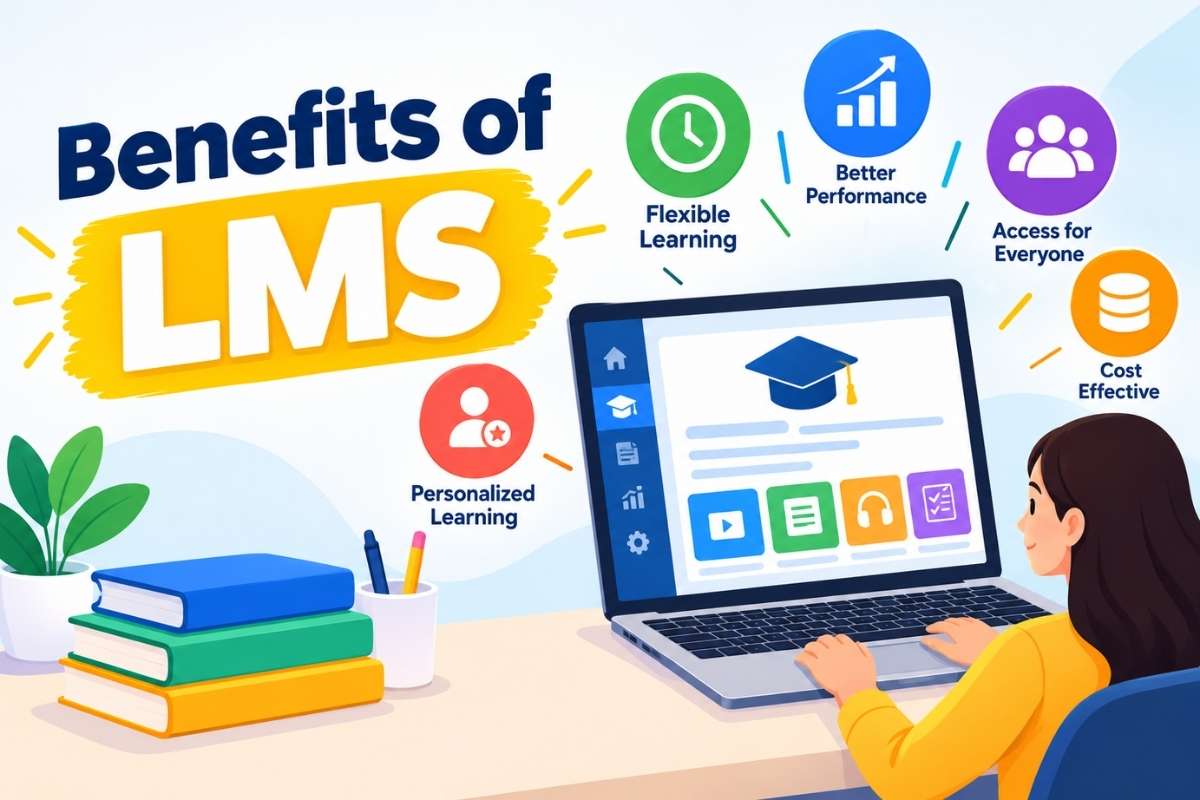
The benefits of LMS are lower training costs, better progress tracking, and more scalable learning. For HR and L&D teams, an LMS brings training content, learner data, and key workflows into one place. For schools and colleges, it can connect course materials, attendance, and learner progress.
Without an LMS, teams often rely on folders, spreadsheets, and separate tools. That makes learning harder to manage and measure. This guide breaks down eight benefits and shows which LMS features create each one.
What are the Key Benefits of LMS Platforms?
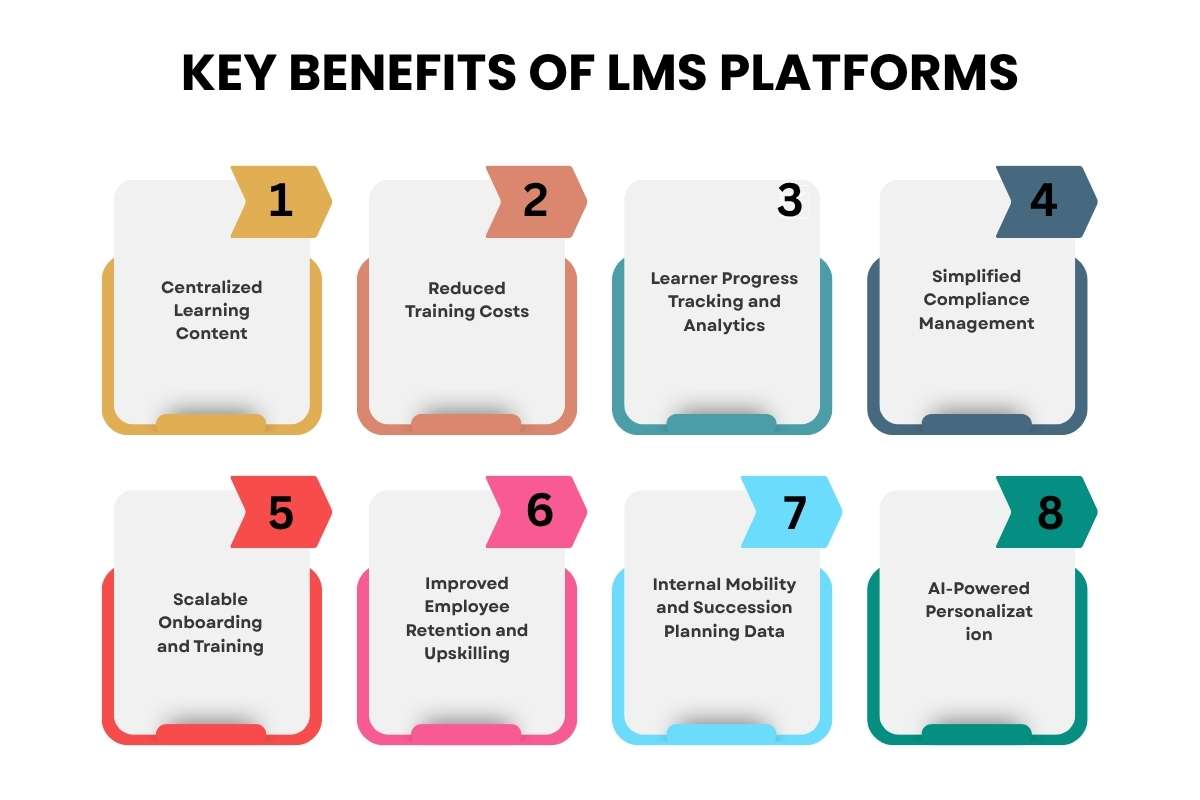
A learning management system (LMS) helps organizations manage learning, reduce costs, track progress, and build skills. These benefits apply to workplace training as well as teaching in schools and colleges. Here are eight key benefits, with examples of how an LMS can make learning more effective.
1. Centralized Learning Content
When learning content lives in email threads and shared drives, learners may use outdated or incorrect materials. Educators also spend time answering basic access questions. An LMS gives users one place for courses, videos, quizzes, badges, and other resources.
The result is easier access and content control. Admins can organize material by course, role, department, grade, or program. They can also update one version instead of replacing files in many locations.
A real example is the NCS University System in Pakistan. Its Moodle-based learning environment puts video lectures, online exams, and teacher evaluations in one central system.
2. Reduced Training Costs

Training becomes costly when sessions require travel, rooms, printed materials, and repeated instructor time. Manual registration and follow-up add more work.
One of the main benefits of LMS platforms is that they shift much of this work online. Teams can reuse courses, automate enrollment, and deliver learning How does a learning management system work to large groups. This reduces admin work and repeat training costs.
The biggest savings often come from scale. One course can support new hires, existing staff, or large student groups without rebuilding the same learning event each time.
For compliance training, Cape and Islands Emergency Medical Services System (CIEMSS) saved $20,000 a year in employee time. They moved from a paper and database process to an LMS.
3. Learner Progress Tracking and Analytics
Without clear data, a training team may know who enrolled but not who understood the material. Educators may also struggle to spot learners falling behind.
LMS analytics turn learning activity into useful signals. Teams can track enrolment, completion, scores, and group progress. Educators can use these signals to offer support earlier.
Completion alone does not prove learning. A learner may finish a course yet miss key concepts. Analytics help teams spot weak areas and adjust content.
4. Simplified Compliance Management
Manual compliance tracking creates gaps. HR may have to chase employees and check spreadsheets. They may also send reminders and verify certificates one by one.
An LMS can automate much of this work. This is one of the benefits of an LMS that is liked by HR. LMS can assign required courses based on role, set deadlines, and send reminders. It can also flag overdue learning. Some systems also manage recertification cycles.
This creates an audit trail. HR teams can see who completed required training and where gaps remain. The same model works for schools and colleges managing required staff training or academic policies.
5. Scalable Onboarding and Training

A manual onboarding process may work for ten hires but break down with 100. New employees can receive different messages or miss key courses. They may wait for HR to add them to training.
An LMS makes onboarding repeatable. HR can assign a starter course, then add role-based learning by department. Rules can trigger the next course after completion.
For example, Moodle describes this workflow through dynamic rules. It assigns general onboarding and then enrolls staff into department training. This helps every new hire start with the same core knowledge. It also reduces early confusion.
6. Improved Employee Retention and Upskilling
Among the benefits of LMS, employee development LMS for Employee Development stands out because it connects learning with career growth. Employees may look elsewhere when they cannot see a path to grow. Hard-to-find or irrelevant training can make development feel like a real opportunity.
An LMS can make development more visible and consistent. Employees can follow learning paths, build skills, and track progress toward career goals.
The link to retention is increasingly clear. TalentLMS reported that 95% of surveyed HR managers agreed that better training and skill development improve employee retention. It also found that 44% planned to prioritize reskilling for future roles in 2026.
7. Internal Mobility and Succession Planning Data
Internal moves are harder to plan when leaders cannot see what employees know. A résumé may show past roles, but it may not show current skills. It will not show completed training or readiness for a future position.
An LMS can provide part of that picture. Skill records, certifications, course history, and competency data can help HR compare current skills with future role needs.
This data can support succession plans and internal talent pools. TalentLMS found that 50% of respondents said their companies hire externally for skills current employees already have. Also, 40% said finding a new job is easier than finding a new internal role.
8. AI-Powered Personalization

Traditional training often gives everyone the same course. That can waste time for advanced learners while leaving skill gaps hidden for others.
AI-enabled LMS: AI in learning management systems tools can use learner records, assessments, and role data to suggest relevant learning. They can also flag missing skills and help create more focused learning paths. Among the different benefits of LMS, this one is useful when roles change fast.
AI should support human decisions, not replace them. HR and educators still need to check if recommendations match job goals and learner needs.
Which LMS Features Deliver These Benefits of LMS?
The benefits of learning management systems come from functions working together. The table below connects each outcome with the feature that drives it.
| Benefit | LMS feature | Impact |
| Centralized content | Content library | Keep learning materials in one place. |
| Lower training costs | Automation, reusable courses | Cuts delivery and admin costs. |
| Progress tracking | Dashboards, reports | Tracks completion, scores, and gaps. |
| Compliance | Reminders, certificates | Simplifies required training and records. |
| Scalable onboarding | Auto-enrolment, learning paths | Standardizes training for new hires. |
| Retention and upskilling | Skill paths, recommendations | Supports growth and career development. |
| Internal mobility | Skills profiles, competencies | Helps identify talent for new roles. |
| AI personalization | AI recommendations, gap analysis | Targets learning and skills gaps. |
The strongest setup is not the one with the most features. It is the one where features connect to a clear learning goal. An HR team may link roles to competencies, then use paths, assessments, and reports to track progress.
For schools and colleges, course content can link with assessments and learner analytics. At a large scale, this can support many learners without a separate process for each class or faculty.
University of Indonesia, for example, uses Moodle for more than 55,900 active students and creates more than 13,800 courses each semester. This shows how an LMS can support large academic operations.
Conclusion
The benefits of LMS go beyond putting courses online. A well-designed system can cut admin work, lower training costs, and improve learner visibility. It can also simplify compliance, support onboarding, and connect learning with career growth. AI can add another layer through recommendations and skills-gap analysis. Choose features based on your learning goals, then track the outcomes that matter most. Select one clear use case and build from there.
FAQs
1. What are the main benefits of LMS?
They include centralized content, lower costs, better tracking, and scalable learning.
2. How does an LMS reduce training costs?
It reduces repeat delivery, manual admin, travel, printing, and one-to-one training work.
3. Can an LMS improve employee retention?
Yes, it can make upskilling and career development more accessible and visible.
4. How does an LMS support schools and colleges?
It centralizes course content, assessments, learner data, and communication across classes.
5. Can an LMS identify skills gaps?
AI-enabled LMS tools can compare role needs with learner data to flag possible skills gaps.