
Key Takeaways
- NYC Schools AI Ban restricts generative AI tools for students from 2-K through 8th grade.
- The one-year moratorium starts in the 2026-2027 school year.
- High schoolers get AI literacy classes and limited supervised pilots.
New York City Public Schools will bar student-facing generative AI tools for children in 2-K through 8th grade starting this school year, affecting nearly 600,000 students.
A Citywide Pause on AI in Early Grades
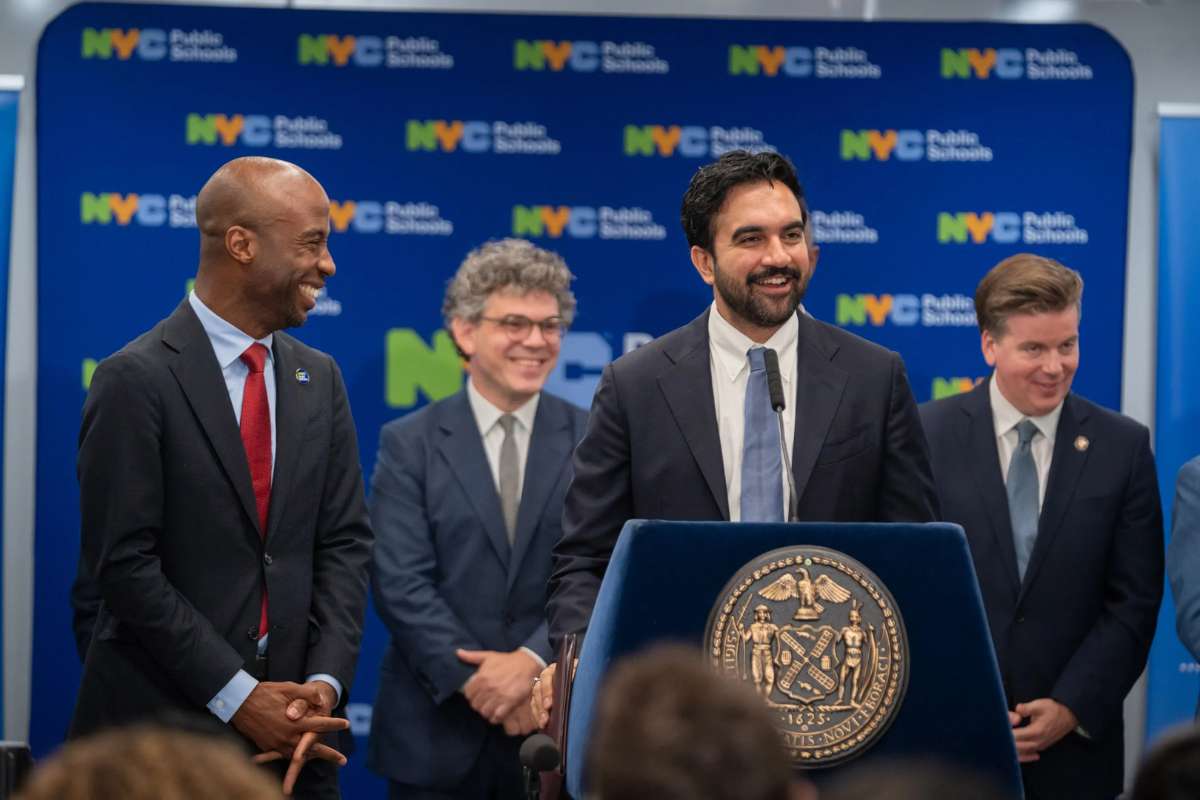
Mayor Zohran Mamdani and Schools Chancellor Kamar Samuels announced the one-year moratorium alongside new screen time limits. The policy blocks all student-facing generative AI software for children through 8th grade and bans companion chatbots across every grade level.
Officials describe the NYC Schools AI Ban as the broadest student-facing AI policy in the country. The city says the goal is to protect human instruction and connection while it studies how the technology affects learning.
A new Technology in Schools Coalition will spend the 2026-27 school year reviewing the moratorium and any pilot programs. The group includes students, educators, parents, elected officials, and outside experts. It will publish recommendations for future school years once its review wraps up.
High Schools Get Limited AI Access and Literacy Classes
High school students will not face the same restrictions under the NYC Schools AI Ban. Up to 50,000 general education high schoolers, about 5% of the student body, can take part in five limited AI pilot programs this year.
Each pilot runs in no more than five classrooms per high school under direct teacher supervision. The tools include Quill for reading and writing practice, Edia for math coaching, Brisk Teaching for guided lessons, Playlab for examining AI outputs, and Intel AI-Ready Schools for project-based learning. Weekly use ranges from about 10 to 20 minutes depending on the tool.
All high schoolers, regardless of pilot participation, will take two 45-minute AI literacy modules each year. The sessions cover what generative AI can and cannot do, along with bias, ethics, and its effect on future careers.
Teachers can still use AI for lesson planning and administrative tasks if the tools meet city safety standards. The city will also grant exceptions for assistive technology used by students with disabilities, multilingual learners, and students in career and technical programs.
Screen Time Limits Extend Beyond AI Tools
The NYC Schools AI Ban also comes alongside new screen time restrictions tied to a child’s age. Students in 2nd grade and below face restricted one-on-one screen time. Recommended daily caps run 30 minutes for grades 3 through 5 and 45 minutes for grades 6 through 8.
Every technology tool used in city schools will now go through a review process. Officials will remove tools found not essential to learning, based on vendor safety records, transparency, evidence of effectiveness, and ongoing feedback from users.
City and state officials framed the policy as a cautious response to a fast-changing technology. Several elected officials pointed to lessons learned from social media’s earlier impact on young people as a reason to move carefully with AI tools in classrooms.
The city plans to use findings from the coalition’s review to shape long-term AI policy for schools beyond the 2026-27 school year.