
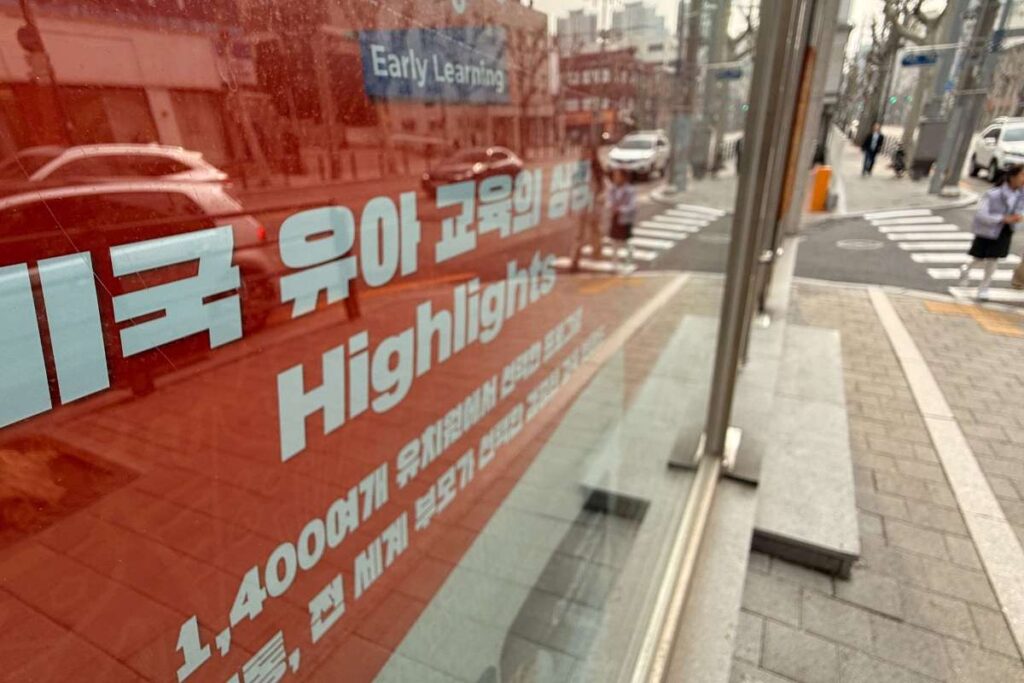
A national education ministry has announced plans to restrict knowledge based teaching for children under age three at private academies, and as part of the broader move, South Korea Targets English Kindergartens, with changes expected to begin in the second half of next year.
Focus Shifts Toward Age Appropriate Learning
The proposed rules aim to protect the developmental needs of young children by limiting structured academic instruction at an early age, and as part of this broader reform, South Korea Targets English Kindergartens to regulate early education practices. Under the plan, children below three years will not be allowed to receive formal academic teaching at private institutes. For children aged three and above, instruction time will be capped at three hours per day.
Educators view this move as an effort to encourage balanced growth during early childhood. Instead of focusing on academic performance, the new approach highlights the importance of play based learning, social interaction and emotional development. These elements are considered essential for building a strong foundation in the early years of education.
The changes are expected to affect a wide range of private academies that currently offer structured learning programs for toddlers and preschool students, and within this shift, South Korea Targets English Kindergartens as part of efforts to reshape early learning priorities. Many of these institutions have emphasized early academic preparation, often introducing subjects such as language and numeracy at a young age.
Policy Aims To Reshape Early Education Practices
The ministry plans to revise existing rules governing private teaching institutes to ensure that teaching methods align with age appropriate standards, and as part of this reform, South Korea Targets English Kindergartens to better regulate early education practices. The updated framework will also restrict certain practices that are considered unsuitable for young learners, including advanced instruction that may place pressure on children.
Another key aspect of the reform involves limiting the use of assessment methods for young students. A separate update to private education rules, set to take effect later this year, will prohibit the use of level based tests for admissions and class placement. This step is intended to reduce early academic pressure and create a more inclusive learning environment.
Teachers and education experts note that these changes could shift how early education is delivered, as South Korea Targets English Kindergartens, pushing schools to focus more on creativity and overall development rather than academic outcomes.
For students, the new rules are expected to create a more supportive learning environment that aligns with their stage of growth. Young children will have more time to explore, interact and develop essential life skills without the demands of structured academic schedules.
Parents and educators are also likely to play a key role in adapting to these changes. Awareness of age appropriate learning practices will become increasingly important as the education system moves toward a more balanced approach in early childhood.
The ministry has indicated that it aims to complete the approval process within the year and begin implementation soon after. Once in place, the regulations are expected to influence early education practices across private institutions.
These developments highlight a broader shift in education toward prioritizing the well being and natural development of young learners. By reducing the emphasis on early academic instruction, the new framework seeks to create a more effective and child centered learning experience.