
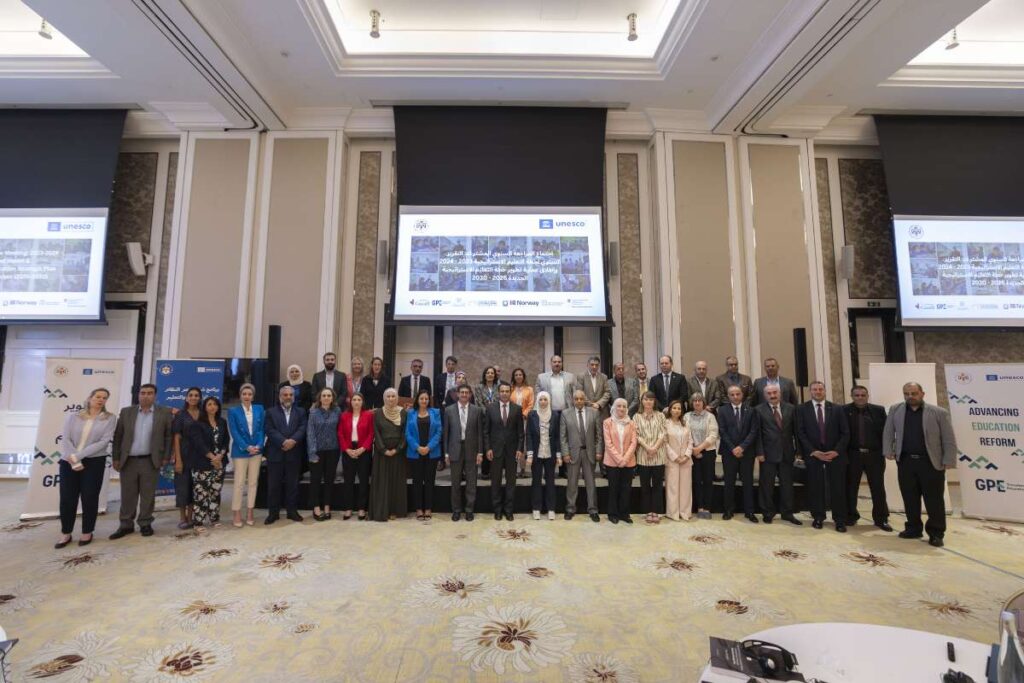
Jordan’s Ministry of Education, in collaboration with UNESCO’s Amman office, has launched the Strategic Education Plan 2026 to 2030. The plan aims to strengthen human capital and ensure inclusive learning across the country. It covers all education levels, from early childhood to higher education, and aligns with the Economic Modernization Vision and Sustainable Development Goal 4 on equitable quality education.
Focus On Foundational Learning And Teacher Development
The Strategic Education Plan 2026 to 2030 was developed using the UNESCO International Institute for Educational Planning methodology and draws on a thorough analysis of the national education system conducted in March 2025. It identifies key priorities, including strengthening foundational learning, promoting inclusive and gender-responsive education, advancing digital transformation, enhancing teacher professional development, and integrating green and climate-responsive practices in schools.
Minister of Education Azmi Mahafza described the plan as a national milestone. He emphasized that the strategy reflects a realistic assessment of sector challenges and international best practices. The plan also anticipates future trends in digital learning and global competitiveness, aiming to prepare students with the skills required for a knowledge-based economy.
The strategy supports the institutional transformation of the education sector under the newly formed Ministry of Education and Human Resources Development. This ministry merges the former Ministries of Education and Higher Education and Scientific Research to unify policies and strengthen human resources development systems.
Structured Strategy Across All Education Levels
The plan is organized into four interconnected educational areas: early childhood education, basic and secondary education, vocational and technical education, and higher education. It is reinforced by cross-cutting pillars such as digital transformation, inclusive education, risk and crisis management, and equality. These pillars aim to strengthen the resilience and sustainability of the education system.
Early childhood education is highlighted as the foundation for long-term human capital growth. Vocational, technical, and higher education are emphasized for their role in meeting labor market demands, supporting scientific research, and enhancing economic competitiveness.
UNESCO Representative Noha Bawazir described the plan as a major step toward creating a future-ready education system that is inclusive and aligned with economic modernization goals. Martin Benavides, Director of UNESCO IIEP, said the plan combines rigorous sector analysis with inclusive national dialogue, offering a coherent and actionable roadmap for the country.
The Strategic Education Plan 2026 to 2030 aims to equip students with the knowledge and skills necessary for the modern economy while ensuring equitable access to learning opportunities. By addressing early learning, workforce alignment, and digital readiness, the plan positions Jordan’s education system to meet both national and global challenges.
Through this initiative, Jordan reinforces its commitment to developing human capital, advancing education reforms, and fostering sustainable economic and social growth.