
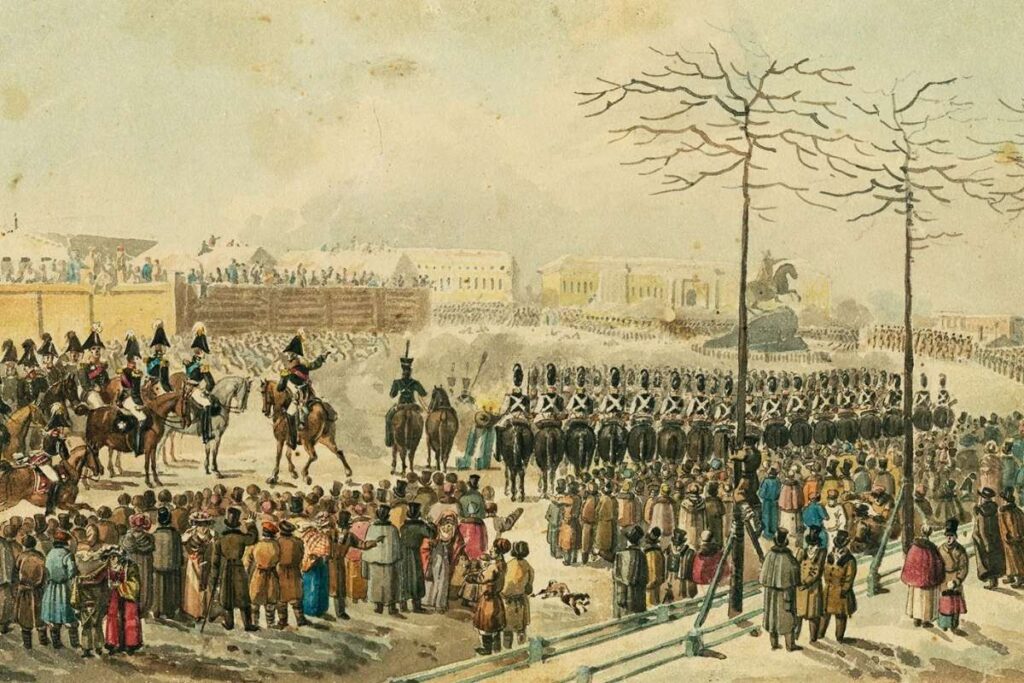
There was a time when a single ruler controlled lands across many continents, bringing different cultures, languages, and people under one flag. That was real, not fiction.
The largest empire in history was the British Empire. At its peak, it ruled nearly one in every four people on Earth. Its lands stretched so far that the sun never set on it. But Britain was not alone. Many powerful empires rose before it. Some grew faster. Some ruled more people, and all of them changed the world we live in today.
So what made these empires so large? And why did they fall? People debate what counts as the biggest empire. Do we measure land? Population? Or staying power? Let’s break it all down today by learning their rise, their fall, and everything in between.
How Empires Are Measured?
An empire is more than a large country. It controls many people and lands under one central power. Kings, khans, and rulers expanded by land or sea, bringing different cultures, laws, and trade systems together.
Historians often measure empires by land area at their peak. Some count only connected territories, while others include distant colonies. That’s why the British Empire, spread across oceans, and the Mongol Empire, stretching over one massive landmass, are often compared.
Other measures exist, like population size, influence, or duration, but land area is the most common. This approach comes from research by Rein Taagepera in the journal World Politics, a trusted source for mapping empires historically.
When we talk about the largest empire in history, we usually mean the one with the most land at its height.
Meet the 10 Largest Empires in History and Their Stories
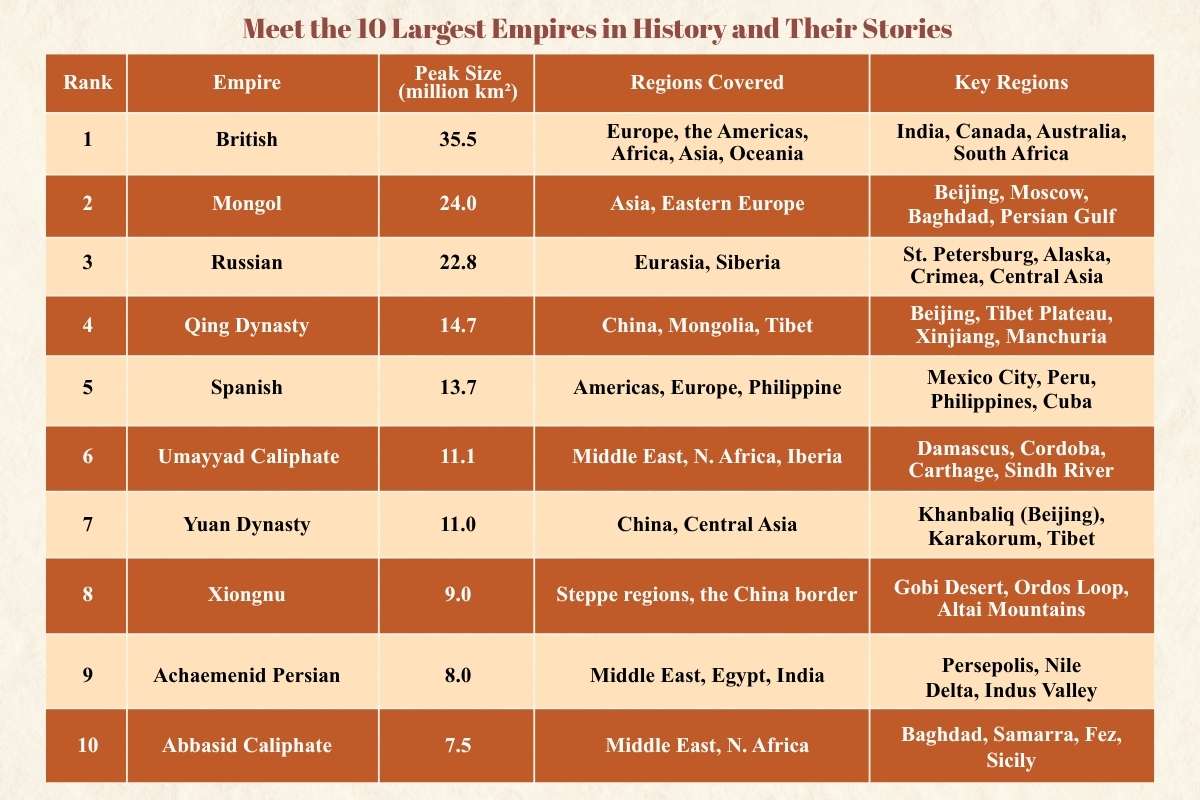
As we saw, there are many ways to measure an empire. But to keep things clear, we ranked them by the total land area they controlled at their peak.
The list below follows a descending order, starting from the largest empire to the smallest among the top ten.
| Rank | Empire | Peak Size (million km²) | Regions Covered | Famous Phrase | Key Regions |
| 1 | British | 35.5 | Europe, the Americas, Africa, Asia, Oceania | “Sun never sets.” | India, Canada, Australia, South Africa |
| 2 | Mongol | 24.0 | Asia, Eastern Europe | “Pax Mongolica” | Beijing, Moscow, Baghdad, Persian Gulf |
| 3 | Russian | 22.8 | Eurasia, Siberia | “Third Rome” | St. Petersburg, Alaska, Crimea, Central Asia |
| 4 | Qing Dynasty | 14.7 | China, Mongolia, Tibet | “Mandate of Heaven” | Beijing, Tibet Plateau, Xinjiang, Manchuria |
| 5 | Spanish | 13.7 | Americas, Europe, Philippines | “Golden Age” | Mexico City, Peru, Philippines, Cuba |
| 6 | Umayyad Caliphate | 11.1 | Middle East, N. Africa, Iberia | “Dar al-Islam” | Damascus, Cordoba, Carthage, Sindh River |
| 7 | Yuan Dynasty | 11.0 | China, Central Asia | “Great Yuan” | Khanbaliq (Beijing), Karakorum, Tibet |
| 8 | Xiongnu | 9.0 | Steppe regions, the China border | “Northern Barbarians” | Gobi Desert, Ordos Loop, Altai Mountains |
| 9 | Achaemenid Persian | 8.0 | Middle East, Egypt, India | “King of Kings” | Persepolis, Nile Delta, Indus Valley |
| 10 | Abbasid Caliphate | 7.5 | Middle East, N. Africa | “House of Wisdom” | Baghdad, Samarra, Fez, Sicily |
Now that you have seen the rankings, let’s take a quick look at each empire. This will help you understand how they grew, who led them, and why they declined.
1. British Empire
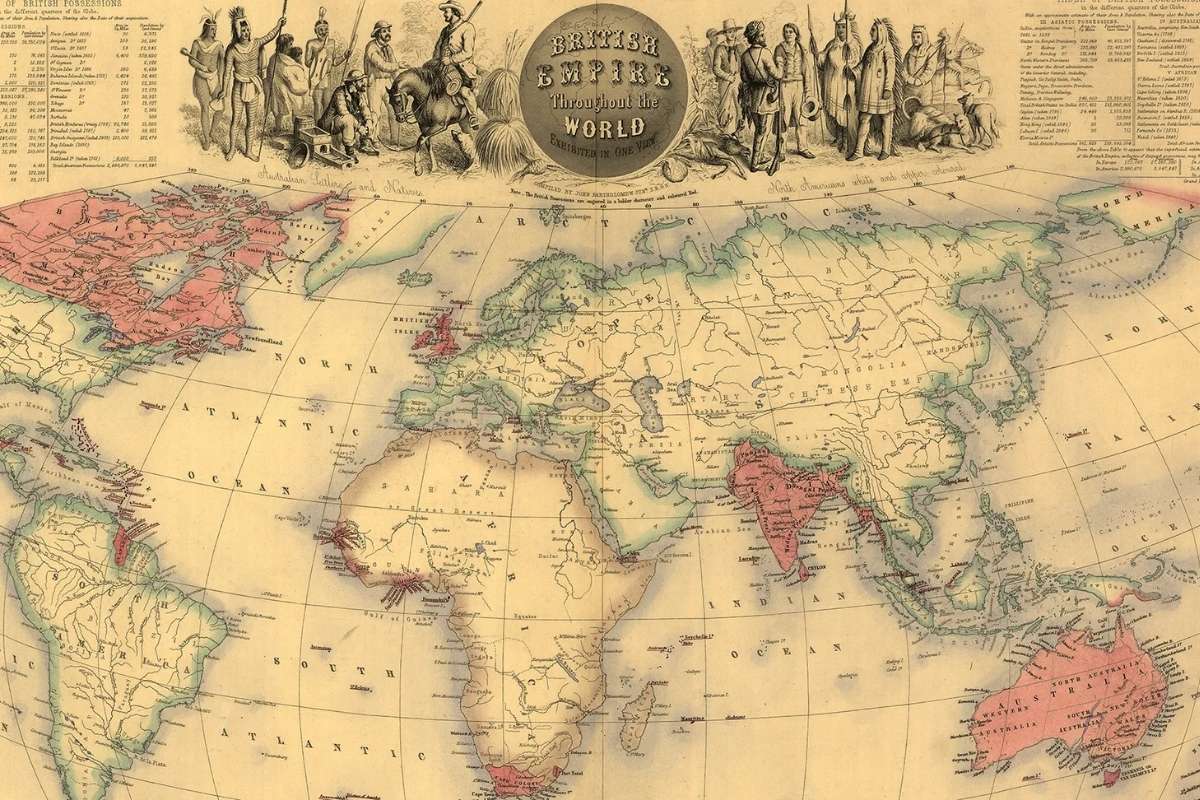
- Peak size: 35.5 million sq km
- Time period: 1920
British ships reached nearly every continent. Ports in India, Africa, and Canada buzzed with trade. Queen Victoria spread laws and education, but colonial rule meant exploitation. In 1857, Indian soldiers sparked the Sepoy Rebellion over unfair treatment and British policies. Gandhi later led the Non-Cooperation Movement in the 1920s, pushing for independence. In Kenya, the Mau Mau Uprising (1952-1960) challenged British authority. This mix of growth and resistance slowly shrank the empire, but it became the largest empire in history, leaving behind language, trade, and legal systems that still influence millions.
2. Mongol Empire
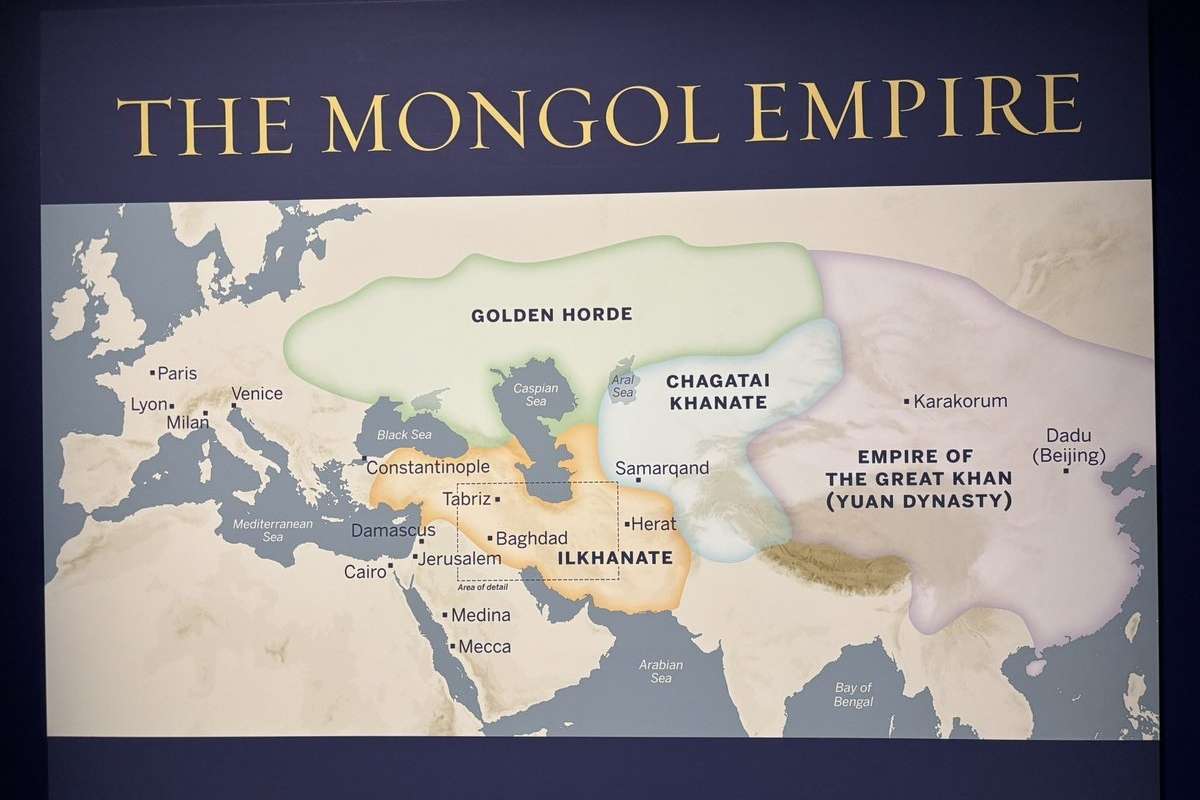
- Peak size: 24 million sq km
- Time period: 1279
The Mongols expanded at breathtaking speed under Genghis Khan. Cities like Nishapur and Samarkand fell quickly, while trade along the Silk Road flourished under Mongol protection. After Genghis Khan died in 1227, his grandsons divided the empire into the Golden Horde, Chagatai Khanate, Ilkhanate, and Yuan Dynasty, weakening central control. Even as the empire fractured, it connected east and west like never before. Its mix of fear, order, and opportunity reshaped trade, culture, and communication across Eurasia.
3. Russian Empire
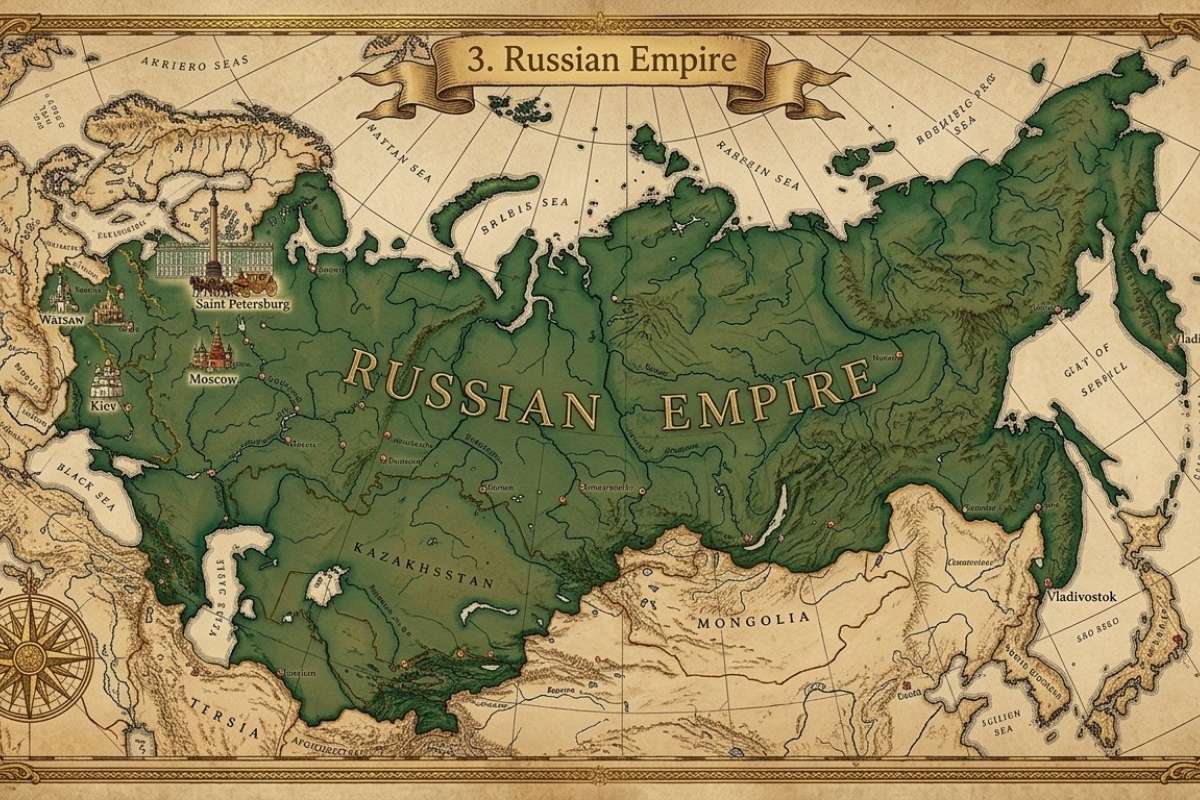
- Peak size: 22.8 million sq km
- Time period: 1895
Russia spread across Siberia and Eastern Europe, reaching cold and distant lands. Peter the Great changed cities, the army, and trade to make the empire stronger. Life in far regions was hard, and people grew unhappy. In 1773–1775, peasants and Cossacks fought in Pugachev’s Rebellion over taxes and serfdom. Later, unrest and World War I pressures caused the Russian Revolution of 1917, ending imperial rule. Even after it fell, the empire shaped Russia’s borders, culture, and influence. Its story shows that even one of the largest empires in history could be huge and powerful, but still fragile inside.
4. Qing Dynasty
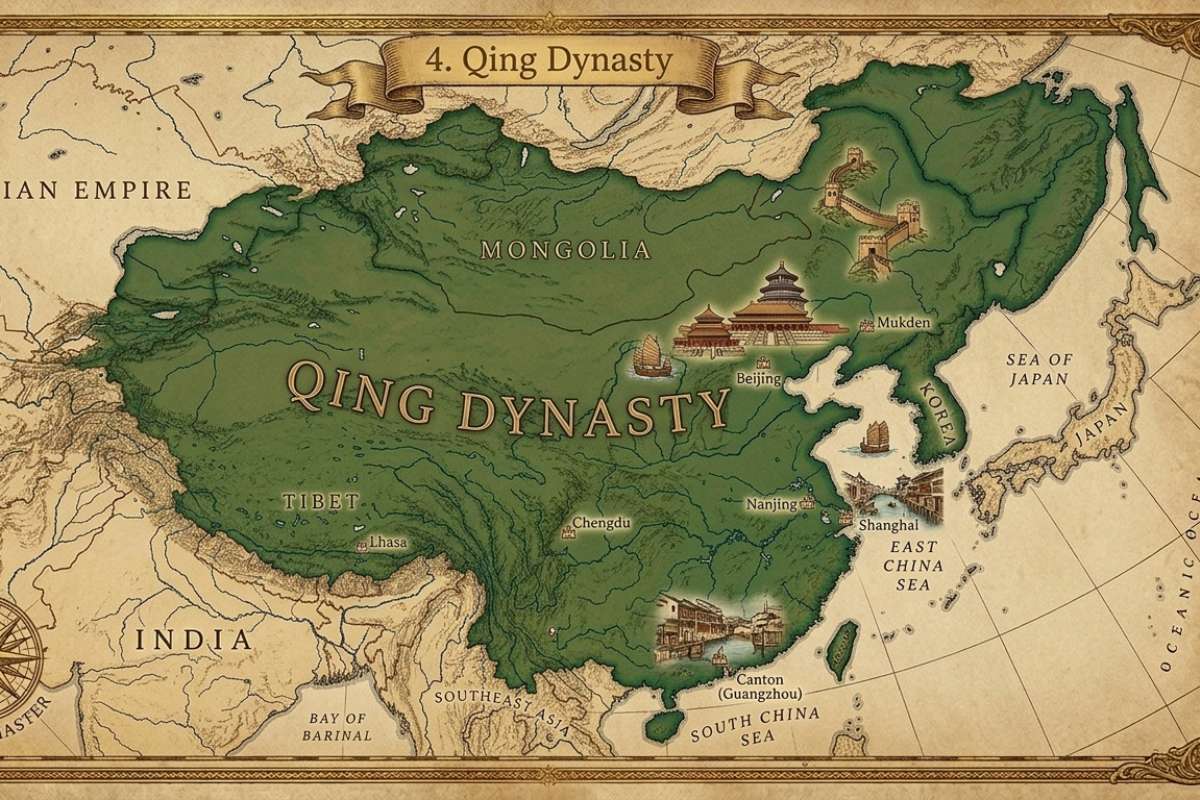
- Peak size: 14.7 million sq km
- Time period: 1790
The Qing rulers did something many empires failed to do. They held together a vast land with many cultures for a long time. Trade flowed, art and culture thrived, and the empire felt stable. Over time, corruption crept in, and outside powers began to press in. The Taiping Rebellion (1850-1864), led by Hong Xiuquan, became one of history’s deadliest civil wars, challenging the dynasty’s authority. What once stood as the largest empire in history began to weaken from both inside and outside. By the early 1900s, the dynasty collapsed. Even today, many of China’s borders reflect the reach of the Qing era.
You may also like: Top 15 Strongest Currencies in the World and Why the US Dollar isn’t #1
5. Spanish Empire
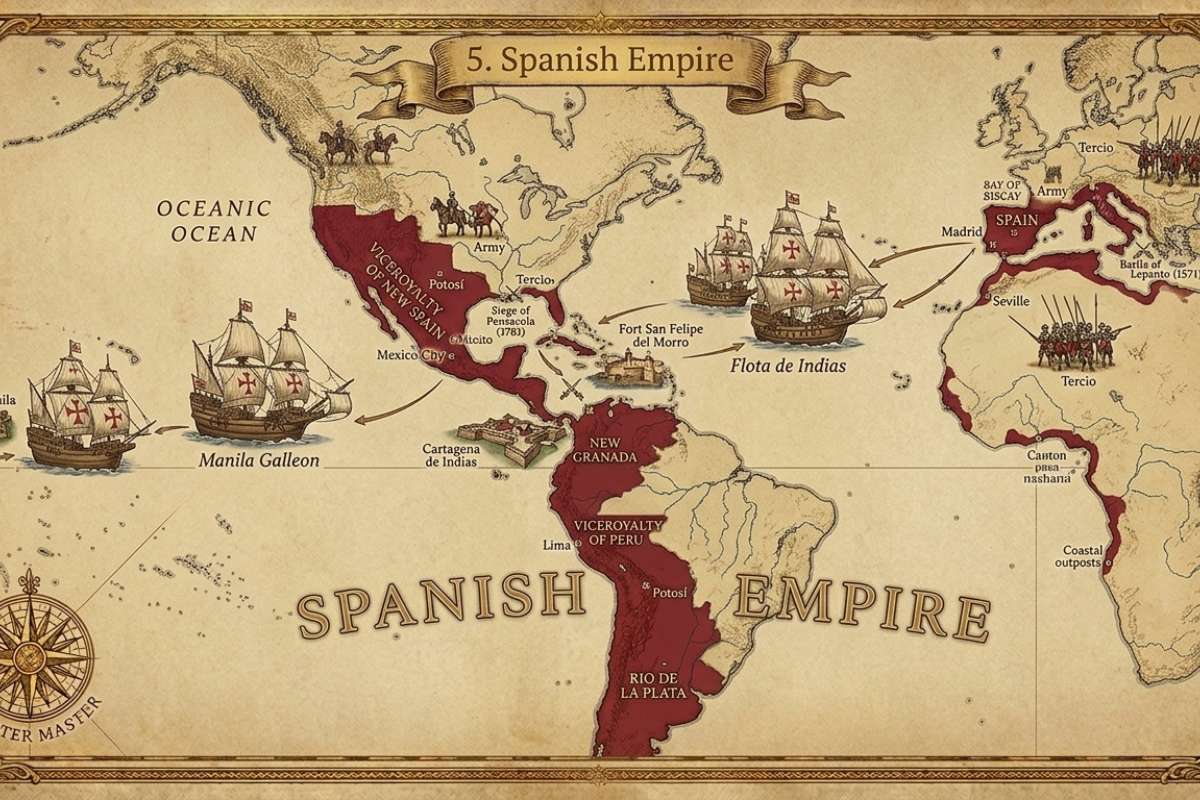
- Peak size: 13.7 million sq km
- Time period: 1810
The Spanish Empire began with bold journeys across unknown seas. Explorers like Christopher Columbus opened the door to the Americas. Spain quickly built a vast empire rich in gold and silver. Native populations often suffered, and controlling distant lands became hard. Revolts like the Mexican War of Independence (1810-1821) and the Venezuelan War of Independence (1810-1823) chipped away at Spanish control. Over time, colonies fought for independence, and Spain lost much of its empire. But its language and culture still shape much of Latin America.
6. Umayyad Caliphate
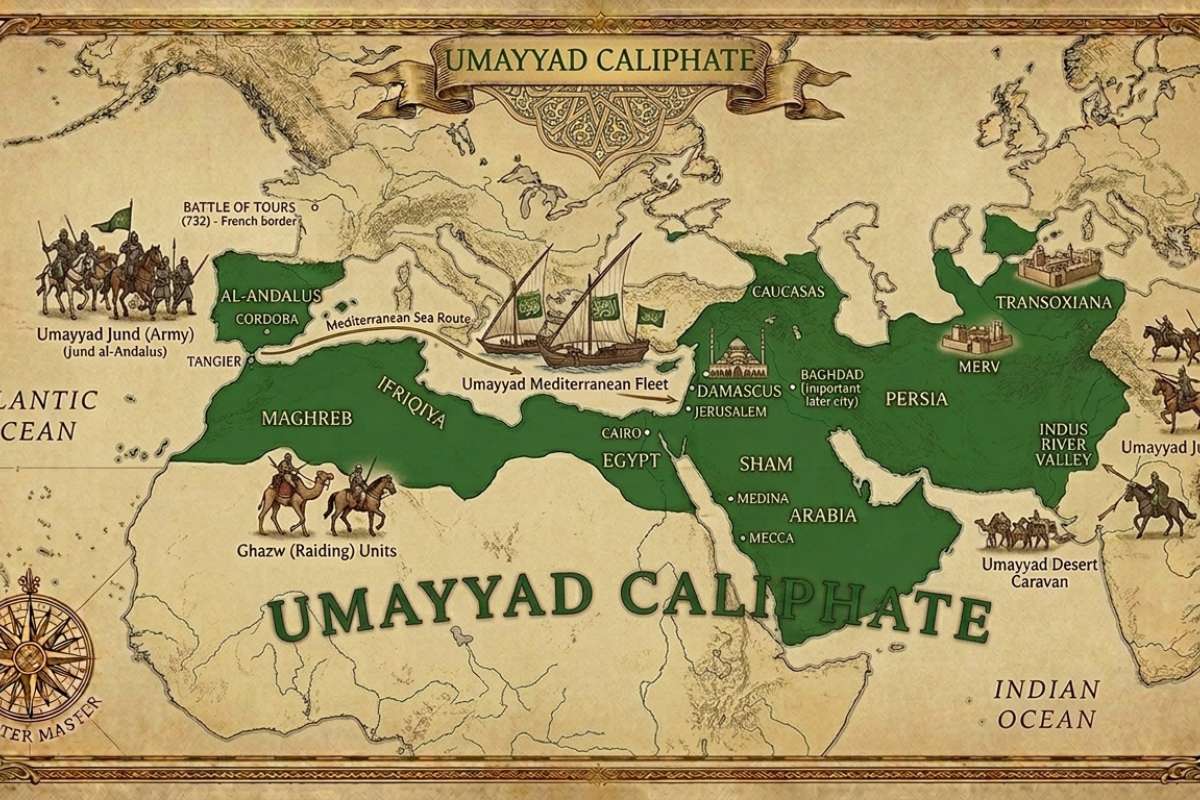
- Peak size: 11.1 million sq km
- Time period: 720
The Umayyads moved fast, expanding from the Middle East to North Africa and Spain, creating what became the largest empire in history through conquest and trade. Cities grew, and culture spread across their lands. However, rapid growth brought tension. The Berber Revolts in North Africa (740-743) challenged Umayyad control, and internal conflicts weakened their grip. Eventually, the Abbasids replaced them. Still, the Umayyads shaped early Islamic culture, architecture, and governance, leaving a lasting mark that influenced people and societies long after their fall.
7. Yuan Dynasty
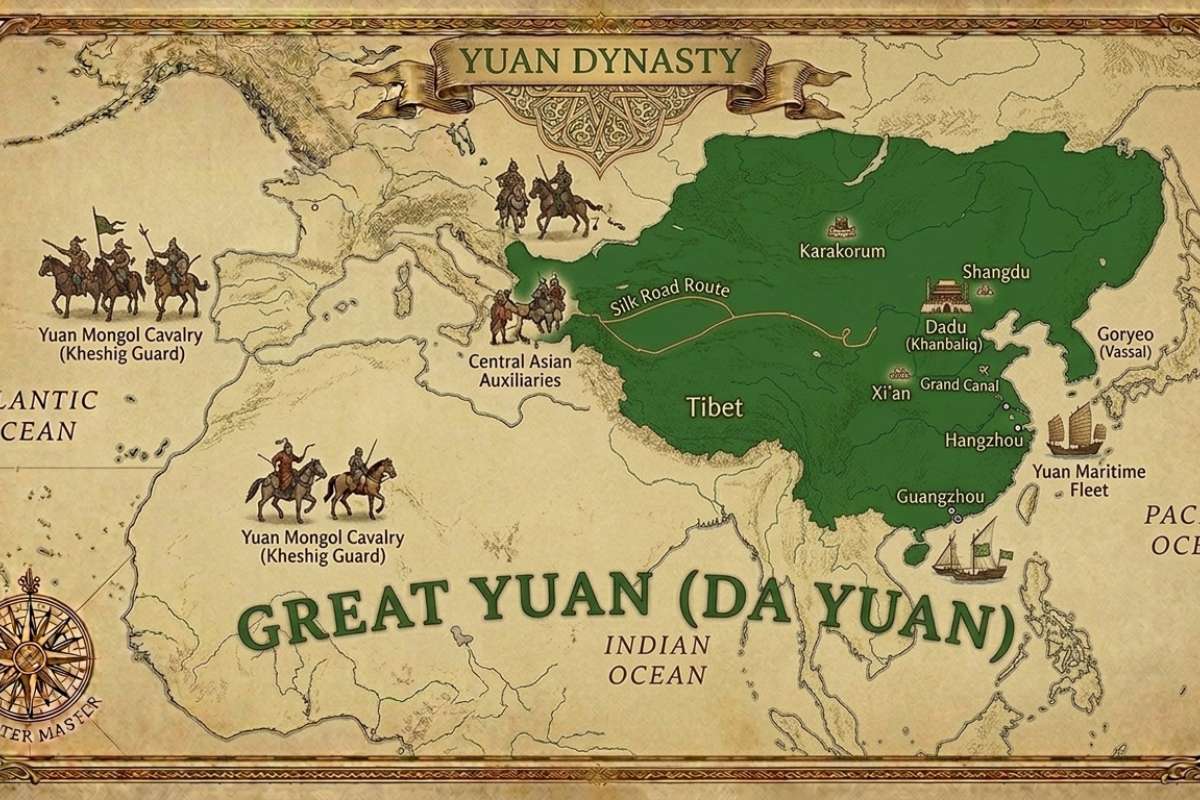
- Peak size: 11 million sq km
- Time period: 1310
The Yuan Dynasty began when Kublai Khan took control of China. Trade routes stretched farther than before, and cultures from different lands mingled in markets and courts. Not everyone welcomed foreign rulers. Rebels rose during the Red Turban Rebellion (1351-1368), challenging Mongol authority. Eventually, the Ming took over, but the Yuan had already opened China to the wider world, connecting continents through commerce and culture. By linking distant lands, the dynasty became part of the largest empires in history. It left a legacy of exchange and innovation that lasted for centuries.
8. Xiongnu Confederation
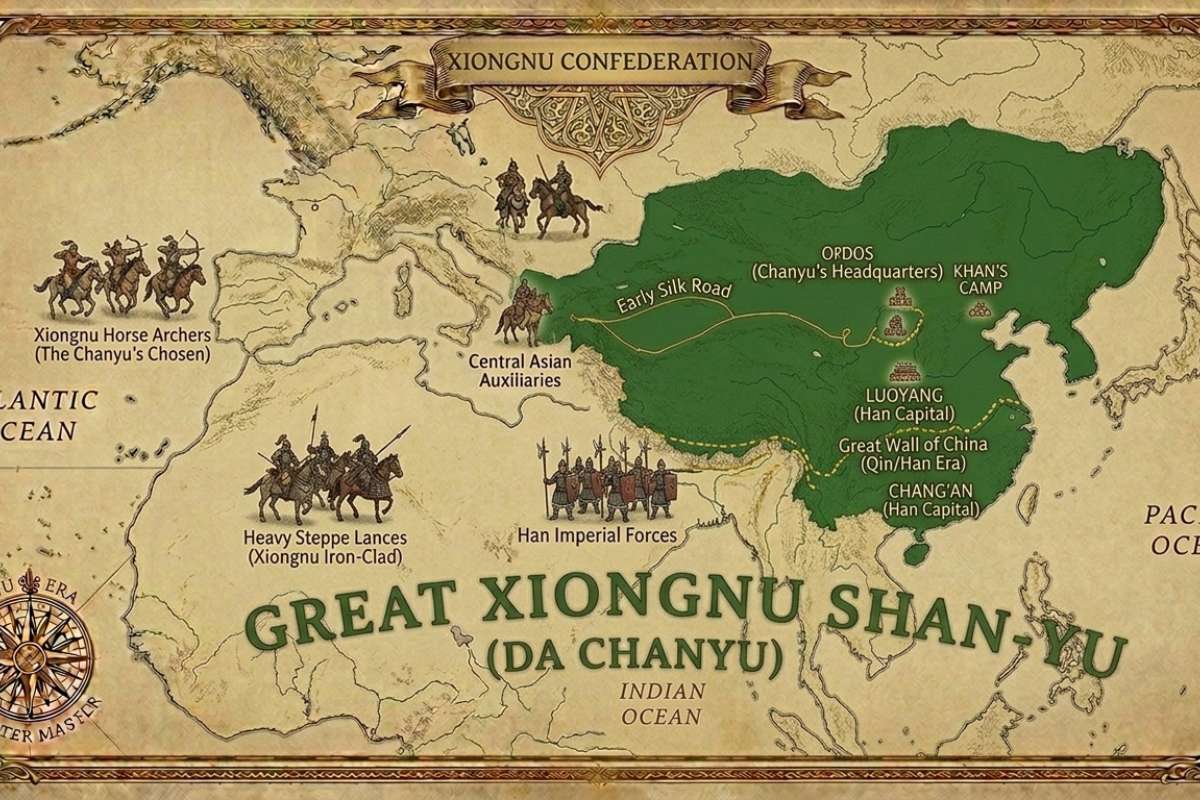
- Peak size: 9 million sq km
- Time period: 176 BC
The Xiongnu built a powerful confederation across the steppes north of China. Skilled horsemen and warriors raided neighboring states and controlled trade routes, forcing Chinese dynasties to negotiate tribute and alliances. Internal struggles and pressures from Han campaigns eventually fragmented the confederation. Even so, the Xiongnu influenced steppe politics, military strategies, and regional trade, showing how the largest empire in history could dominate vast lands long before the rise of later empires.
9. Achaemenid Empire
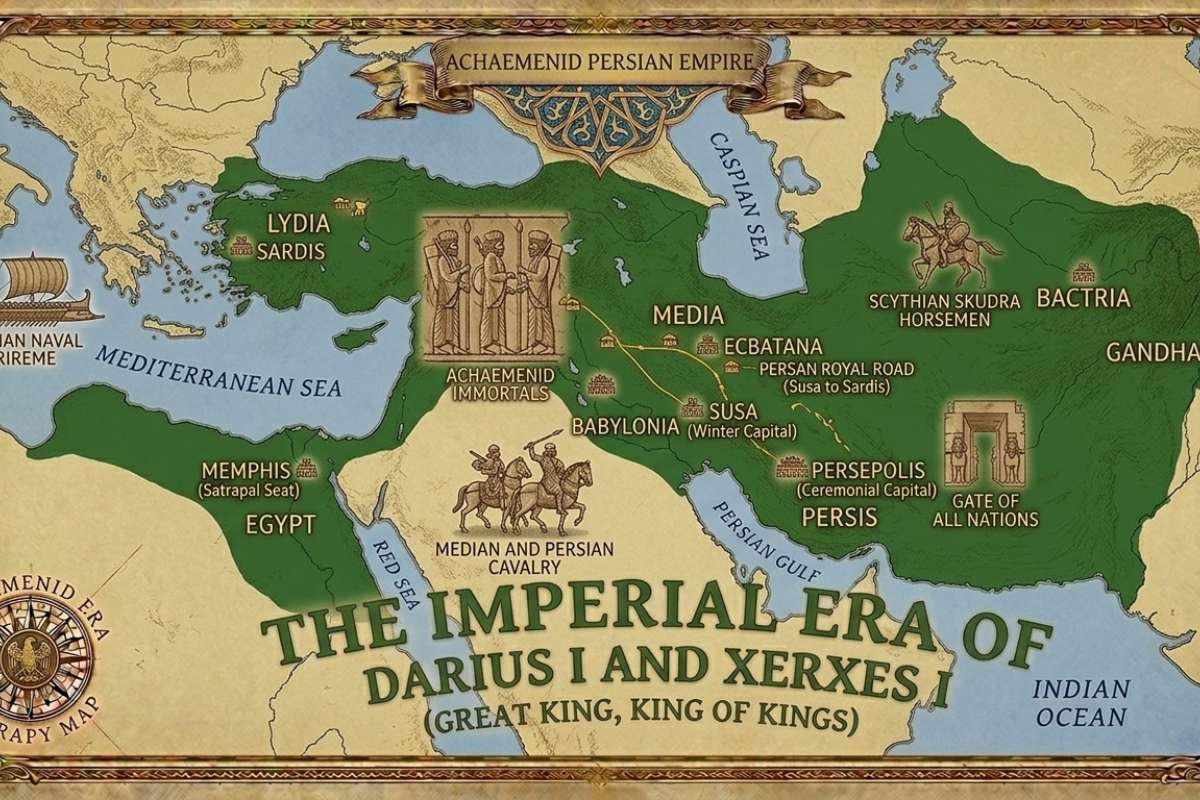
- Peak size: 8 million sq km
- Time period: 500 BC
Cyrus the Great created a vast Persian empire stretching from Egypt to India. Roads, postal systems, and local administration allowed rulers to govern efficiently. While revolts and succession disputes challenged their rule, the Achaemenids promoted tolerance, trade, and infrastructure. Their legacy of governance, culture, and architecture influenced later empires. The Achaemenid story shows how the largest empires in history relied on smart systems to manage vast lands.
10. Abbasid Caliphate
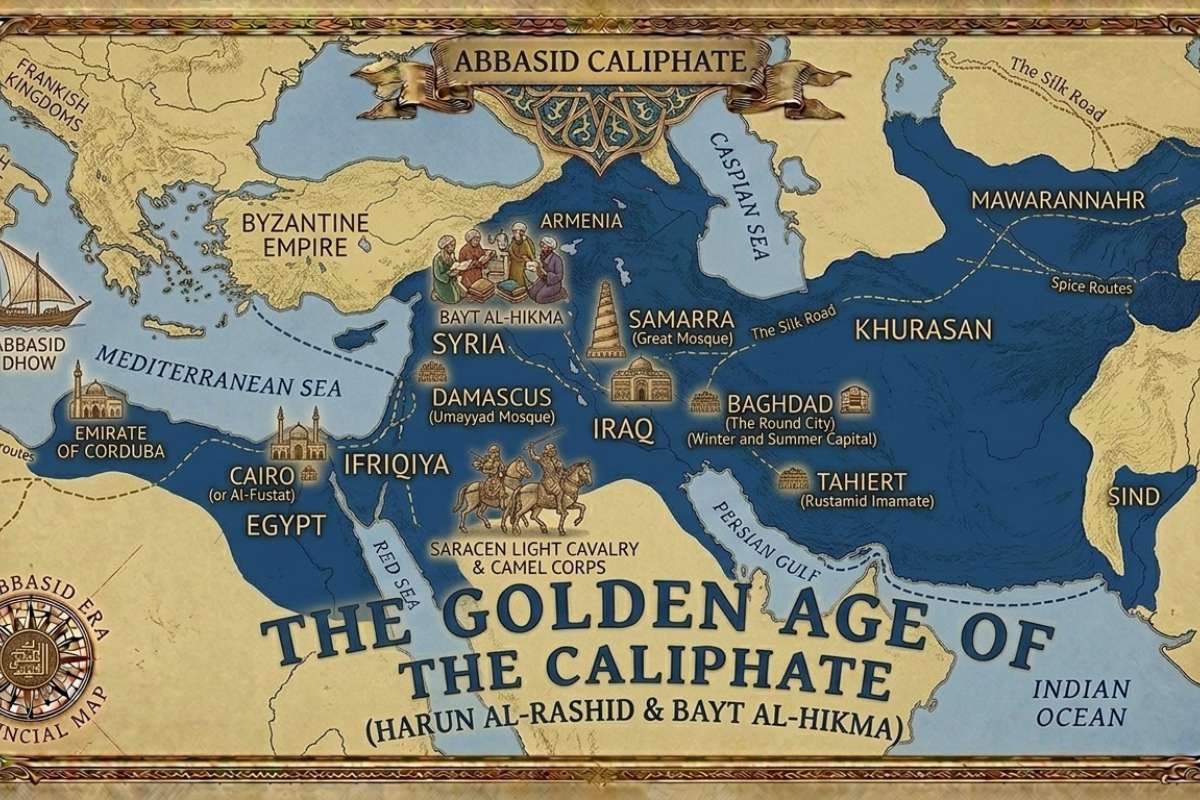
- Peak size: 7.5 million sq km
- Time period: 750
The Abbasids ruled a vast empire, famous for knowledge and culture. Baghdad became a center of science, medicine, and philosophy, while trade connected distant lands. Scholars like Al-Khwarizmi advanced mathematics, and libraries preserved classical knowledge. Yet internal power struggles and regional revolts weakened the empire. The Mongol sack of Baghdad in 1258 destroyed much of its capital and ended its central rule. Even so, the Abbasid Caliphate influenced learning across the world. It left a lasting legacy beyond conquest and borders.
Why Did the British Empire Become the Largest Empire in History?
Imagine standing on the deck of a British ship in 1588 as the Spanish Armada sails toward England. Victory that year protected the island and also opened the oceans to British ambition. Their ships could carry soldiers, weapons, and supplies anywhere, giving Britain a reach no other empire had.
Back home, factories worked nonstop, producing guns, cloth, and ships that fueled trade and conquest. Slowly, the East India Company took control of India piece by piece, and by 1920, Britain ruled about a quarter of the planet. Without India, the empire would still stretch 10 million km², but it wouldn’t hold the crown.
Here’s what set Britain apart from other empires:
- Control of the seas: A strong navy allowed Britain to move troops and goods anywhere quickly.
- Smart use of trade companies: The East India Company helped Britain gain influence in India without full-scale conquest at first.
- Industrial power: Factories supplied weapons, ships, and goods to expand both trade and territory.
- Diplomacy and alliances: Britain combined negotiation with force, avoiding unnecessary wars while keeping rivals in check.
By blending sea power, trade, industry, and strategy, Britain became the largest empire in history. It left a mark on the world that lasts even today.
You may also like: Happiest Country in the World (2026): Top 10 Countries Ranked
How the Largest Empires in History Still Shape Our World Today?
Step back and look at the world today. Empires long gone shaped their borders, languages, trade routes, and even some family trees. The British spread English, courts, and schools across continents; over 50 nations still speak it, and the Commonwealth links 56 countries.
The Mongols opened the Silk Road, letting spices, ideas, and cultures flow between East and West. DNA studies show that 1 in 200 men today carry Genghis Khan’s genes, a living reminder of those connections.
Russia pushed east to the Pacific, shaping trade routes and energy pipelines. Spanish gold funded Europe’s art boom, while Roman roads still carry cars centuries later. Archaeologists in 2026 uncovered new Mongol artifacts in Mongolia, proving how far trade and influence once reached.
The legacies of the largest empires in history still echo everywhere. UN votes and even the apps on our phones show us that history still shapes our daily lives in ways we often take for granted.
Conclusion
The largest empire in history was not just about size. It was about reach, power, and influence. The British Empire stands at the top in land area. The Mongols dominate in land continuity. Others shaped culture, trade, and politics. Every empire rose with strength. Every empire fell with time.
But their legacy still lives around us. The world we know today is, in many ways, a result of their rise and fall.
FAQs
Q1: Which empire lasted the longest in history?
The Roman Empire, including its eastern Byzantine continuation, lasted nearly 1,500 years.
Q2: What empire had the biggest population at its peak?
The Qing Dynasty ruled over around 400 million people at its height.
Q3: Did any empire really control the entire world?
No empire ever ruled the entire world, though some reached across multiple continents.
Q4: How did trade shape empires?
Trade brought wealth, power, and cultural influence, helping empires like the Mongols and British expand.
Q5: Can we see traces of ancient empires today?
Yes, roads, languages, laws, architecture, and even DNA reflect their lasting influence.