
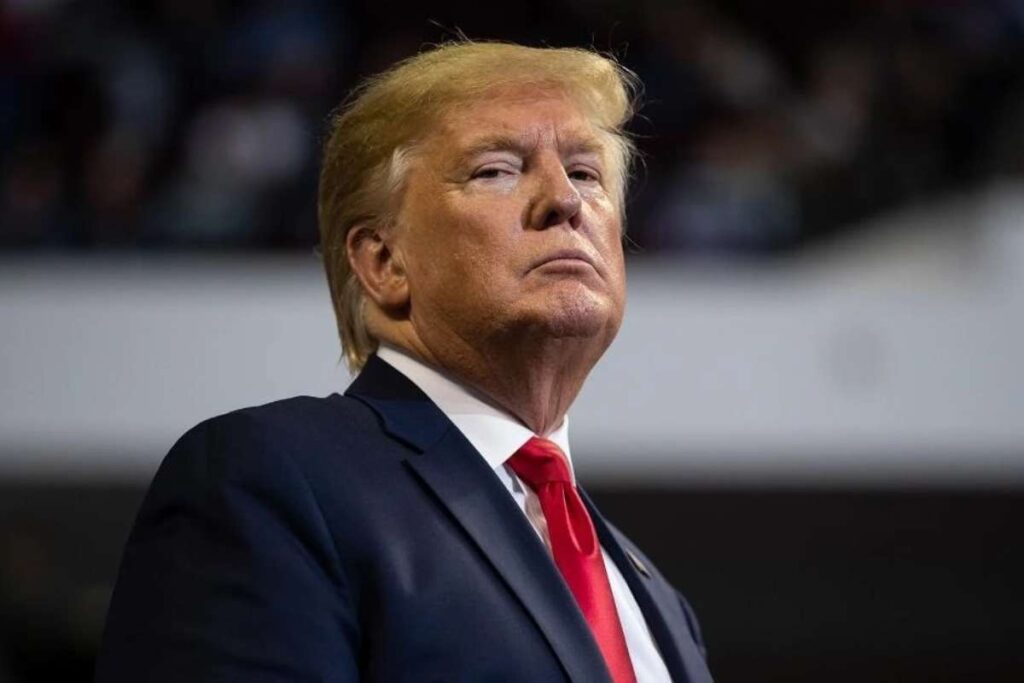
Key Points:
- Trump on foreign students – Trump warned that reducing international student numbers would “financially destroy” U.S. universities.
- Foreign students contribute billions to the U.S. economy and keep many colleges afloat.
- Experts say they boost research, innovation, and global competitiveness in higher education.
U.S. President Donald Trump on foreign students said reducing the number of international students in American universities would “financially destroy” the higher education system. In an interview with Fox News host Laura Ingraham on Monday, Trump described foreign student enrollment as essential to the business operations of U.S. colleges and universities.
Trump said he does not personally favor having large numbers of foreign students but acknowledged their importance to maintaining the stability of the education sector. “You don’t want to cut half of the people, half of the students from all over the world that are coming into our country — destroy our entire university and college system — I don’t want to do that,” he said. “I actually think it’s good to have outside countries.”
Financial Role of International Students
Trump on foreign students noted that they provide critical funding for many U.S. institutions, including smaller colleges and historically Black universities that rely on international tuition fees. He said overseas students often pay “more than double” what domestic students do, contributing significantly to the academic economy.
“We do have a lot of people coming in from China; we always have China and other countries,” Trump said. “If we were to cut that in half, you would have half the colleges in the United States go out of business.”
According to the U.S. Department of Commerce, international students contributed more than $40 billion to the American economy in recent years, supporting both universities and local communities through tuition, housing, and living expenses. Many U.S. colleges depend on this revenue to maintain academic programs, research initiatives, and scholarships.
International Enrollment Trends
Recent data from the Institute of International Education (IIE) shows that over one million foreign students are currently enrolled in American higher education institutions. These students come from countries including India, China, South Korea, and Canada, among others.
The Organisation for Economic Co-operation and Development (OECD) reports that India remains a leading source of international students, accounting for 14% of all foreign enrolments in OECD countries in 2023. However, the United States has seen a decline of 39% in Indian student numbers due to stricter financial requirements and limited work opportunities after graduation.
Even with the drop, the U.S. still hosted 331,602 Indian students in the 2023–2024 academic year, making India the largest source country for international students in the United States.
Universities’ Perspective
University administrators across the country have long emphasized the value of global diversity on campuses, both economically and academically. International students contribute to research innovation, cultural exchange, and the development of global partnerships in science, technology, and business.
Many institutions have expanded their international outreach programs to attract a broader range of applicants, offering additional support for visa processing, career development, and post-study employment. The goal is to maintain strong enrollment figures and encourage cross-border academic collaboration.
Higher education analysts say that Trump on foreign students highlights the importance of maintaining international student participation as key to preserving the United States’ global leadership in research and education. Without these students, they warn, many graduate programs—particularly in STEM fields—would struggle to operate at current levels.
Economic and Educational Outlook
Trump on foreign students brings attention to the balance between maintaining national education priorities and sustaining the financial health of American universities. For students and educators, the discussion underscores how closely tied higher education is to international participation.
While policy debates may continue, the broader consensus among education leaders remains clear: international students not only support the financial framework of U.S. universities but also enrich the academic experience for all learners.