
Key Points:
- California will ban ultraprocessed foods in schools by 2032.
- The goal is better student health and learning.
- Schools get support for a smooth transition.
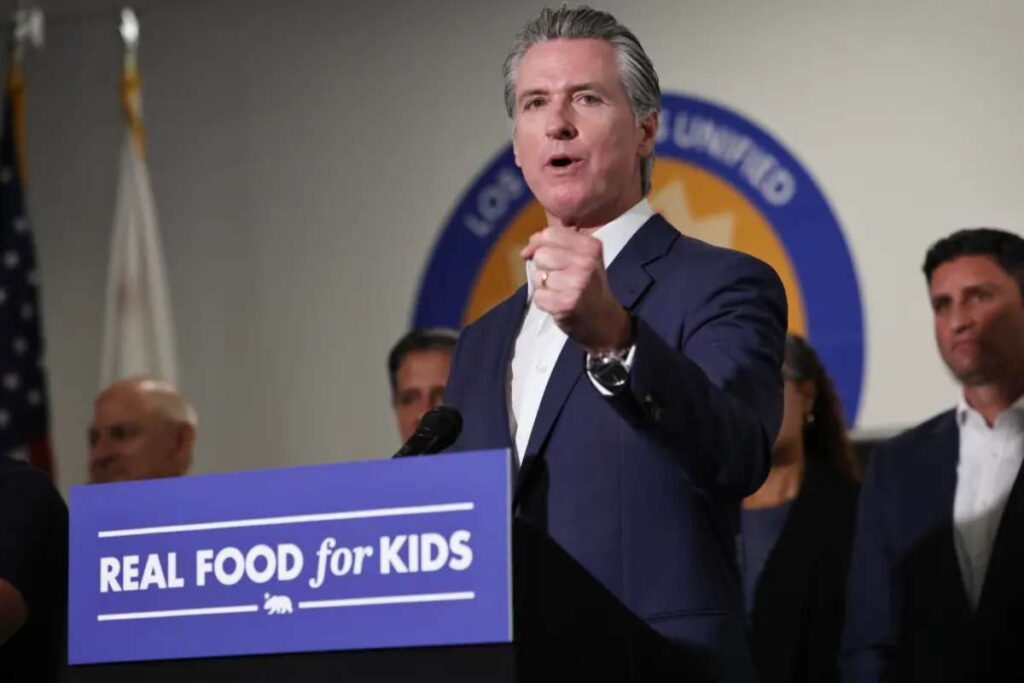
California Governor Gavin Newsom has signed a new law that will gradually eliminate ultraprocessed foods from all public school meals in the state by July 2032.
The legislation, known as AB 1264, was introduced by Assemblymember Jesse Gabriel and focuses on improving the nutritional quality of food served in schools. It defines ultraprocessed foods as those containing artificial colorings, flavor enhancers, or high levels of saturated fats, sodium, or added sugars. The measure aims to support students’ long-term health and learning outcomes.
Promoting Healthier School Meals
Under the new law, California schools will begin phasing out ultraprocessed foods in stages over the next several years. The initiative is part of a broader effort to promote balanced nutrition and encourage healthier eating habits among students. School districts will receive guidance on updating menus, sourcing fresh ingredients, and aligning with new dietary standards.
Nutrition experts have long emphasized the link between diet quality and academic performance. Healthier meals can lead to better concentration, improved energy levels, and reduced absenteeism. By limiting foods high in additives and refined ingredients, the state hopes to enhance both physical well-being and classroom engagement among students.
Educators and parents have also expressed support for the move, noting that access to wholesome food during the school day plays a key role in shaping lifelong dietary habits. The bill encourages collaboration between nutritionists, school administrators, and local suppliers to ensure smooth implementation without disrupting meal programs.
Setting a National Example
California’s plan aligns with growing national attention on school nutrition and student wellness. The state has already taken steps to restrict food dyes and chemical additives in school products by 2027, and this new measure builds upon those earlier standards.
The approach focuses on providing children with meals that are both nutritious and appealing, balancing taste with health. Many schools are expected to increase offerings of fruits, vegetables, whole grains, and minimally processed proteins while cutting back on packaged snacks and sugary beverages.
Supporters say the 2032 timeline gives schools ample time to adjust procurement processes and kitchen operations. Training programs for cafeteria staff will help ensure the transition maintains meal quality and variety.
Researchers studying child nutrition have noted that reducing ultraprocessed foods can help lower risks of obesity, diabetes, and heart disease later in life. In an educational setting, such preventive measures also contribute to improved student behavior and learning efficiency.
A Step Toward Healthier Learning Environments
California’s phased approach positions it among the first states to adopt such comprehensive school nutrition standards. As awareness of the health effects of ultraprocessed foods grows, education leaders across the U.S. are monitoring how this initiative influences student outcomes.
By combining nutrition policy with education goals, the law reflects an understanding that a student’s health is directly connected to their ability to learn. Health officials and educators alike view the initiative as a foundation for more active, focused, and resilient school communities.
Schools will begin implementing the first changes in the coming years, with the complete transition scheduled for July 2032.