
Key Points:
- Boston Public Schools AI program introduces an AI curriculum in high schools, teaching skills and ethics.
- Partnership with industry and higher education, backed by a $1M donation and an advisory board.
- Teachers trained, students gain hands-on experience and learn responsible AI use.
Boston Public Schools will become the first district in the country to implement an AI-focused curriculum in high schools through the Boston Public Schools AI program, aiming to equip students with practical skills and an ethical understanding of the technology. The initiative will begin in September and is designed to prepare students for college, careers, and the future workforce.
AI Curriculum Developed Through Collaboration With Industry
The Boston Public Schools AI program will be created through a partnership between the school district, city government, higher education, and local companies. Students will learn to use AI tools effectively while understanding their ethical implications. Courses will include hands-on opportunities and support for educators to integrate AI responsibly in classrooms.
A $1 million donation from tech entrepreneur Paul English will support the launch of the curriculum. The initiative will also establish an AI-industry advisory board, chaired by English and Ellen Rubin, to provide guidance, feedback, and real-world learning opportunities for students. The board will consist of leaders from local companies at the forefront of AI development.
Teachers Receive Training and Students Gain Real-World Experience
Educators will participate in advanced training programs to prepare for the new curriculum as part of the Boston Public Schools AI program. Almost 30 teachers in the district are already qualified as AI fellows, and additional support will be provided to ensure lessons are delivered effectively. The program emphasizes that students’ personal data will not be shared with outside entities, focusing instead on responsible and informed use of AI technology.
The curriculum aims to help students identify inaccurate AI outputs, evaluate information critically, and apply AI in problem-solving. The hands-on approach will extend learning beyond classrooms through industry engagement and community-based projects. Students will be encouraged to explore AI applications while developing a clear understanding of ethical considerations.
District leaders stress that the Boston Public Schools AI program builds on prior work in AI education and will continue to expand over time. The program reflects the growing importance of AI skills in higher education and the workforce, preparing students for future opportunities in technology-driven fields.
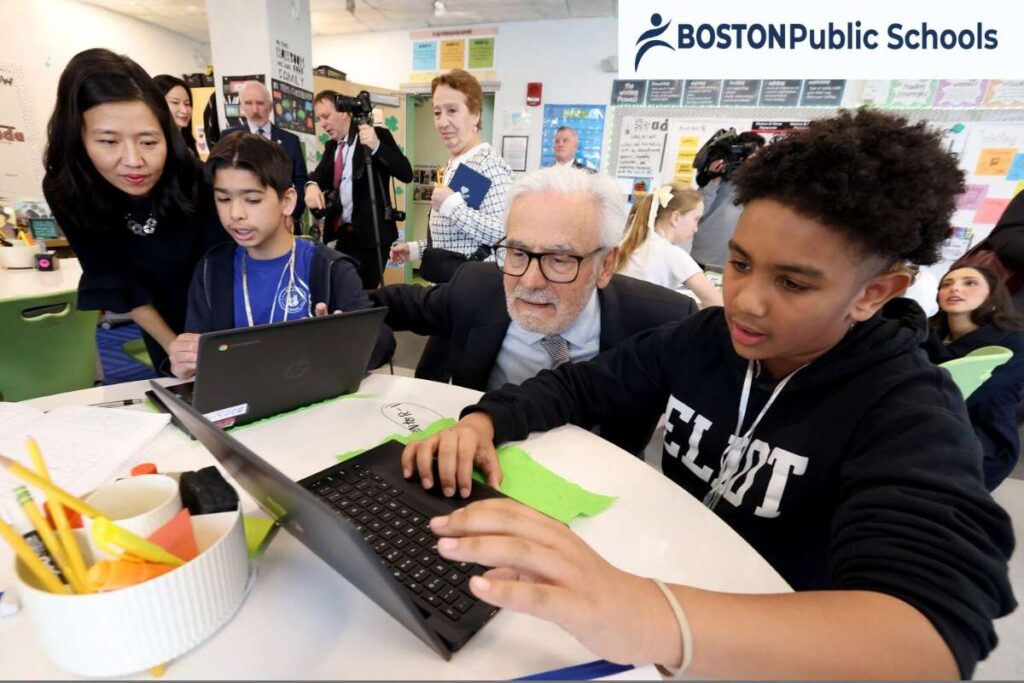
Superintendent Mary Skipper noted that the initiative strengthens ongoing efforts to integrate AI into instruction, while Eliot K-8 School Head Traci Walker Griffith highlighted the role of students as leaders in applying AI thoughtfully.
The program represents a model for other districts seeking to prepare students for emerging technologies, combining rigorous instruction, ethical guidance, and engagement with local industry. It aims to ensure students graduate with both practical AI skills and an understanding of how to navigate the technology safely and responsibly.
By establishing this framework, the Boston Public Schools AI program intends to set a precedent for AI literacy and ethical use, supporting students in leveraging technology for education and career advancement.
You may also like: Future of AI in Education