
Key Takeaways
- Board approved measure with 6 votes in favor and 0 against, with 1 recusal
- LA school screen policy will apply from the 2026 to 2027 academic year.
- Students in first grade and below will not use digital devices in class
- The parent group supporting limits has about 2000 members locally
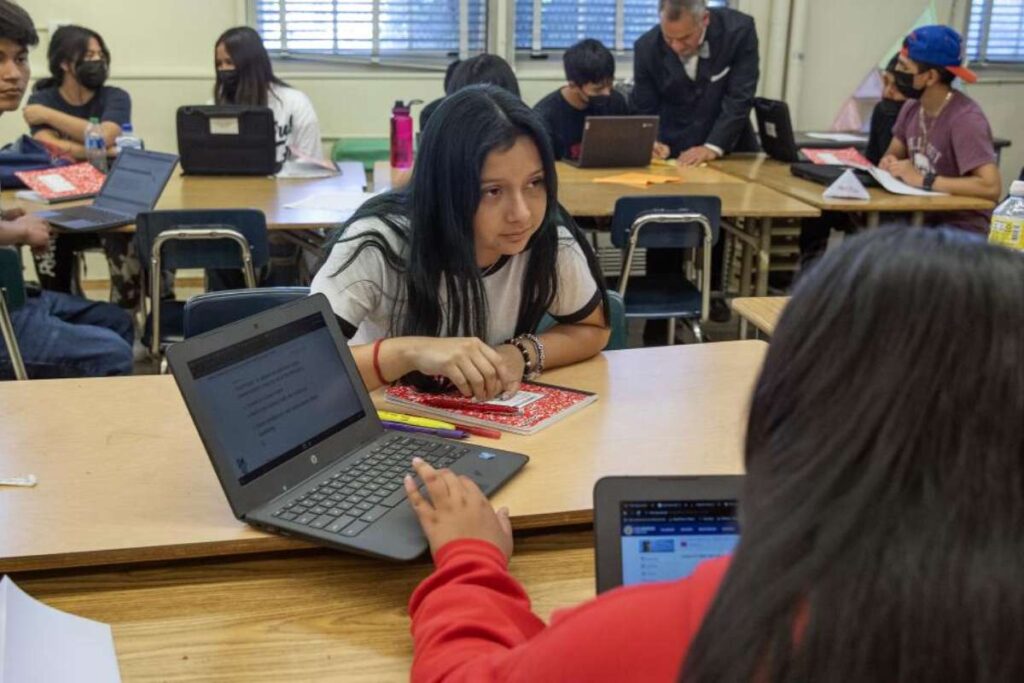
The Los Angeles Unified School District has approved a major change in classroom practices through its LA school screen policy, limiting student use of laptops and tablets and encouraging more pen and paper assignments.
Schools Move Toward Reduced Screen Use
The decision makes the district one of the first large school systems in the United States to formally shift away from heavy reliance on digital devices in classrooms. The resolution requires the creation of detailed screen time policies based on grade level and subject area.
Under the LA school screen policy, younger students will see the most immediate changes. Children in first grade and below will not be allowed to use digital devices during class time. For older students, usage will be restricted during periods such as lunch and recess.
Schools will also need to define how technology is used during lessons. The policy aims to ensure that devices support learning without becoming a source of distraction. Students will not be allowed to freely access online video platforms during school hours.
Parents will have clearer options to opt their children out of classroom technology use. This adds flexibility for families who prefer traditional learning methods.
The district will also review its contracts related to education technology. This step is intended to assess how digital tools are being used and whether they align with classroom goals.
Parent Concerns And Classroom Impact
The LA school screen policy follows growing concerns among parents and teachers about the effects of screen use on student focus and performance. Families have reported that students were distracted by games, videos, and social media during class time.
In some schools, dedicated online testing days disrupted regular subjects such as science, music, and physical education. These issues contributed to calls for a more balanced approach to technology in education.
A parent-led group, Schools Beyond Screens, has played a key role in raising awareness. The group has gathered support from families who want reduced reliance on digital devices in classrooms.
Educators have also noted that traditional methods may help improve attention and engagement. Writing by hand and working on paper can support learning in ways that differ from digital tools.
At the same time, school officials have acknowledged that technology still plays an important role in modern education. Devices help provide access to resources and support learning for students from different backgrounds.
The new LA school screen policy reflects an effort to find balance. It aims to reduce unnecessary screen exposure while keeping useful digital tools available for learning.
As the district prepares to implement the changes, schools will focus on clear communication with students and parents. The shift is expected to influence how classrooms manage technology and may shape similar decisions in other districts over time.
Visit Future Education Magazine For The Most Recent Information.