
Key Takeaways:
- BorderPlus healthcare mobility plans expansion into new global healthcare markets.
- Training-first model prepares nurses for international careers.
- Global nurse shortages continue driving healthcare workforce demand.
BorderPlus, a healthcare workforce mobility platform co-founded by upGrad co-founder Mayank Kumar, plans to expand beyond Germany, the Gulf Cooperation Council, and Japan into several global markets as rising healthcare worker shortages and ageing populations drive international demand for trained nurses.
The BorderPlus healthcare mobility expansion roadmap includes the United Kingdom, the United States, Canada, Australia, New Zealand, Italy, France, Spain, the Nordic countries, and South Korea. The company currently recruits healthcare professionals from India, Brazil, and the Philippines while maintaining partnerships in Uzbekistan, Turkey, and Egypt.
Kumar said demographic changes in developed economies are increasing demand for healthcare workers and creating opportunities for younger countries to supply trained professionals.
“As societies age there is going to be a paucity of talent,” Kumar said. “Countries like India and other emerging markets can become a much bigger source of talent for these ageing societies.”
The expansion comes as healthcare systems continue to face staffing shortages. The World Health Organization’s State of the World’s Nursing 2025 report projects a global shortage of more than four million nurses by 2030 despite growth in the nursing workforce. The Organisation for Economic Co-operation and Development has also warned that ageing populations and healthcare worker retirements are expected to sustain demand across developed economies.
Company Focuses on Training and Workforce Readiness
BorderPlus healthcare mobility operates a vertically integrated healthcare mobility platform designed to reduce fragmentation in international recruitment, Kumar said. He estimated candidates often move through “10 to 50 middlemen” before reaching overseas employers.
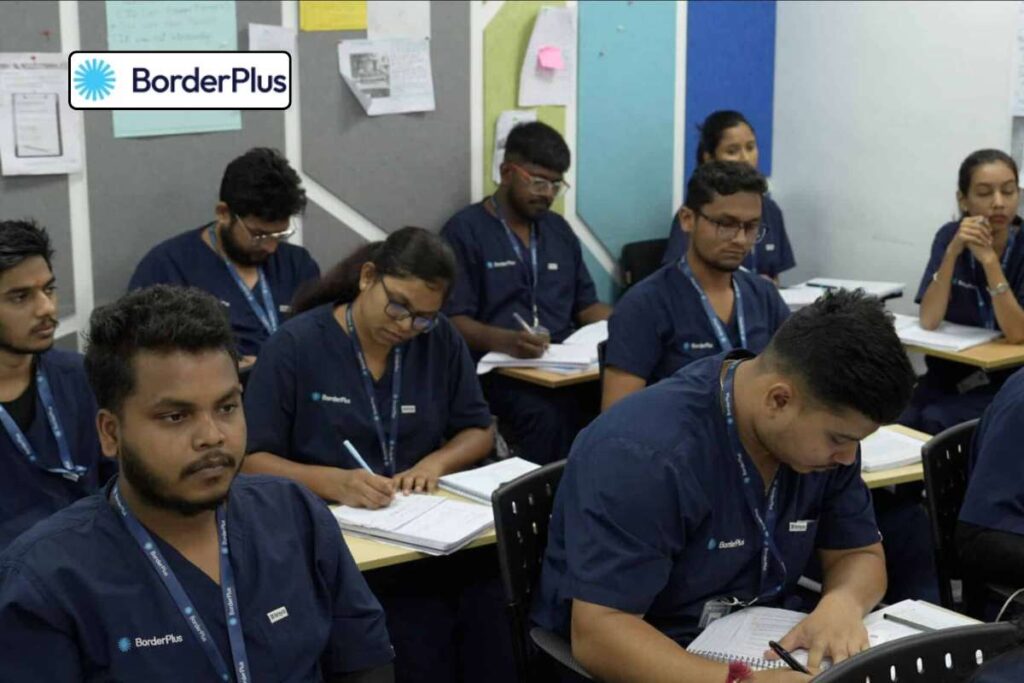
The company operates eight training centers, including six in India and one each in Brazil and the Philippines. Candidates typically spend between three and 12 months preparing for overseas employment through language instruction, licensing support, workplace communication, interview preparation, and clinical skills training.
BorderPlus said it has placed more than 500 nurses overseas and has raised Rs 60 crore, or about $7 million, in funding led by Owl Ventures. The company declined to disclose revenue.
Drawing on his experience at upGrad, Kumar said measurable outcomes remain central to the company’s approach.
“One big lesson from upGrad was ensuring that learners achieve meaningful outcomes,” Kumar said. “The model only works if candidates achieve successful outcomes.”
Germany remains BorderPlus’ largest destination market, while the GCC and Japan are emerging growth regions. Kumar said Germany offers higher-value placements that require extensive language preparation, while GCC countries allow faster deployment with lower recruiter fees.
AI, Regulation Shape Future Growth
BorderPlus healthcare mobility is expanding its use of artificial intelligence to prepare healthcare professionals before they relocate abroad.
The company has developed an AI-powered “Nurse Companion” that allows candidates to practice clinical conversations and workplace scenarios, including patient interactions and hospital situations they may encounter in Germany.
“We have trained about 1,000 hours of clinical scenarios,” Kumar said. “When nurses land in Germany, they feel much more comfortable because they have already practised those situations.”
Kumar said BorderPlus is developing additional AI tools to assist with clinical documentation and provide guidance based on destination-country healthcare practices.
Despite its growth plans, Kumar said visa processing, regulatory approvals, and documentation requirements continue to delay international deployments after candidates complete training.
Looking ahead, Kumar said BorderPlus healthcare mobility can help India have an opportunity not only to supply healthcare workers abroad but also to strengthen training infrastructure and support circular migration, allowing professionals to return with international experience that benefits India’s healthcare system.
Kumar said government agencies and private organizations should expand capacity for nursing and allied health education to meet growing international demand.
Visit Future Education Magazine For The Most Recent Information.