

Career Development Programs help employees build skills, grow confidently, and prepare for future opportunities while helping businesses retain talent and develop stronger leaders. This guide explores program types, career stages, essential skills, AI’s role, practical strategies, useful tools, common challenges, and proven ways to create successful development programs that support long-term employee and business success.
Think about the best manager you have ever worked with. They probably did more than hand you a to-do list and wish you luck. They showed you a better way to solve problems, trusted you with bigger tasks, or gave you the confidence to try something new.
That kind of growth rarely happens by accident. It usually comes from well-planned career development programs that help employees build new skills and prepare for future opportunities. Businesses benefit too by keeping talented people engaged and creating stronger leaders from within. In this guide, we’ll look at the different types of programs, the skills they should develop, how to build one successfully, and the common mistakes that can hold people back.
What are Career Development Programs?
They are structured plans that help employees grow, not just survive another Monday. They combine training, mentoring, coaching, career planning, and real work experience to build new skills and prepare people for future roles.
For businesses, they create stronger teams, better leaders, and employees who see a future instead of just the next paycheck.
What Are Career Development Programs?
Learning a new skill at work is great. Growing into a role you never thought you could do? Even better. That is the real purpose of career development programs. They are structured plans that help employees build skills, gain experience, and prepare for bigger opportunities over time. Instead of focusing on one course or one workshop, they create a long-term path for career growth.
Many people confuse career development with employee training, but they are not the same thing. Training teaches you how to do today’s job better. Career development helps you get ready for tomorrow’s job. When employees keep learning, they stay motivated and confident. Companies benefit too because they build stronger teams, improve retention, and spend less time searching for talent outside the organization.
| Career Development | Employee Training |
| Long-term growth | Immediate skills |
| Career focused | Job focused |
| Ongoing journey | Single activity |
| Includes mentoring | Usually course-based |
Of course, career development does not happen in isolation. It works best when it is paired with everyday learning that helps employees succeed in their current roles while preparing for future ones. That balance between immediate skill building and long-term career growth is what makes Employee Training and Development such an important part of a successful workplace.
Why Career Development Programs Matter More Than Ever
The workplace is changing faster than your phone asks you to install another update. New technology is reshaping jobs, industries are evolving, and the skills that got someone hired a few years ago may not be enough today. Employees are noticing this too. Instead of staying in one role for years, many now expect opportunities to learn, grow, and move up.
Why businesses are paying attention
Today’s organizations are investing more in career growth because it helps them:
- Keep valuable employees longer
- Fill leadership roles from within
- Close growing skill gaps
- Boost employee engagement
- Stay competitive in a fast-changing market
88% of organizations are concerned about employee retention, and providing learning opportunities is their No. 1 retention strategy. That turns learning into more than a workplace perk. It becomes a smart business investment.
No surprise, then, that career development programs are becoming a key part of modern workplaces where employees can grow instead of feeling like they have hit the career version of a traffic jam.
Helping employees build long-term careers starts with understanding Why Employee Development Programs Matter, especially for organizations that want stronger teams, higher retention, and future-ready leaders.
Core Components of Successful Career Development Programs
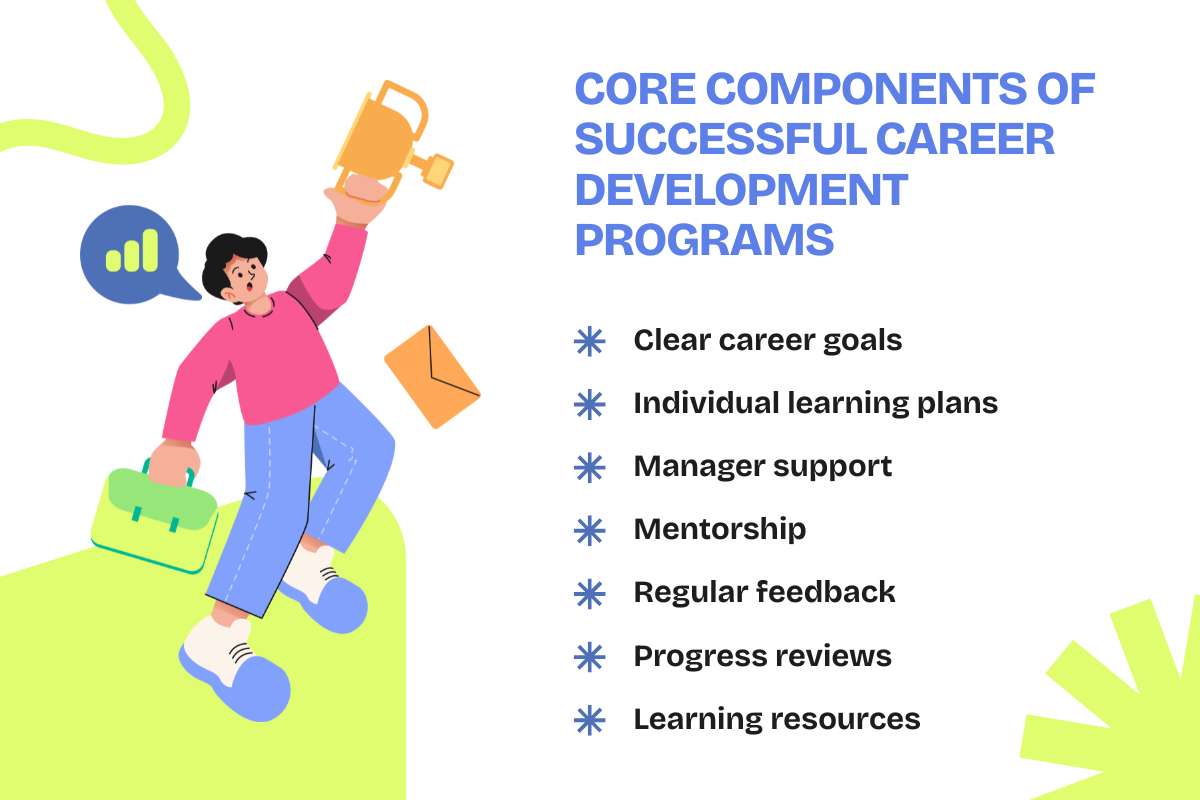
A great career does not grow from one training session and a motivational coffee mug. It grows from several moving parts that work together. The best development programs are built with a clear plan, not crossed fingers.
The building blocks of success
- Clear career goals: Employees should know where they are heading and what success looks like.
- Individual learning plans: Everyone learns differently, so development should not be one-size-fits-all.
- Manager support: Growth happens faster when managers coach instead of simply supervise.
- Mentorship: Experienced mentors can help employees avoid mistakes and gain confidence.
- Regular feedback: Honest conversations help people improve before small problems become big ones.
- Progress reviews: Checking milestones keeps development on track and motivates employees to keep going.
- Learning resources: Courses, workshops, books, and online learning should always be easy to access.
Think of these components like the legs of a chair. Remove just one, and the whole program becomes a lot less stable.
Types of Career Development Programs
Not every employee grows in the same way. Some learn best by watching experienced colleagues, while others prefer hands-on projects or formal courses. That is why organizations use different career development programs to support different goals and career stages.
| Program Type | Best For | Example |
| Mentorship | Career guidance | A senior employee mentors a junior colleague. |
| Upskilling | Learning new skills | Earning an AI or data analytics certification. |
| Leadership Development | Future managers | Leadership coaching, workshops, and management training. |
| Job Rotation | Cross-functional knowledge | Moving from Marketing to Sales for a few months. |
| Stretch Assignments | High performers | Leading a new product launch or special project. |
| Individual Development Plans (IDPs) | Personalized growth | Creating a quarterly roadmap with career goals and milestones. |
The right mix depends on both the employee and the business. A new hire may benefit from mentoring, while an experienced employee might be ready to lead a major project. The best organizations do not force everyone into the same learning path. Instead, they match opportunities to individual goals and business needs, making career development programs far more effective.
Mentoring is often where career growth begins because practical advice from someone who has “been there, done that” is hard to beat. That is why many organizations invest in Employee Mentorship Programs to build confidence and prepare employees for bigger responsibilities.
Once employees know where they want to go, the next step is building the skills to get there. Strong Employee Upskilling Programs help close knowledge gaps and keep teams ready for whatever the workplace throws at them next.
Career Development Stages
No one walks into their first job knowing everything. (If they say they do, give it a week.) Careers grow one step at a time, and each stage comes with new opportunities and challenges. The best career development programs evolve alongside employees instead of treating everyone the same.
1. Early Career
This is where employees learn the basics, build confidence, and figure out that replying “Reply All” is not always the best idea. The focus is on developing core skills, understanding workplace expectations, and gaining hands-on experience.
2. Mid Career
Employees begin taking ownership of bigger projects, sharpening their expertise, and solving more complex problems. This stage is about growing from a reliable team member into someone others rely on.
Senior Professional
Experienced employees often become mentors while leading important projects. They share knowledge, guide newer colleagues, and help shape the team’s success beyond their own daily work.
3. Leadership
Leadership is about more than having “Manager” in a job title. It involves making strategic decisions, coaching teams, developing future leaders, and helping the business move in the right direction.
Career growth is rarely a straight line. People move between stages, explore new opportunities, and continue learning throughout their careers, which is exactly why development should never stop after the first promotion.
Essential Skills Career Development Programs Should Build
Technical skills may help someone land a job, but they are not always what helps them grow. The employees who stand out are often the ones who communicate well, solve problems without panicking, and adapt when things do not go according to plan. That is why the best career development programs focus on building both technical and workplace skills.
| Skill | Why It Matters |
| Communication | Improves teamwork, collaboration, and workplace relationships. |
| Leadership | Prepares employees to guide teams and take on bigger responsibilities. |
| Problem Solving | Helps people make smarter, faster decisions when challenges arise. |
| Adaptability | Makes it easier to adjust to new technology, roles, and business needs. |
| Digital Literacy | Keeps employees productive in today’s technology-driven workplace. |
| Emotional Intelligence | Builds trust, strengthens relationships, and improves teamwork. |
The best professionals are not just experts in one subject. They know how to work with people, stay calm when plans change, and keep learning throughout their careers. Those are the skills that turn good employees into the colleagues everyone hopes are on their team.
Building these skills is not something that happens in a single workshop or annual seminar. It takes continuous learning, practical experience, and the right support system. That is exactly where Employee Upskilling Programs help employees strengthen existing abilities while preparing for the skills tomorrow’s workplace will demand.
How to Create Career Development Programs That Actually Work

The best career programs are not built by throwing a few online courses into a company portal and hoping for the best. They start with people, stay flexible, and grow alongside the business. If you are building development programs for careers, this simple framework is a great place to start.
Step 1: Understand employee career goals
Start by asking employees where they want to grow. A quick conversation today can prevent a lot of guesswork later.
Step 2: Identify business skill gaps
Compare employee strengths with future business needs. This helps prioritize the skills that matter most.
Step 3: Create personalized development plans
One size rarely fits everyone. Tailor learning opportunities to each employee’s goals, experience, and role.
Step 4: Offer mentoring, coaching, and learning opportunities
Mix formal training with real-world experience. Employees often learn the most by doing, not just by clicking through another presentation.
Step 5: Measure progress and improve
Review progress regularly, celebrate milestones, and adjust plans when goals or business priorities change.
According to Gallup, engaged employees produce better business outcomes than disengaged employees, while Gallup’s workplace research also links higher engagement with lower employee turnover.
The strongest programs never stay on paper. They evolve as employees grow, and that journey often begins with a well-structured Employee Development Plan that turns career goals into practical, measurable actions.
Career Development Strategies for Students and Professionals
Career growth is not one-size-fits-all. A college student looking for their first opportunity and a professional aiming for a leadership role have very different priorities. The best career development programs recognize this and adapt to where someone is in their career journey.
| Students | Professionals |
| Gain practical experience through internships, volunteering, or part-time work. | Keep learning through courses, certifications, and industry trends. |
| Earn certifications that strengthen your resume and skill set. | Volunteer for challenging projects that push you outside your comfort zone. |
| Build your network early because opportunities often come through people. | Ask for regular feedback to identify strengths and areas for improvement. |
| Find mentors who can offer career advice and real-world insights. | Develop leadership skills, even if you’re not managing a team yet. |
| Explore different career paths before committing to one. | Continue expanding your professional network to create new opportunities. |
Whether you are just entering the workforce or planning your next promotion, career development is an ongoing journey. The strategies may change, but the goal stays the same: keep learning, keep growing, and never get too comfortable. After all, comfort zones are great for couches, not careers.
No matter where someone is in their career, growth starts with knowing what they want to achieve. Setting clear Employee Development Goals helps turn good intentions into practical actions that can be measured and improved over time.
The Role of AI in Career Development
AI is becoming a helpful career coach, just one that never asks to “circle back later.” Today, many career development programs use AI to identify skill gaps, recommend personalized learning paths, suggest relevant courses, and even highlight possible career moves based on an employee’s interests and experience.
That said, AI should support career development, not run it. It can analyze data, but it cannot replace a manager who believes in your potential, a mentor who shares hard-earned lessons, or the confidence that comes from solving real workplace challenges. After all, careers are built by people, not algorithms.
AI can make learning smarter and more personalized, but it works best when it supports a broader learning culture rather than replacing it. That is why strong Learning and Development Programs continue to play a central role in helping employees grow with confidence.
Helpful Tools That Support Career Development
The right technology can make career growth easier to manage, but it cannot do the growing for you. Many career development programs use digital tools to organize learning, track progress, and connect employees with the resources they need.
| Tool Category | Purpose |
| Learning Management Systems (LMS) | Deliver courses, training, and learning materials. |
| Skill Assessment Tools | Identify strengths, skill gaps, and future learning needs. |
| Career Planning Software | Help employees set goals and track career progress. |
| Mentoring Platforms | Match mentors with employees and support mentoring relationships. |
| Performance Management Tools | Monitor development, feedback, and overall progress. |
The best tools make career development more organized and measurable, but they should never replace meaningful conversations. Real growth still comes from supportive managers, experienced mentors, and regular feedback. Organizations looking to strengthen these efforts often combine technology with structured Employee Development Tools that keep learning, feedback, and career planning in one place.
Common Challenges in Career Development
Career growth is rarely a straight road. There are usually a few potholes, unexpected detours, and the occasional “I have no idea what I’m doing” moment. The good news is that most challenges can be solved with the right approach. Even the best career development programs need regular attention to stay effective.
| Challenge | Practical Solution |
| Unclear career goals | Create clear development plans with achievable milestones. |
| Limited manager support | Schedule regular one-on-one check-ins and coaching sessions. |
| Lack of time | Offer flexible learning through online, self-paced, or microlearning options. |
| Outdated skills | Encourage continuous learning and regular upskilling opportunities. |
| No way to measure success | Track meaningful metrics such as skill growth, promotions, and employee engagement. |
According to the World Economic Forum’s Future of Jobs Report 2025, 39% of workers’ core skills are expected to change by 2030, making continuous learning more important than ever.
Most of these challenges become much easier to overcome when employees know what they are working toward. Setting clear Employee Development Goals gives learning a purpose and helps both employees and managers measure meaningful progress over time.
Conclusion
Great careers are not built overnight, and they definitely are not built by attending one training session and calling it a day. They grow through continuous learning, honest feedback, new experiences, and people who are willing to invest in each other’s success.
Well-designed career development programs give employees the confidence to aim higher while helping organizations build skilled, engaged, and future-ready teams.
At the end of the day, investing in people is one of the smartest business decisions any organization can make, and it all starts with a strong foundation of Employee Development.
Frequently Asked Questions
1. What are career growth programs?
They are structured initiatives that help employees build skills, gain experience, and prepare for future roles through continuous learning, mentoring, coaching, and career planning.
2. What is included in a career development program?
A Career Development Program typically includes learning plans, mentoring, coaching, training, career planning, skill development, and regular feedback to support long-term employee growth.
3. Why are career growth programs important?
They improve employee growth, engagement, retention, and productivity while helping organizations build stronger leaders and achieve better long-term business performance.
4. What skills should career development initiatives develop?
They should build communication, leadership, problem-solving, adaptability, digital literacy, emotional intelligence, and other workplace skills needed for long-term career success.
5. How do you measure the success of career growth programs?
Measure success through internal promotions, employee retention, engagement scores, skill completion rates, performance improvements, manager feedback, and employee satisfaction with development opportunities.