
Key Takeaways
- Wealthy families are embracing AI-powered schools for personalized education.
- Traditional schools struggle to integrate AI without hurting critical thinking.
- High tuition makes AI-focused education inaccessible for most families.
Wealthy U.S. families are increasingly choosing AI-powered schools over traditional education, betting that personalized learning and life skills will better prepare children for an economy reshaped by artificial intelligence.
Parents are enrolling their children in schools that use AI tutors to personalize instruction while replacing conventional classrooms with project-based learning and coaching models. Supporters argue that traditional schools have been slow to adapt to the rapid rise of artificial intelligence in education.
Alpha School Builds Growth Around AI-Based Learning
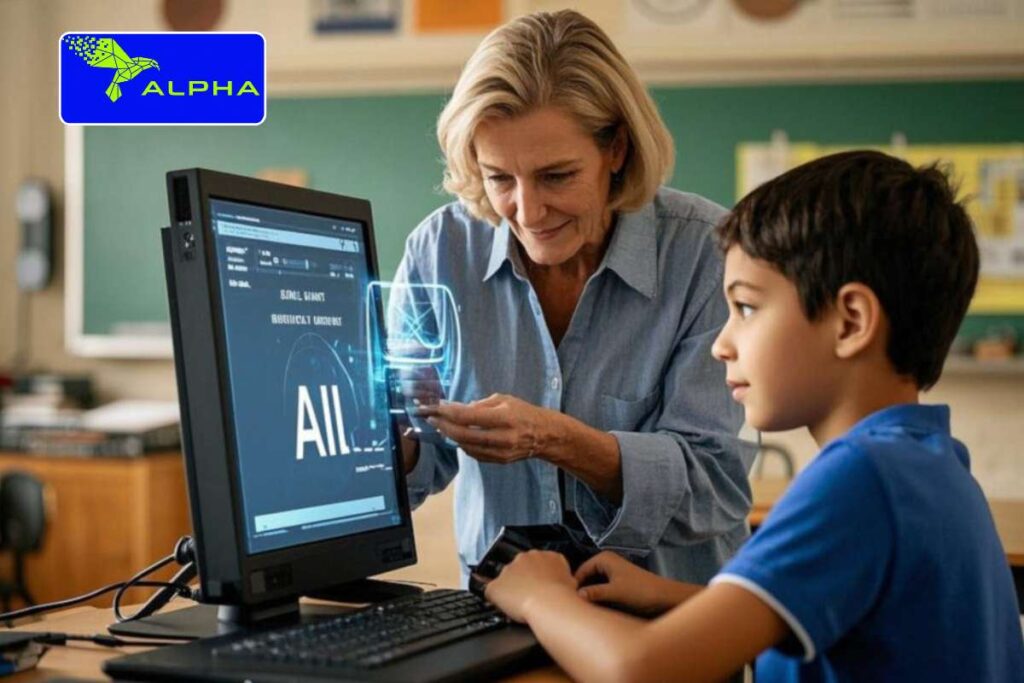
Alpha School, founded in Austin 12 years ago, uses AI tutors for about two hours each day before students move into workshops focused on projects and practical skills. The AI-powered school system monitors student engagement and adjusts lessons in real time.
The school charges up to $75,000 in annual tuition. According to Alpha spokesperson Anna Davlantes, every on-site learning guide earns a six-figure salary.
Alpha expanded to eight new locations in 2025, including San Francisco and New York, and plans nearly two dozen additional campuses this fall in communities such as Palo Alto and Malibu. The company also offers homeschooling software and a competency-based curriculum.
Davlantes said many New York families enrolled at Alpha work in finance or own businesses, while many Bay Area families come from the technology industry. Billionaire investor Bill Ackman is also reported to support the school’s approach.
San Francisco venture capitalist Shaun Johnson said he plans to enroll his son in Alpha’s kindergarten program.
“We recognize that education is likely broken the way it is, and there’s going to be entrepreneurs that try to fix it,” Johnson said. He added that AI-driven personalized learning, rather than the technology itself, is the main reason for his decision.
Research Raises Questions About AI in Traditional Classrooms
Recent research suggests many traditional schools are still struggling to integrate AI effectively into learning.
A study involving more than 26,000 students in China found that homework completed with AI was finished more quickly and received higher scores, but exam performance fell by as much as 24%. The study also found that about 81% of long-term AI users relied on the technology to complete their thinking.
The article said a separate study by researchers at the University of California, Berkeley, reached similar conclusions.
Schools like Alpha argue that AI-powered schools should become part of the learning process instead of remaining an unsupervised tool that students use independently. Their model aims to teach students how to work alongside AI while developing critical thinking and problem-solving skills.
High Costs Highlight Growing AI Education Divide
The cost of AI-focused private education remains out of reach for many families. With tuition reaching $75,000 annually, schools such as Alpha primarily serve wealthy households.
The article argues that this reflects a widening economic divide as AI transforms education. At the same time, it notes that AI tools available online may broaden access to personalized learning by giving anyone with an internet connection access to an always-available tutor that adapts to individual learning needs.
Supporters say that opportunity can only be fully realized if schools first teach students how to use AI responsibly and effectively, rather than relying on it to do their thinking.
Visit Future Education Magazine for the latest information.