
We are so stuck with our modern lives that we don’t give enough time to our brains. We spend our time scrolling through Instagram, checking out new shows and movies, writing assignments, and working behind a computer screen. Not only is this affecting our minds and memories, but it is also leading to a decrease in attention span. Our brain is getting rusty as we speak.
Think of it this way: if you stop using your hands, your hands will slowly become useless. The same will happen if you stop using your brain. Our brain is a part of the body that requires continuous work and exercise to keep going. Have you recently felt like everything feels confusing? You keep forgetting things, every once in a while? If yes, then that’s your brain shouting for help.
You need to exercise your brain for your own physical good. And how can you do that? By taking some time out of your hectic life and getting your brain running.
So, to help your brain work out, here is the list of 15 best games for brain that you can play in your free time.
15 Best Games for Brain Health for an Update to Your Cognitive Skills
When we talk about games that require mental ability, we are talking about games that will force you to focus, solve, observe, react, and use all of your mental capacity. Why? You may wonder, well, the more you exercise your brain, the better its health is.
That’s why, here is a list of 15 games that will make you use your brain to full capacity.
1. Lumosity
Lumosity is one of the best games for brain that you can play for free. Launched in 2007, Lumosity is a mobile-based brain training program. The program is built to increase memory, speed, attention, flexibility, and problem-solving skills. You can play various games in the program, such as Train of Thought, River Ranger, Highway Hazards, Top That, and Chalkboard Challenge.
The program has multitudes of games, some of which are its original creations, while others are based on real cognitive assessment tests. If you want to check your cognitive abilities, Lumosity is exactly the game for you
2. Sudoku

Sudoku is one of the most popular brain games in the world. It has been around, in some form, since the 18th century. The game is a logic-based game, designed to improve your deduction and logic-based solving skills. The objective of the game is to fill a 9×9 grid, which is subdivided into 3×3 grids. The goal is pretty simple: you have to fill all the boxes with numbers from 1 through 9, without any repetition.
The Best Games for Brain is available online, in your newspapers, magazines, and puzzle books, and even as a mobile app. One thing to keep in mind is that Sudoku can be a really time-consuming game, taking a good amount of time to solve.
3. Peak

Peak is another mobile-based brain training program designed to improve your brain functions. It is one of the best games for brain that you can play. The game program was made as a collaborative effort of academics from leading universities to target areas such as memory, attention, problem-solving, mental agility, and language. Users can track their daily progress, workouts, and receive detailed insights to help them compare their performance to others.
Founded in 2012, the game works on a freemium model, which means you can play some of the basic games and get general insights for free. You can download the game on your iOS and Android phones.
4. Wordle
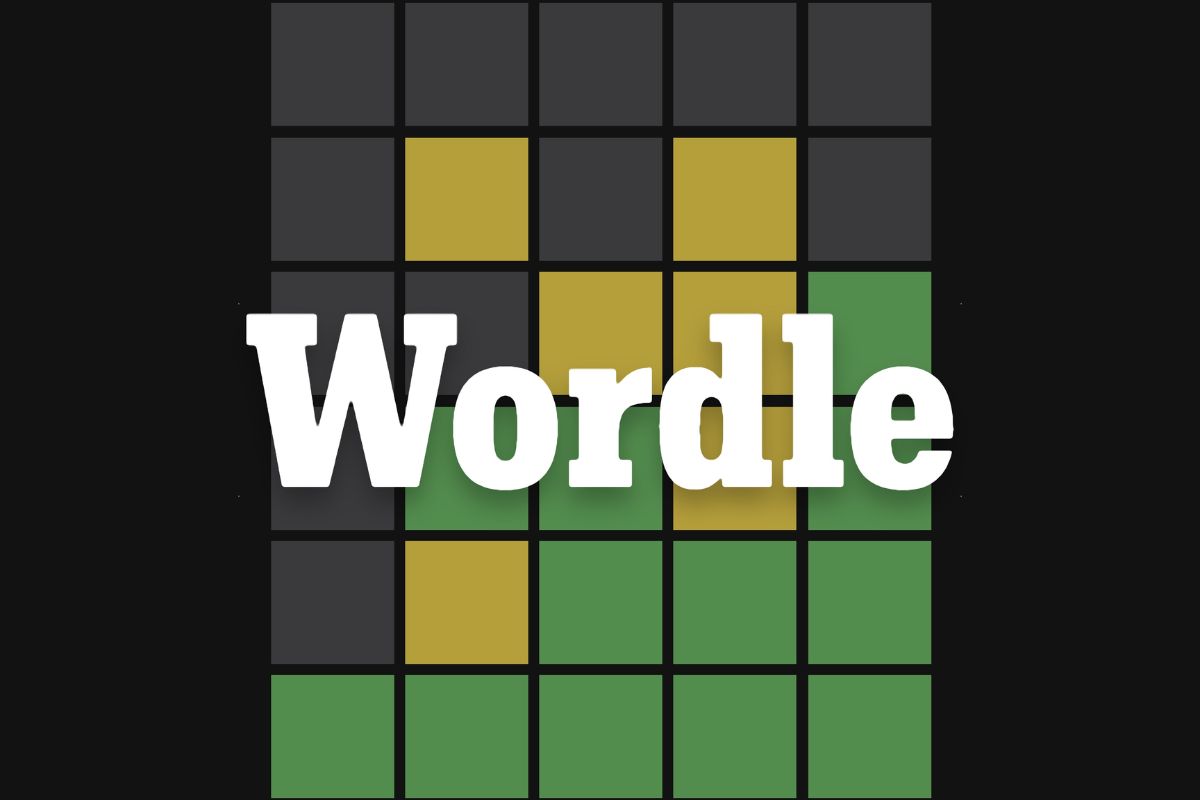
Wordle has gained quite a popularity in recent times and for a very good reason. The web-based game is perfect if you are someone who is working on their language skills. The game became extremely popular due to its simple rules, social media sharing options, and daily challenges. During 2023, the game was played around 4.8 billion times.
The Best Games for Brain is simple but effective. The goal is to find the word of the day in six attempts. The game gives feedback in the form of colors to help you guess the word. If all the blocks are green, it means you found the game. If you see a yellow box, you have found the letter but not the position. And red, as you can guess, means the letter is not in the word
5. Crossword

Crossword is one of the most effective problem-solving games. The game, while simple, helps your brain learn complex terminology and improves your short-term as well as long-term memory. The game comes with some really simple, easy-to-understand hints and also with some cryptic puzzles that require lateral thinking. This blend helps your brain balance between critical thinking and simple problem-solving.
The modern crossword puzzle, as we know it today, was invented by journalist Arthur Wynne. He published a “word-cross” puzzle in the New York World on December 21, 1913. It was an instant hit and gained widespread popularity in the 1920s. And it has still remained as one of the best games for brain health
6. Elevate
Elevate is another mobile-based brain training program, similar to Peak and Lumosity. The program offers over 40 games, each designed to improve a certain brain function, including focus, memory, speaking abilities, processing speed, and math. The game offers a daily training program for its users, which keeps changing difficulty based on the user’s growth and track record.
The Best Games for Brain focuses on reading and writing skills, problem-solving skills, and mental math abilities to help your brain function to improve to its maximum capacity.
7. Happy Neuron
Built on the principle of Neuroplasticity, Happy Neuron aims at improving five areas of brain functions, i.e., memory, attention, language, executive functions, and visual-spatial reasoning. The game offers a personalized experience, with the difficulty based on the user’s performance.
Happy Neuron also offers a professional version, “Happy Neuron Pro,” which is a digital cognitive therapy tool used by clinicians to help patients with a variety of neurological conditions.
8. Braingle
If you are looking for one of the best games for brain that is also free, let me suggest Braingle. It is a free website that claims to have the largest collection of brain teasers, puzzles, riddles, optical illusions, and mind games. Unlike most games on this list, Braingle does not focus on structured, app-based training; instead, it is a community-driven resource.
The website boasts over 15,000 games, each submitted by users, and it also includes articles on study skills and strategies. If you are looking for an online community-based game with interesting puzzles and brain teasers, this is the game for you.
9. Scrabble

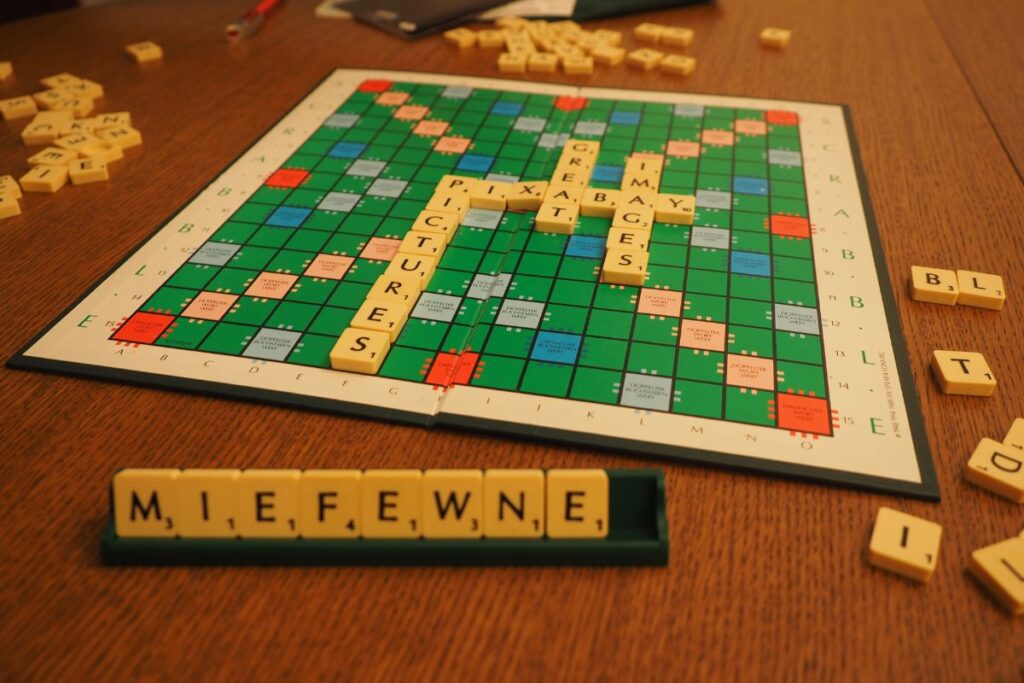
Similar to Crossword, Scrabble is a word-puzzle game that can be played by 2 to 4 players. The goal is to form words that are recognized in the standard dictionary. Think of it as a multiplayer version of Crossword, because that’s exactly what it is.
Each letter tile has a specific point value, and players can multiply their score by strategically placing tiles on special squares on the board that offer double or triple letter or word scores. The game is a mix of vocabulary, strategy, and mathematics
10. Boggle
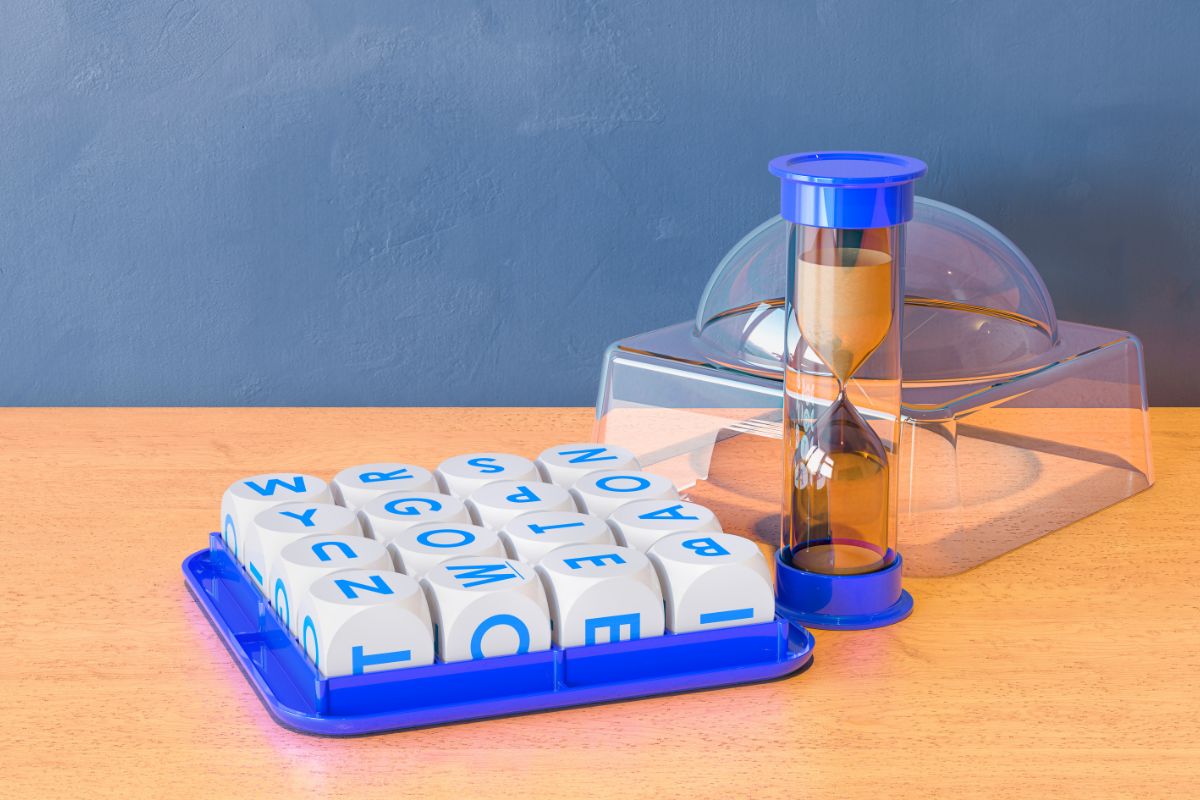
If you are looking for a mind-boggling game, try playing Boggle. It is a very easy game in which players have to find as many words as possible in 3 minutes. Words are created by linking adjacent letters horizontally, vertically, or diagonally. A letter cube can only be used once in any given word. Once the time is up, players compare their lists, and only words that no one else found are counted for points, which are awarded based on word length.
Boggle is a great brain game that offers a fast-paced, stimulating mental workout. The game not only helps in improving your vocabulary, but it also helps in improving your pattern recognition skills
11. CogniFit

CogniFit is a brain training platform developed to do neuropsychological assessments. These assessments help in evaluating and improving many cognitive skills such as memory, attention, executive functions, and coordination.
Unlike many other games, CogniFit’s approach is rooted in a clinical and methodological approach. It provides personalized training programs based on an initial cognitive assessment, targeting the user’s specific cognitive strengths and weaknesses.
12. SET
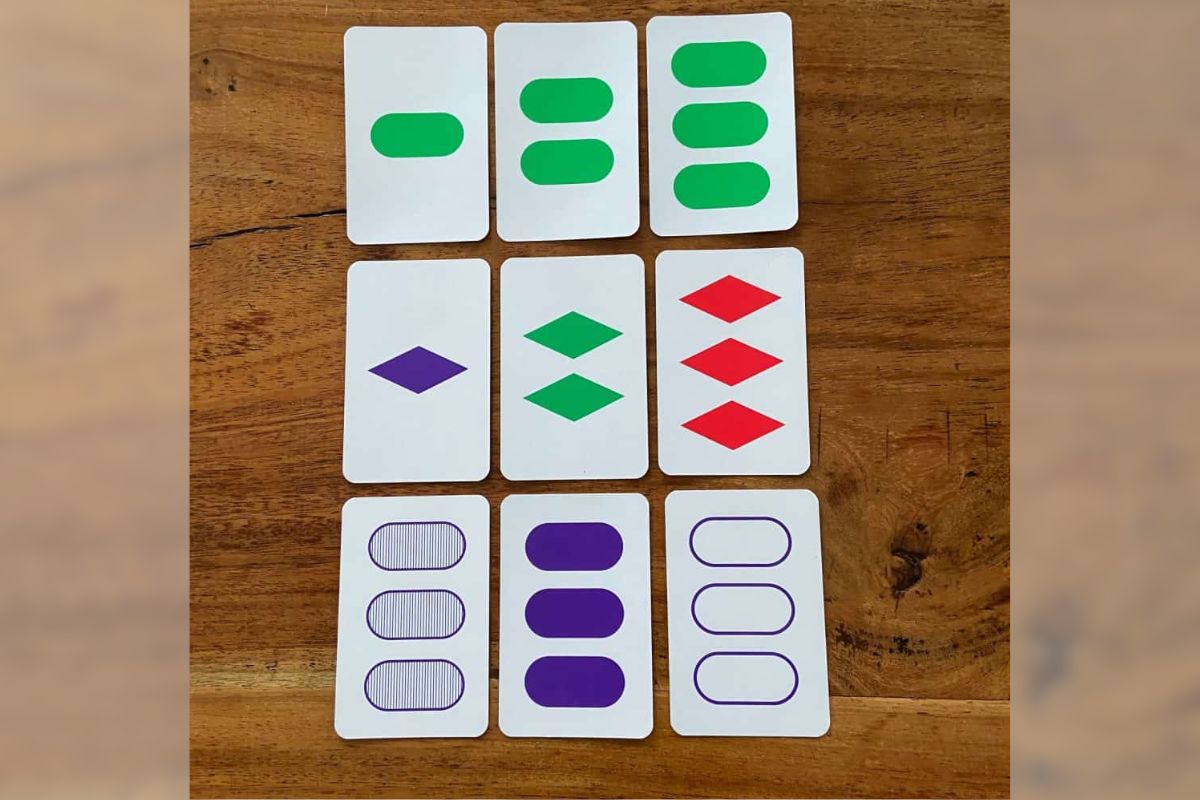
Card games can be really underrated when we talk about the best games for brain. SET is one such card game. It is a powerful and fun game for brain training, particularly because it requires a combination of both quick perception and logical deduction. The game is 81 unique cards, with each card featuring four distinct attributes. And your goal is to find a “set” of three cards from the table.
This real-time card game makes you work out on your visual perception and logical deduction. It is perfect to play with a group of friends and family. It is easy, fast-paced, and super fun.
13. Jeopardy!
We have all heard of the popular American TV show, Jeopardy! But did you know it is also available for your computers and mobile phones? Yes, it is true. It is one of the best quiz games of all time. Its unique take on the traditional quiz is one of its biggest selling points. Instead of giving you questions and options as answers, the game gives you clues that help you find the answer to each quiz.
Divided into three rounds, i.e., Jeopardy!, Double Jeopardy!, and the final, high-stakes round, Final Jeopardy!, this game is perfect to test your problem-solving and logical deduction skills
14. Portal
While all of these games are good, you may feel like they lack something. A game must be entertaining, and that is exactly what Portal is. It is a first-person video game following the character of Chell, who is stuck in a mysterious laboratory, Aperture Science Laboratories. You, as a player, help her solve puzzles and use portals to transport objects and herself through space and to manipulate momentum, allowing Chell to “fling” herself over large gaps or to reach high platforms.
The game is famous for its physics-based puzzles, dark humor, and memorable antagonist, the artificial intelligence GLaDOS. If you are into puzzles, AIs, portals, and first-person games, Portal is one of the best games for brain you can play.
15. Chess

You cannot talk about the best games for brain and not mention Chess. The game is the predecessor of all brain games. It dates back to the 6th century AD, when it was called Chaturanga; later, the Persians renamed it as shatranj. The game is played on a checkered board of 64 squares arranged in an 8×8 grid.
Each player starts with 16 pieces: one king, one queen, two rooks, two knights, two bishops, and eight pawns. The goal of the game is to checkmate the opponent’s king. The game requires cognitive abilities such as focus, memory, and most importantly, logic.
Advantages of Games for Boosting Your Brain:
“Brain training games promote neuroplasticity, the brain’s remarkable ability to reorganize itself by forming new neural connections throughout life. This reorganization is the foundation for improving memory, attention, and problem-solving skills,” by Jim Kwik, brain coach and expert on neuroplasticity.
Now that you have a list of the 15 best games for your brain, let’s talk about how they help you boost your brain power.
1. Enhances Cognitive Skills:
The main goal of every brain game is to improve the core cognitive function of your brain. They are designed to be a mental workout for various skills such as memory, attention, logic, and problem-solving. This regular practice helps keep your mind sharp and can lead to measurable improvements in these areas, making it easier to perform everyday tasks.
Also Read ;- How Multilingualism in Education Improves Learning and Skills?
2. Builds Cognitive Reserve:
Participating in mental games can help you build a cognitive reserve, which is the brain’s ability to keep up with age-related changes and potential challenges and issues. By constantly training your brain, you are basically creating new neural pathways that result in building resilience against symptoms of cognitive decline that come with your age.
Also Read :- How Do Children Develop Intelligence? The Stages Of Cognitive Development Explained.
3. Improves Processing Speed:
Many games, especially those that are timed like SET and Boggle, help your brain learn how to process information faster. When you play these games, due to the time limits, you are required to scan and analyze the given information as fast as you can. This helps your reaction time in real-world events and also improves your mental agility.
Also Read ;- What is Personalized Learning and Why is it Important?
4. Improved Emotional Well-being:
Beyond cognitive skills, the best games for brain are also extremely important for your emotional well-being. These games help you reduce stress, de-clutter your mind, and most importantly, offer a small escape from your daily life. They also give you a sense of calmness. And when you solve a difficult puzzle or level, your brain releases dopamine, which is a neurotransmitter linked to pleasure and mood, contributing to a sense of well-being.
Also Read :- Can Teaching Kindness Boost Test Scores? The Surprising Truth of Social-Emotional Learning.
5. Encourages Lifelong Learning:
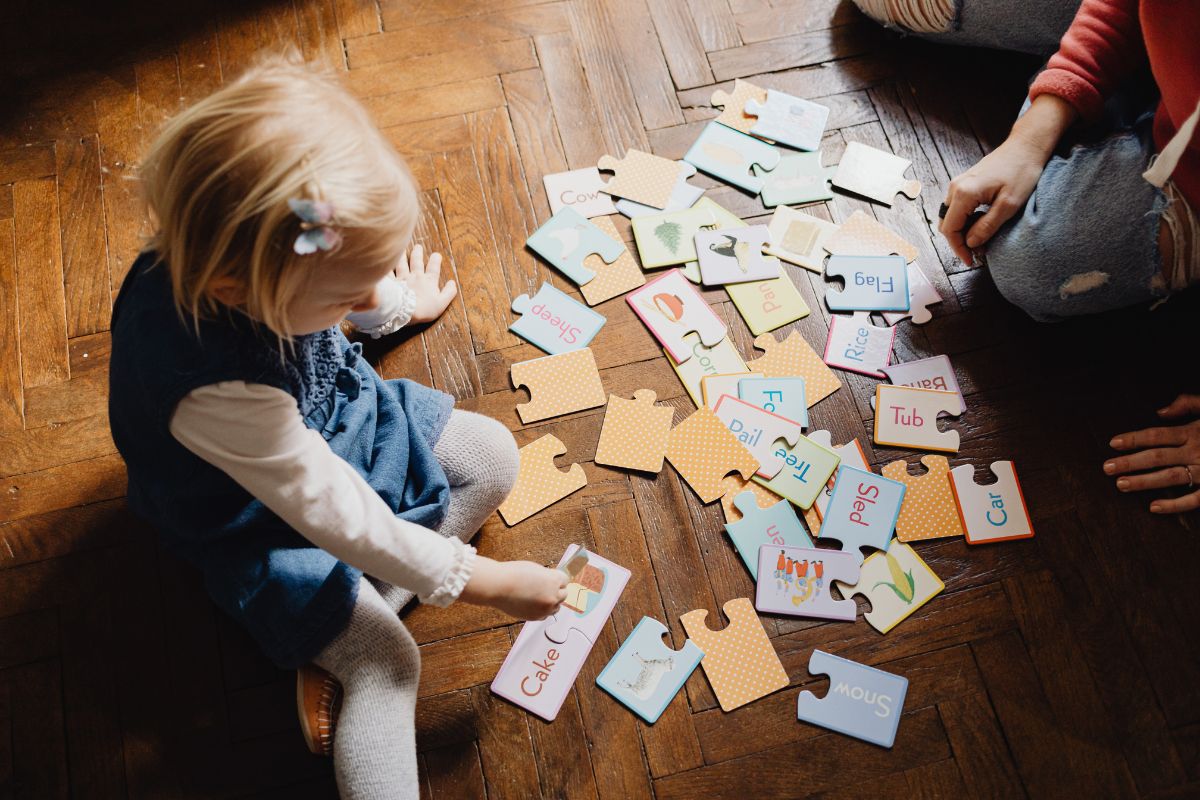
Whether you learn a new word through Scrabble or understand some complex theory of physics through Portal, these games are a fun way to gain new knowledge. They create this sense of curiosity that helps in creating a resourceful, healthy, and adaptable mind throughout your life.
Also Read :- Lifelong Learning: The Key to Personal and Professional Growth
Future Trends of Games in Education:
“Playing video games changes how our brains perform and also their structure, improving attention, visuospatial skills, memory, and mental agility.” By Marc Palas, cognitive neuroscience researcher.
Now that it’s clear that games offer a powerful and engaging way to boost brainpower, let’s discuss the future of gaming in education. As we know, artificial intelligence, VR systems, and modular learning equipment have changed the way we perceive learning.
AI-powered gamified lessons give students real-time feedback and corrections, which helps in understanding complex concepts faster.
According to Verified Market Research, the children’s educational game market was valued at $12.24 billion in 2023. Another research by Kings Research shows that the market will be valued at $20.58 billion by 2030.
All of this is proof of the inevitable gamification of the education sector. While traditional education can teach concepts and ideas, it does not factor in the fact that not everyone learns at the same rate. Some people are slow learners, and some are fast learners.
With games in education, the problem is solved. The games will help you learn at your own pace, without forcing you to compete with others.
Case Study- Boosting Cognitive Performance: A Case Study on Brain Training Games
A recent study at King Saud University explored whether brain training games could enhance cognitive function in healthy adults. Over three weeks, participants in the active group played Lumosity, a collection of games targeting memory, attention, processing speed, and problem-solving, for at least 15 minutes daily. Compared to a control group, these players showed significant improvements in attention, motor speed, and several executive function measures.
Interestingly, higher levels of the blood marker ApoE correlated with faster memory responses, though no strong link was found with BDNF levels. While the study suggests that brain games like Lumosity can be among the best games for brain health, especially for sharpening focus and mental agility, researchers note that longer-term studies are needed to confirm lasting benefits, particularly in older adults.
Source: https://pmc.ncbi.nlm.nih.gov/articles/PMC5930973/
Conclusion:
Ultimately, the evidence is clear: dedicating time to brain-stimulating games is a powerful and enjoyable way to invest in your cognitive health. The best games for brain that we’ve explored, from the strategic depths of Chess to the fast-paced challenges of Boggle and the personalized programs of apps like Lumosity, are not just forms of entertainment. They are effective tools for enhancing memory, improving focus, and building the brain’s resilience against age-related decline.
By making these activities a regular part of your routine, you are actively giving your brain the exercise it needs to stay sharp, agile, and ready for whatever life throws your way. So, go ahead and play; your brain will thank you for it.
FAQs
1. Do brain training apps and games really work?
Yes, they can improve performance on the specific cognitive skills they target. Consistent mental challenge is a key component of maintaining brain health and agility.
2. How do games relate to dementia?
While games cannot cure or prevent dementia, they are a valuable tool for brain health. Engaging in mentally stimulating games can help build cognitive reserve, which may help delay the onset or slow the progression of symptoms. Games also improve mood and provide social engagement, which are important for people living with dementia.
3. How often should I play brain games to see benefits?
Consistency is key. Regular practice, even for a few minutes a day, is more effective than sporadic long sessions.
Also Read :- How Game-Based Learning Sparks Student Engagement?