

An employee development program is a structured plan that closes skill gaps through modern, hands-on training. Unlike outdated video libraries, it integrates quick learning tools into daily workflows to lower error rates, boost productivity, and improve staff retention. Read this complete guide to see the main training types and follow a simple, three-phase framework to build a successful program for your business today.
Old ways of training workers fail to support staff advancement, role changes, or onboarding new hires. In the past, companies just gave workers a huge list of online videos to watch. This method fails because daily job tasks change too fast. People do not have time to sit and watch hours of clips that do not help them solve real-time work problems or earn promotions.
Fast tech updates cause massive skill gaps across entire departments. Bad training setups make the problem worse, causing both new hires and loyal employees to fall behind.
Companies now use smart learning tools to fix this. These employee development programs check what each worker already knows to give them short, useful tips. To get the best results, you need to understand what a successful program looks like, the different training types you can use, and how this new setup boosts company profits.
What Are Employee Development Programs and How Do They Benefit Your Business?
It is a structured plan that a company uses to help workers improve their skills and learn new things. At its core, this framework mixes regular training classes, peer coaching, and digital learning tools to upgrade workforce capabilities. Instead of just teaching your staff how to do one simple task today, it focuses on long-term operational growth. This setup gives your team the skills they need to handle larger corporate projects and step into leadership roles over time.
Building a good training system gives your company a big advantage. Top workers look for businesses that offer real rewards like badges and certificates. Companies that do not offer clear growth paths often suffer from low team focus and high turnover. A smart training plan helps your business grow by turning daily work into clear success.
How to Build an Employee Development Program and Track Its Success

Building a great team takes a clear plan. Leaders must know how to design a training system, put it into action, and check if it actually works. This detailed guide breaks down the three major phases of a successful framework.
Phase 1: Creating and Planning Your Program
To build a great training system, you must start with a clear plan.
1) Set Clear Business Goals:
Look at your company’s weak spots, identify if you need to lower software errors or prepare your staff to close current skill gaps. Write down three specific targets, such as cutting project delays by ten percent over the next three months.
2) Map Out Needed Skills:
Talk to your employees to see what actions they take every day. Write down the exact skills a worker needs to master their specific role.
3) Choose the Right Learning Platform:
Pick a learning tool that connects directly with the software your team already uses for daily work. Avoid separate training websites that force workers to log into a different system. Test the tool with a small group of three employees before rolling it out to the whole company.
Also Read: Boost Workplace Success with Corporate Learning Management
Phase 2: Integrating and Running Your Program
Once your plan is ready, you need to launch it into the daily routine.
1) Connect Training, Mentors, and Feedback:
Do not treat mentoring and training as separate tasks. Connect them using a shared schedule. When a worker finishes a skill lesson on your platform, automatically send an alert to their peer mentor. Have the mentor review the worker’s next live project and log feedback in that same tracking system to keep all your pieces working together.
2) Gather Team Input and Adjust:
Talk to your employees about the new training setup every single month. Use short, anonymous surveys to ask what parts help them and what parts feel annoying. Review the answers with your management team and use this feedback to change your plan so the training stays useful, simple, and engaging for everyone.
Phase 3: Measuring Your Program’s Success
After your program runs for a few weeks, you must check the data to see if it helps.
1) Check Staff Retention Rates:
Compare your current employee turnover data with your numbers from last year. Look at how many workers choose to stay at your company after completing the training. When you offer a strong employee development plan, fewer people quit their jobs each month.
2) Count Daily Error Rates:
Review your software logs and project bugs each week. Check if the number of mistakes drops after workers use the real-time learning tips
3) Monitor Internal Advancement Rates:
Track how many entry-level workers move up into new roles within your business. A successful program helps current staff upgrade their skills to become future managers. When internal moves rise, it shows your leadership track is working well and helping you lower recruiting costs.
What Are the Main Types of Employee Development Programs?
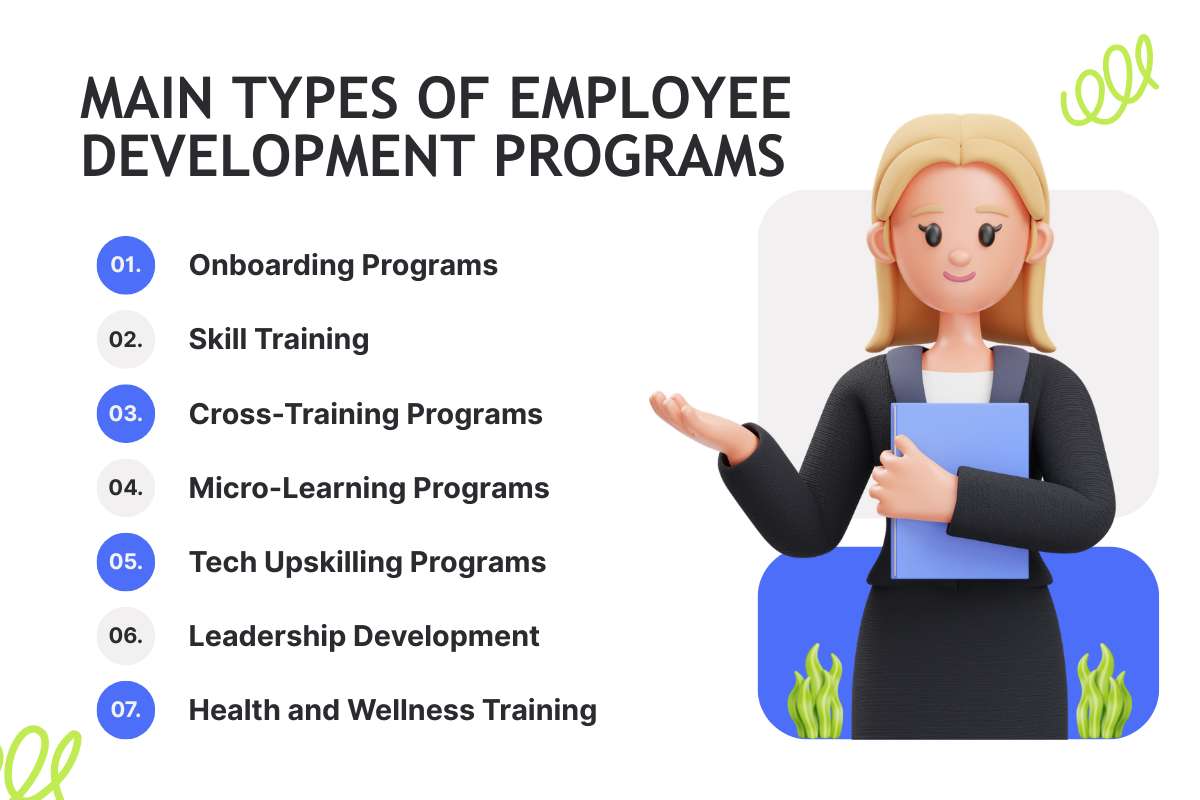
Companies use different setups to train their workers. For job switchers and workforce leaders, these main types matter most today.
1. Onboarding Programs
Starting a new job or switching to a different department can feel overwhelming. Onboarding programs fix this issue by guiding new hires through the company culture and tools from day one.
To use this setup well, managers should give new workers a step-by-step task list for their first week and pair them with an experienced work buddy. This structured path ensures that fresh team members learn their daily routines quickly without feeling lost.
2. Skill Training
When an employee struggles with specific daily software or machinery, standard skill training is the best fix. This method focuses purely on the exact technical tasks a worker needs to do their job correctly.
You can run this program by setting up short, focused practice lessons on the specific tools your team uses every day. This approach bridges the gap between what your staff knows now and what you expect them to deliver.
3. Cross-Training Programs
Cross-training lets employees learn tasks outside their usual job requirements, which is perfect when your business is short-staffed or when a worker wants to explore a new area.
You can apply this naturally by letting a worker spend two hours a week tracking a peer in a different department. This strategy creates a flexible workforce and gives your employees a safe way to try new roles before making a final career switch.
4. Micro-Learning Programs
If your team makes frequent small errors but has no time for long classes, micro-learning is the ideal solution. This system uses smart software to send tiny, two-minute lessons straight into daily work apps like chat or project boards.
Workers get quick, helpful tips exactly when they make a mistake on a live task. This keeps daily work moving fast without forcing staff to sit through long, boring training sessions.
5. Tech Upskilling Programs
Industry shifts and new technology require teams to update what they know to stay relevant. Tech upskilling programs teach workers how to use advanced tools like artificial intelligence so they do not fall behind.
You should build this into your employee development program whenever new software updates change your daily workflows. Running weekly hands-on workshops where teams use the new tech on real company projects keeps your business fast and competitive.
6. Leadership Development
When a high-performing worker is ready to step up, leadership development prepares them to become a manager. This type of program teaches top staff how to handle budgets, solve team conflicts, and make big business choices.
You can implement this by letting an employee lead a small project while a senior executive provides regular feedback. This path ensures you always have trained leaders ready to guide future company projects.
7. Health and Wellness Training
Heavy workloads and tight deadlines can easily cause high stress and employee burnout. Health and wellness training teaches staff how to manage their daily stress and maintain their energy.
Leaders should use this training whenever team stress levels rise by offering short sessions on time management or providing free gym and wellness apps. Keeping your teams healthy lowers burnout and keeps workplace focus high.
Why Does an Employee Development Program Beat Old Video Libraries?
Workforce leaders need to stop tracking simple metrics like hours spent in a seat. Instead, they should look at how well workers do their jobs. The table below shows the big differences between old video libraries and new learning tools.
| How Training Works? | Old Video Libraries | New 2026 Learning Tools |
| Where You Learn | Separate websites and long course lists | Short helpful tips inside your daily work software |
| What They Count | Total hours watched and final test scores | Real skill growth and daily job accuracy |
| How Fast It Changes | Static paths are updated once a year | Live updates that adapt when your work changes |
| Main Company Goal | Checking boxes for basic rules | Making sure workers are ready for real tasks |
How Do Employee Development Programs Lower Risks and Boost Profits?

Bad training directly drains company profits. Data from the U.S. Bureau of Labor Statistics shows that business productivity grew by just 0.8% in early 2026, while labor costs rose by 2.3%. When companies pay more for labor, but workers lack the skills to produce more, the business loses money.
A global study by the OECD found that over one in three businesses face a massive skill mismatch. This gap slows down daily tasks and prevents teams from using new, money-saving tech tools.
For job seekers, a structured program is the best way to avoid these risks. The benefits of strong employee development plans are:
- Faster Raises: Tracks clear skill milestones that lead directly to promotions and higher pay.
- Job Security: Teaches modern technical skills that protect you from being replaced by automation.
- Lower Costs: Eliminates slow manual work and daily system errors for the business.
- Happier Teams: Replaces stressful guesswork with fast, helpful workflow feedback.
Conclusion:
Building a modern employee development program is the best way to protect your career or your company. Today, real success requires short, hands-on lessons that help workers learn while they do their daily tasks. Whether you want to switch jobs or lead a business, look for programs that track real skill growth. Your future career success depends on your willingness to keep learning every day.
FAQs
1. How can an organization prevent employee burnout when introducing a new development program?
Frame the program as a tool that reduces daily work friction and allocate dedicated company hours for learning so staff does not work overtime.
2. What low-cost alternatives exist for small businesses that lack the budget for specialized learning platforms?
Organizations can leverage existing team chat applications to share quick tips and use standard shared spreadsheets to manually track skill progress.
3. Who is responsible for creating the training content within a micro-learning framework?
Organizations can crowdsource training material by having top-performing employees record brief screen shares of their workflows rather than relying solely on management.
4. What corrective actions should management take if an employee’s error rates remain high after completing the training modules?
Managers should conduct a brief workflow shadowing session to identify if the issue stems from a practical misunderstanding or an unaddressed technical glitch.
5. How can organizations successfully implement peer mentoring and cross-training within a fully remote workforce?
Remote teams can utilize asynchronous screen-recording tools to let employees share their daily workflows and leave feedback on their own schedules.