
Key Takeaways
- EU child online safety measures include phased social media restrictions for children across all 27 member states.
- Under-13 users may face supervised, time-limited access under the proposed rules.
- European Commission aims to unveil formal legislation after the summer.
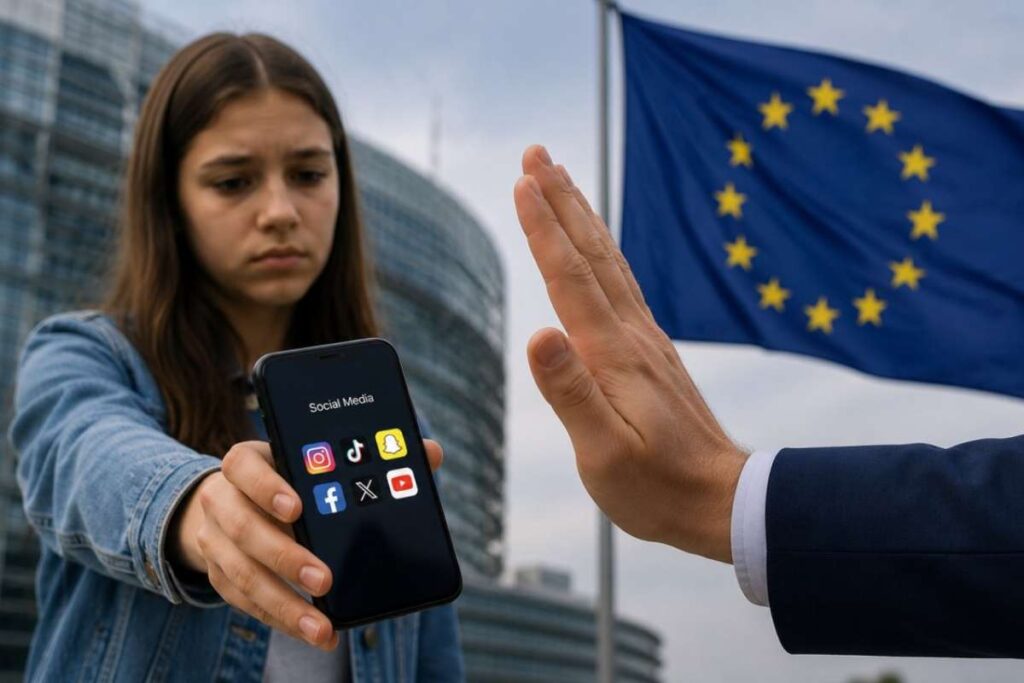
The EU child online safety initiative will introduce age-based restrictions on children’s access to social media across its 27 member states after experts recommended phased limits to reduce online risks. The European Commission is expected to present a formal proposal after the summer.
As part of the EU child online safety initiative, European Commission President Ursula von der Leyen announced the plan Monday in Brussels while presenting recommendations from two experts on protecting children online. The proposal would limit social media access for children younger than 13, allowing only supervised and time-limited use under parents, caregivers, or teachers.
“It is clear we need age-appropriate restrictions to platforms,” von der Leyen told reporters. She said the debate is no longer about whether children face risks online but about how governments can provide a safer online environment for young users.
Experts Recommend Phased Access by Age
The expert recommendations call for a tiered system that gradually expands access to social media as children grow older. Under the proposal, restrictions would ease over time for teenagers based on age.
Von der Leyen said the European Commission is likely to follow the recommendations and prepare legislation after the summer. She is expected to outline the proposal during her annual State of the Union address in September.
“We first need to consider the type of platforms that are harmful to our children,” von der Leyen said. She added that evidence points primarily to social media platforms, along with other online services that include age-inappropriate or addictive features.
The Commission has not released legislative details, but von der Leyen described the effort as applying to “social media plus,” suggesting the proposal could cover services beyond traditional social networking platforms.
Global Governments Increase Pressure on Tech Companies
The proposed EU child online safety measures come as governments worldwide increase scrutiny of children’s online safety. Australia, Britain, China, India, and the United States have either adopted restrictions on children’s social media use or are considering similar measures.
The debate has focused largely on platforms operated by Meta Platforms, including Instagram and Facebook, as well as Alphabet’s YouTube and the popular video-sharing app TikTok.
Meta and Alphabet did not immediately respond to requests for comment following von der Leyen’s announcement. Social media companies have previously said they already enforce measures designed to protect younger users, including minimum age requirements and parental control features.
If approved, the EU child online safety proposal would mark one of the bloc’s broadest efforts to establish common rules for children’s access to online platforms. The Commission has not yet announced when the legislation would take effect if adopted by member states.
Visit Future Education Magazine For The Most Recent Information.