
Key Takeaways
- Public Trust in Higher Education in the U.S. has dropped sharply over the past decade.
- AAC&U urges colleges to strengthen community ties and improve transparency.
- The framework promotes student success and inclusive excellence to rebuild trust.
The American Association of Colleges and Universities has released a national framework urging colleges and universities to strengthen Public Trust in Higher Education through community engagement, student success initiatives, and clearer communication as confidence in higher education continues to decline.
AAC&U Calls for Action Amid Falling Confidence
The AAC&U unveiled its Trust Agenda framework on June 16, calling on nearly 6,000 U.S. colleges and universities to address a long-term decline in public confidence in higher education.
According to Gallup-Lumina data cited in the report, the share of Americans expressing confidence in colleges and universities fell from 57% in 2015 to 36% in 2024. During the same period, the percentage reporting little or no confidence rose from 10% to 32%.
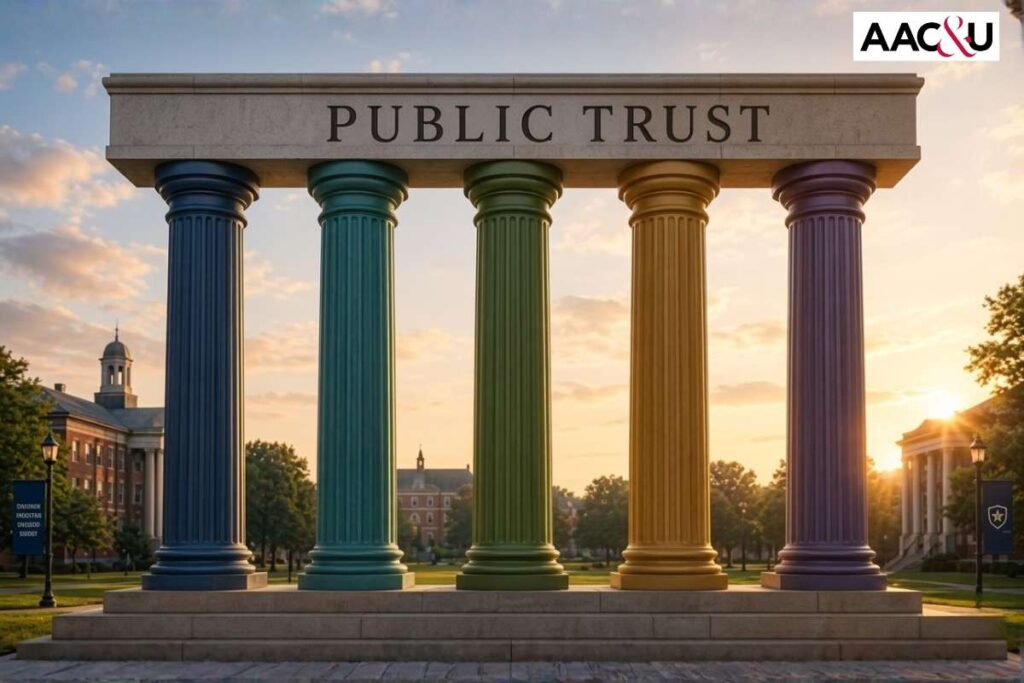
The framework is aimed at university presidents, provosts, and deans. It outlines five recommendations designed to strengthen Public Trust in Higher Education, including reducing administrative barriers, increasing community engagement, and focusing institutional efforts on student success.
“The recommendations focus on innovation and cutting red tape, and making it easier to get things done and create change on campus,” said Jeremy C. Young, AAC&U senior adviser for strategic initiatives.
AAC&U President Lynn Pasquerella said the report was developed in response to growing political pressure on higher education and broader concerns about the sector’s relationship with the public.
“We recognize that we need to enhance Public Trust in Higher Education around the value of higher education,” Pasquerella said.
Report Highlights Cost and Political Pressures
The report identifies rising college costs and declining trust in public institutions as key factors behind growing skepticism toward higher education.
AAC&U leaders also pointed to increasing political scrutiny of universities. The report cites concerns about academic freedom, research funding, and government oversight of campus policies.
Mark Salisbury, CEO and co-founder of TuitionFit, said public perceptions are often shaped by highly publicized tuition prices at elite institutions.
“The public narrative is the sticker price of $100,000,” Salisbury said. “Students think they can’t afford it and decide not to apply.”
Salisbury argued that financial aid systems remain difficult for many families to understand. While universities such as Yale provide substantial aid to lower-income students, many prospective applicants never learn about those opportunities because pricing structures appear confusing and inaccessible.
The framework also addresses debates surrounding diversity, equity, and inclusion initiatives. AAC&U promotes what it calls “inclusive excellence,” a broader approach focused on removing barriers to student access, retention, and graduation.
Young said those barriers can include economic hardship, food insecurity, housing challenges, and limited access to academic support.
Community Partnerships Seen as Key to Restoring Trust
AAC&U argues that rebuilding Public Trust in Higher Education will require stronger connections between colleges and the communities they serve.
The report encourages institutions to act as “anchor institutions” by working closely with local schools, hospitals, businesses, and civic organizations.
Pasquerella said universities must demonstrate their value through visible community involvement rather than relying solely on research achievements or institutional prestige.
“We have to be in the community,” she said. “We have to demonstrate on an ongoing basis that we’re worthy of the trust that we’re seeking.”
The report highlights several examples of community engagement efforts. At Morgan State University, leaders are developing a nonprofit medical school intended to expand primary care access in Maryland.
In Minnesota, students from Macalester College and the University of Northwestern–St. Paul participate in cross-partisan dialogue programs designed to foster understanding across political differences.
AAC&U officials said such initiatives can help counter perceptions of isolation and strengthen relationships between campuses and the broader public.
The organization argues that restoring Public Trust in Higher Education will depend on colleges becoming more transparent, responsive, and engaged with the communities they serve.
Visit Future Education Magazine For The Most Recent Information.