
Key Points:
- Hawaii’s classrooms debate cellphone use; 95% of teachers see them as distractions.
- No statewide policy; rules vary by school.
- Discussion continues on balancing tech benefits and focus.
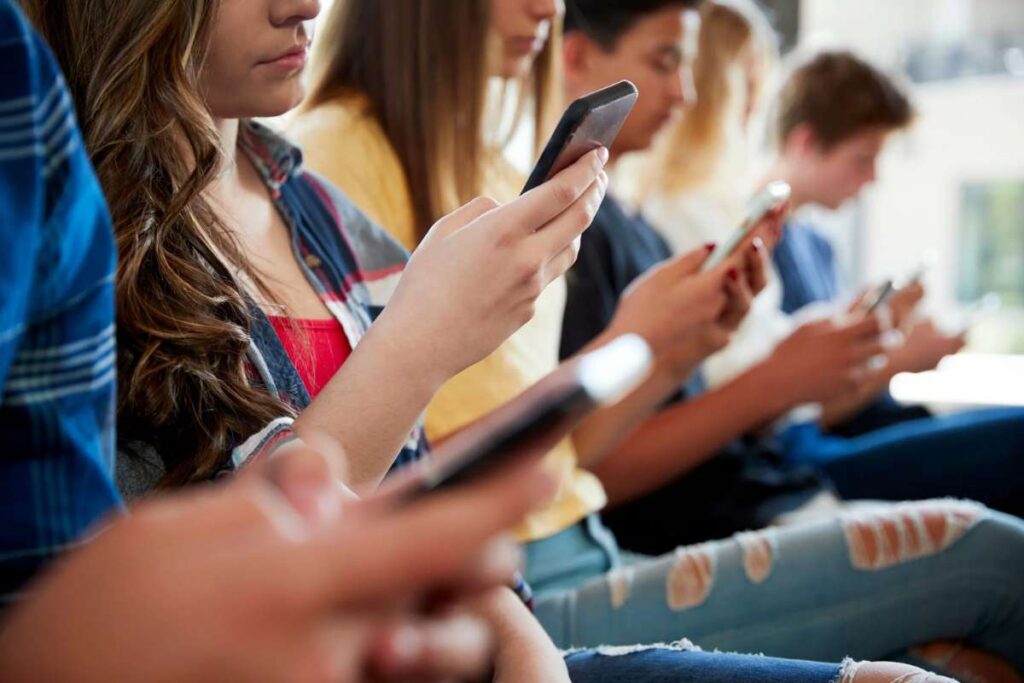
The discussion over whether cellphones belong in Hawaii’s classrooms is once again at the forefront, as new survey data highlights just how widespread the concern has become among educators. A statewide survey conducted at the end of the last school year revealed that 95 percent of teachers believe cellphones distract students from learning.
The Hawaii Board of Education recently reviewed these findings and invited input from parents, students, and community members. While many agree that cellphones present challenges in classrooms, opinions differ on whether restrictions or outright bans are the best solution.
Teachers and Parents Express Concerns
The survey, which drew more than 24,000 responses and included full participation from all schools statewide, showed that cellphones remain a key distraction for students in Hawaii’s classrooms. According to Teri Ushijima of the Hawaii State Department of Education, 85 percent of schools already have restrictive cellphone rules in place, though these policies vary from campus to campus.
For students like Logan Ohtani, the temptation to reach for a phone during class is difficult to resist. “I think when you have your phone on the table, on your desk, you’re just gonna have this instinct to pick it up,” Ohtani explained.
Parents echoed similar concerns. Some noted that limiting phone use would help students concentrate more fully. “I think just getting rid of the phone in general will also help in Hawaii’s classrooms,” Ohtani added.
At the same time, other voices highlighted that distractions from devices are not unique to students. Susan Pcola-Davis pointed out, “Let’s be real, we have cell phones in the workforce doing the same exact things, and we’re adults. It’s not that it’s right or wrong; it’s that it is to enforce something. I trust the teachers. I trust the administration.”
Lack of a Statewide Policy Raises Questions
Hawaii is currently one of just four states without a statewide policy on classroom cellphone use. Instead, decisions are left to individual schools, which often results in inconsistent approaches across the system.
Board of Education member and Kauai representative Bill Arakaki acknowledged the complexity of the issue. “I just want to make sure that people really understand that this is just the start. We do have processes in which, as a board, to really look at, but we want to get input and understand what everybody’s saying, and then we will decide what we’re going to do as a board as far as policy development as it comes up.”
Questions remain about how a statewide policy could realistically be enforced, particularly in schools where students rely on phones for safety, communication, or educational tools. For now, no final decision has been made, and the Board continues to encourage community feedback before taking any formal steps.
Ongoing Debate With No Clear Verdict
The central question — whether cellphones are more harmful or helpful in education — remains unresolved. Advocates for stricter rules argue that reducing distractions will allow students to better focus on instruction, while others believe that flexibility and trust in teachers to manage phone use locally is the more practical approach.
What is clear is that the conversation is not ending soon. The Board of Education has signaled that this is only the beginning of a longer review process. By involving students, parents, teachers, and administrators, the hope is to create guidelines that balance the benefits of technology with the need for focused learning environments.
As Hawaii’s education system navigates this ongoing discussion, one thing is certain: the debate over cellphones in Hawaii’s classrooms will continue to shape how students and teachers interact with technology in the years ahead.
Visit Future Education Magazine For The Most Recent Information.