
Key Points:
- China civil service exam sees 3.7M applicants competing amid rising economic uncertainty and high youth unemployment.
- Age-limit changes boost participation, with older candidates balancing tough preparation with family responsibilities.
- Public sector jobs remain highly sought-after for stability, pensions, and long-term security despite lower pay.
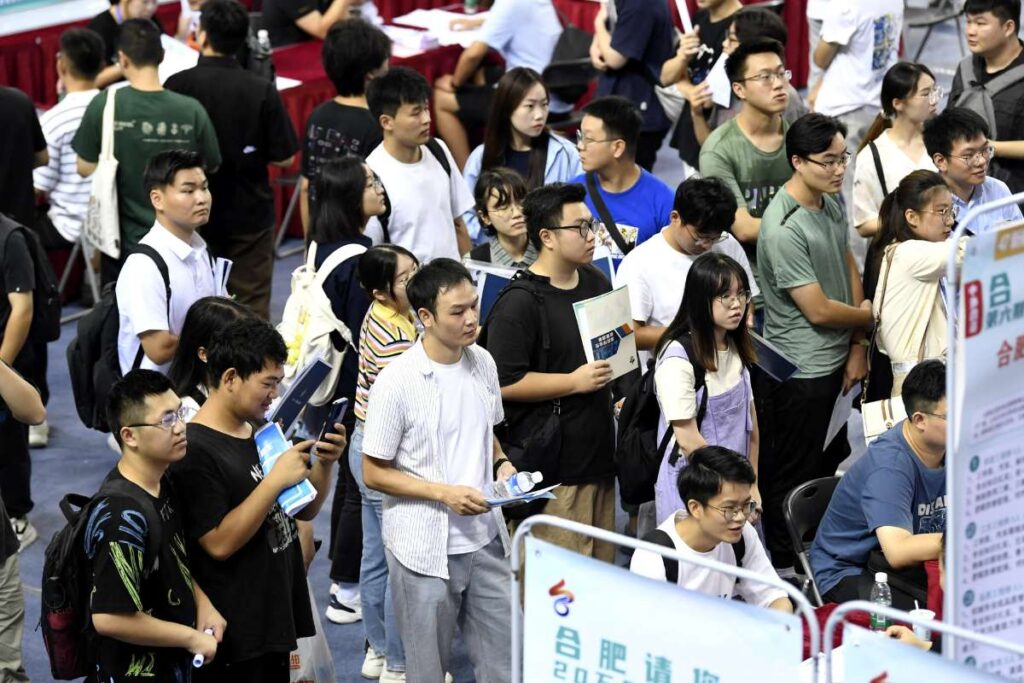
Around 3.7 million people are set to take China civil service exam this weekend, the first since the government raised age limits for applicants. The change allows general candidates up to 38 years old and those with postgraduate degrees up to 43.
The candidates will compete for 38,100 vacancies nationwide, averaging 97 applicants per position. The most popular role in the China civil service exam cycle is an immigration officer post in Ruili, Yunnan province, which borders Myanmar. A single vacancy received 6,470 applications.
Public Sector Jobs Valued for Stability
Beijing announced the age limit increase in October, aligning with gradual rises in the retirement age. The statutory retirement age will move from 50 to 55 for blue-collar women, 55 to 58 for white-collar women, and from 60 to 63 for men.
Although public sector salaries are generally lower, the jobs are prized for security. Known as the “iron rice bowl,” civil service employment provides long-term stability. In contrast, private and gig sector jobs often lack pensions, benefits, and reliable contracts.
“The occupational structure of China’s job market has shifted markedly over the last decade…towards low-pay, low-skill jobs in the gig and informal sectors,” said George Magnus, a research associate at Oxford University’s China Centre. “With 12 million graduates entering the market each year, preference for secure government sector jobs isn’t hard to understand,” especially for those opting for the China civil service exam.
Youth Unemployment Drives Demand
China’s unemployment rate stands at 5.1% for the general workforce and 17.3% for 16- to 24-year-olds, excluding college students. Youth unemployment reached a record 21.3% in 2023, though figures were briefly suspended and later adjusted to exclude students.
Economic pressures, including weak consumer demand and fallout from the Covid-19 pandemic, have led many young people to “lie flat,” avoiding jobs that they see as unstable or poorly matched to their education. Next year, China expects a record 12.7 million graduates.
Exam Preparation Challenges Grow
The civil service exam tests law, physics, biology, politics, and reasoning, with a political theory section added last year. The theory component evaluates candidates’ ability to analyse issues using Communist Party theories. Recent questions covered speeches by President Xi Jinping and Party plenums.
The increase in age limits has been welcomed by older candidates, although balancing preparation with family responsibilities remains challenging. One 35-year-old mother described waking at 4 a.m. to study for the China civil service exam, balancing childcare during the day, and sleeping only four to five hours each night.
Historical Context and Trends
Public sector jobs have long been seen as a safe career path. During China’s reform and opening-up period, workers were encouraged to “jump into the sea” by joining private enterprises. Today, passing the China civil service exam is described as “landing ashore,” reflecting a shift toward stability.
Despite lower wages in some regions, the civil service continues to attract applicants due to job security, pensions, and benefits. The increasing competition underscores the appeal of stable employment amid economic uncertainty and a changing labor market, pushing more citizens toward the China civil service exam as a reliable option.