
Key Takeaways
- Gulf scholarships for African students are making the region a top destination for African students.
- Education partnerships strengthen Gulf influence while expanding opportunities across Africa.
- Experts urge scholarships to support Africa’s development, not worsen brain drain.
Arab Gulf nations are expanding Gulf scholarships for African students and higher education programs and higher education partnerships to attract African students as tighter Western visa policies and growing economic ties position the Gulf as a leading study destination.
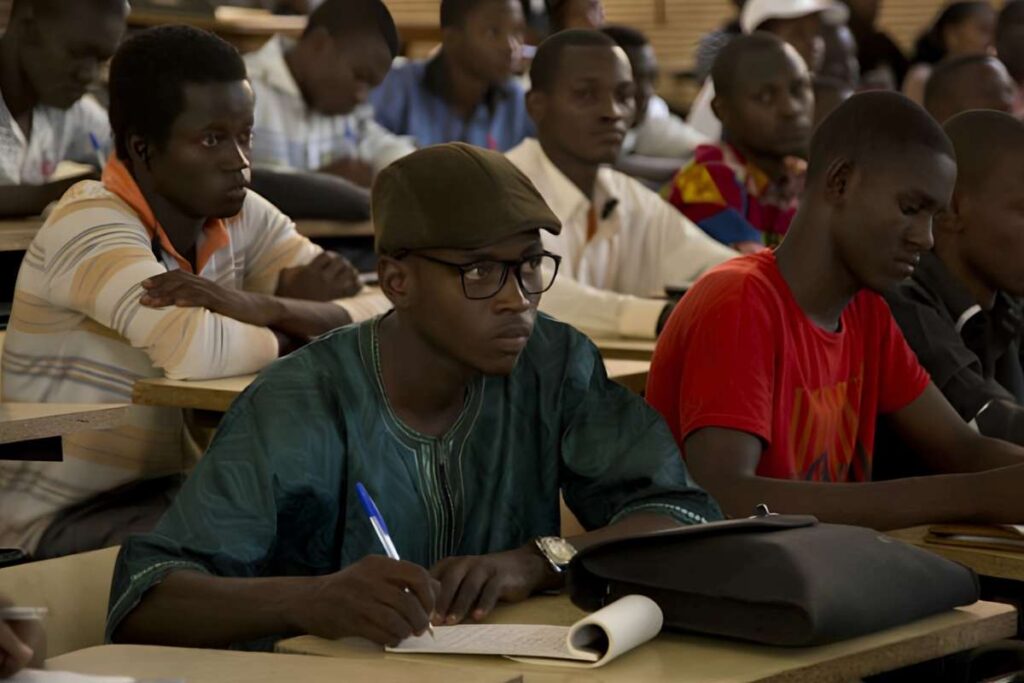
Saudi Arabia, the United Arab Emirates, and Qatar are increasing investments in fully funded scholarships and research fellowships aimed at African students. Experts say the effort supports economic expansion into Africa while helping Gulf countries build knowledge-based economies and strengthen long-term diplomatic ties.
Recent initiatives include new fellowships announced on July 7 by the UAE-based Africa Institute of Global Studies University. The programs support senior researchers and postdoctoral scholars in African diaspora literature, global African studies, visual culture, and related fields.
Saudi universities, including King Abdulaziz University and the Islamic University of Madinah, continue offering fully funded bachelor’s, master’s, and doctoral programs that cover tuition, housing, and monthly living expenses. Qatar also provides scholarships through the Qatar Fund for Development for students attending institutions such as Qatar University, the Doha Institute for Graduate Studies, and Hamad Bin Khalifa University.
Economic Goals Drive Higher Education Investment
Researchers say Gulf governments view Gulf scholarships for African students as a strategic investment that supports both economic growth and international influence.
A 2023 study on international student migration to the Gulf Cooperation Council states that governments have invested heavily in universities, research facilities, and international branch campuses to diversify economies traditionally dependent on oil.
UNESCO Institute for Statistics data show Saudi Arabia hosts 9,267 African students, the largest number among Gulf countries, followed by the United Arab Emirates with 4,966 students. Qatar enrolls 508 African students, while Oman has 203, and Bahrain has 38.
A 2025 study on West African students in Saudi Arabia found that fully funded Gulf scholarships for African students remain the main reason students choose Saudi universities. Participants also cited the country’s academic reputation, religious connections, and education quality.
“Scholarship-oriented policies are a type of cultural diplomacy aimed at enhancing economic and political ties, and they also have the potential to improve the image of the country abroad,” said Dr. Annalisa Pavan, an independent researcher specializing in higher education in Saudi Arabia and the Gulf.
Experts also note that Gulf employers increasingly seek graduates who understand both African markets and Middle Eastern business practices as Gulf companies expand across the continent.
Experts Call for Balanced Africa-Gulf Partnerships
While Gulf scholarships for African students create new educational opportunities, researchers warn they must also support Africa’s long-term development.
Magdi Tawfik Abdelhamid, a professor at Egypt’s National Research Centre, said scholarship diplomacy can strengthen soft power but may also contribute to brain drain if graduates do not find suitable career opportunities in their home countries.
He urged Gulf and African universities to jointly design programs focused on sectors including agriculture, renewable energy, and digital infrastructure while creating study-and-return frameworks that guarantee employment after graduation.
Sanjay Laul, founder of the India-based MSM Unify platform, said scholarships should be viewed as long-term partnerships rather than recruitment tools.
“A scholarship not only creates a student mobility pathway, but also creates a future alumni relationship, a professional network, and, in many cases, a bridge between African talent and Gulf economic ambitions,” Laul said.
Kenneth Besigomwe, a researcher at Makerere University in Uganda, said future success should be measured by research partnerships, graduate outcomes, and institutional collaboration instead of scholarship numbers alone.
Philip Altbach, professor emeritus at Boston College’s Center for International Higher Education, said the scholarship expansion of Gulf scholarships for African students could strengthen Africa’s intellectual capacity while helping Gulf countries develop skilled workforces. However, he cautioned that geopolitical and economic challenges require careful planning and sustained cooperation.
Visit Future Education Magazine to read more.