
A new supervisor gets promoted. She sits through a two-day workshop on giving feedback. She returns to the same team with the same problems. Six months later, she still struggles to inspire people or direct them. This is a common gap.
Many companies train one skill set when the business actually needs the other. Understanding leadership development vs management training is the first step to closing that gap. This article breaks down what each one means. It also covers where they overlap and how to pick the right one for your team.
What is Leadership Development?
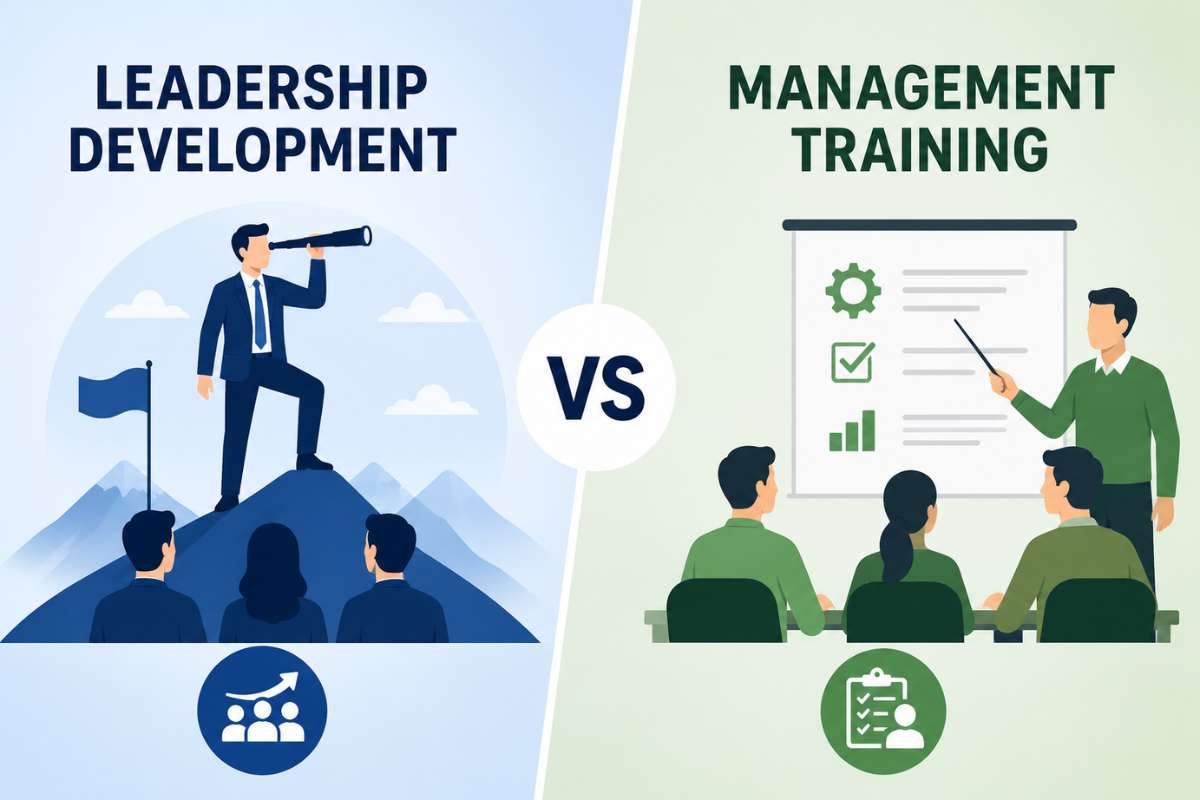
Leadership development builds the mindset people need to guide others through change. It covers skills like vision-setting and decision-making under pressure. It also covers emotional intelligence and how to influence people without relying on your job title. Leadership development programs help acquire these skills.
This process isn’t tied to one role. It applies to senior managers, directors, and even top performers being groomed for bigger jobs. The goal is to shape how someone thinks and communicates over time. Leadership development takes longer than management training and is harder to measure with one test score.
What is Management Training?

Management training teaches the practical skills needed to run a team’s daily work. It covers budgeting, scheduling, performance reviews, and delegation. It also covers company rules and processes. The audience is usually new or first-level managers who need to hit clear, short-term targets.
The impact can extend beyond daily operations. Gallup found that managers who completed training in management best practices saw up to 22% higher engagement, while engagement among their teams rose by up to 18%. Management training is one piece of a bigger employee training and development strategy.
Leadership Development vs Management Training: Core Differences Between Them
The clearest way to see the difference is to compare them side by side.
| Dimension | Leadership Development | Management Training |
| Primary Focus | People, vision, culture | Tasks, processes, systems |
| Orientation | Strategic (why the work matters) | Operational (how to do the job) |
| Time Horizon | Long-term (months to years) | Short-term (weeks to months) |
| Power Source | Personal influence | Positional authority |
| Typical Method | Coaching, mentoring, stretch assignments | Workshops, certifications, SOPs |
| Success Metric | Team engagement, retention, growth | Efficiency, compliance, output |
| Program Format | Ongoing, often self-paced | Fixed course, one-time cohort |
The table above gives you a quick view of leadership development vs management training. Here’s what these differences look like in practice.
1. Guiding the Team vs. Doing the Job
Leadership development is about direction. It asks a bigger question: where is this team going? And how do you get people to want to go there with you? Management training builds competence instead. Someone learns how to run a one-on-one meeting or how to approve a budget the right way.
2. Influence vs. Authority
A leader gets people to act because they trust the message. They also trust the person delivering it. A manager can tell someone what to do because of their title. Leadership development builds the first skill, and management training builds the second. Leadership expert John C. Maxwell writes, “True leadership cannot be awarded, appointed, or assigned. It comes only from influence, and that cannot be mandated. It must be earned.”
3. Slow Growth vs. Fast Results
Leadership growth is slow and hard to measure. Management skills show fast results by comparison; a trained manager runs a better meeting the next day. A Forrester study found leadership development delivered a 424% ROI for one organization, but that payoff built up over three years. This is why judging leadership development vs management training on one metric can be misleading. One builds value slowly; the other produces quick wins.
4. Ongoing Practice vs. Structured Course
Leadership development rarely fits a fixed schedule. It often includes mentoring, honest feedback, and real projects that stretch someone’s skills. There’s no final exam because the work never really ends. Most management training happens in a classroom or an online course instead. It has a clear start and end date.
Can You Have One Without the Other?

When you look at leadership development vs management training closely, picking one over the other completely is rarely the right call. A great leader still needs to know how to run a budget meeting. A great manager still needs to know how to motivate a discouraged employee.
Skills like communication and self-awareness show up in both areas. The best programs blend the two. They teach basic skills early, then add leadership skills as someone takes on more responsibility.
The different roles also receive different levels of organizational investment. ATD’s 2025 State of the Industry report found that 90% of organizations provided managerial and supervisory training in 2024, compared with 69% that provided executive development training. The difference reflects the practical need to equip managers with core skills while also developing senior employees for broader strategic responsibilities.
Which Training Does Your Team Need?
The right answer depends on the problem you’re trying to solve. Use this quick guide to point you in the right direction.
| If you’re seeing this… | The likely gap is… | Start with… |
| High turnover, low morale | Trust and vision | Leadership development |
| Skilled manager can’t inspire the team | Influence and mindset | Leadership development |
| Team resists change | Weak vision | Leadership development |
| Missed deadlines, unclear steps | Basic skills | Management training |
| New manager overwhelmed by admin work | Role basics | Management training |
| Inconsistent performance reviews | Process knowledge | Management training |
If the problem is a disengaged or resistant team, start with leadership development. If the problem is a broken process, start with management training. Mapping out leadership development vs management training is easiest with a clear employee development plan.
What Training Do You Need at Each Career Stage?
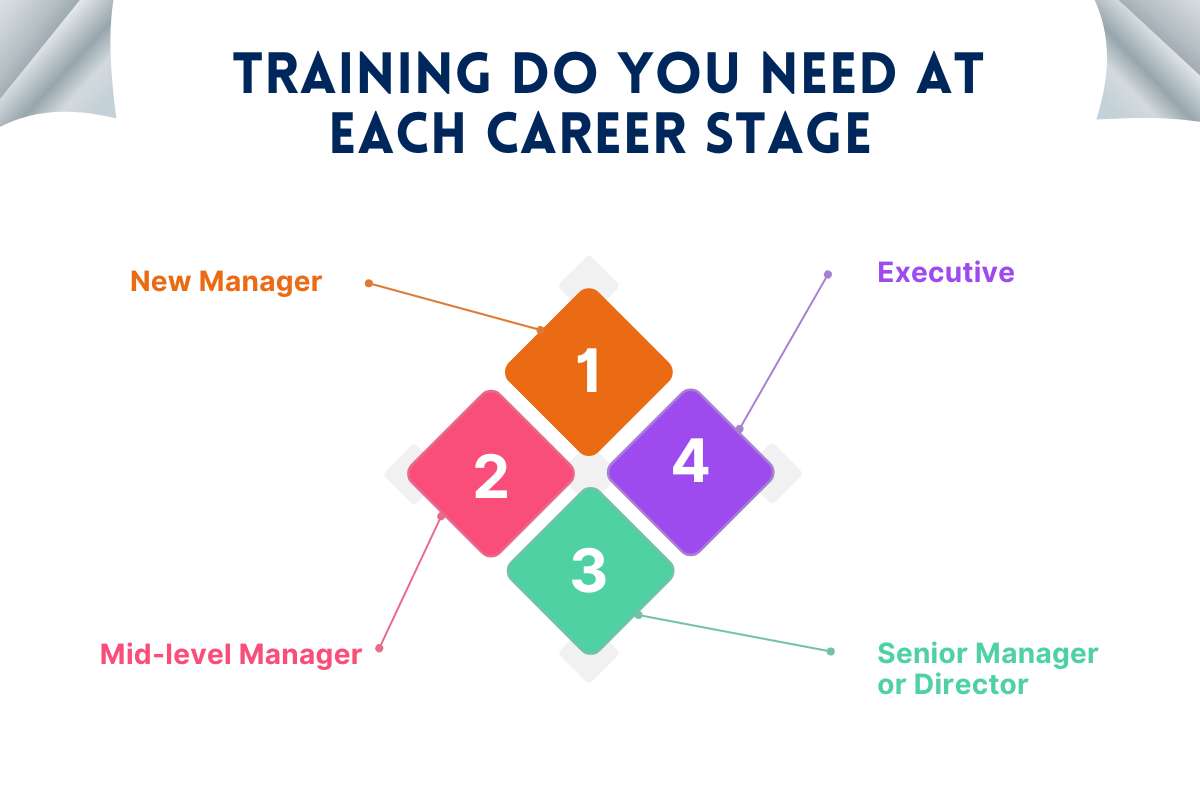
The right mix of leadership development vs management training should change as someone’s responsibilities grow.
1) New Manager:
Mostly management training. New managers need the basics of meetings, feedback, and time management first.
2) Mid-level Manager:
A fairly even mix. They still run daily operations. But they’re starting to shape team culture too.
3) Senior Manager or Director:
More leadership development. Strategic thinking starts to matter more than task execution.
4) Executive:
Mostly leadership development. Vision and the ability to inspire large groups drive success here. Technical process skills matter less.
51% of respondents in a 2026 American Management Association study said they were promoted into people management without formal leadership training. This highlights why organizations need to build management skills early rather than waiting until someone reaches a senior leadership role. Leadership development and management training are both important for employee development.
Conclusion
Neither leadership development nor management training wins on its own. One builds the judgment that carries a team through tomorrow’s challenges. The other builds the skills that keep a team running today.
The smart move with leadership development vs management training isn’t picking a side. It’s matching the right training to the right person at the right time. Find some real gap on your team, then build a plan that grows with your people.
FAQs
1. What are the key differences between leadership and management skills?
Leadership skills focus on influencing and inspiring people toward a long-term vision, while management skills focus on organizing tasks and processes to hit short-term goals.
2. Is leadership development more important than management training?
Not necessarily. They solve different problems. Senior employees benefit more from leadership development, while new employees usually need management training first.
3. Can one person need both at the same time?
Yes, most people need a blend, especially in mid-level roles. The right mix just shifts as they grow into bigger jobs.
4. How long does leadership development usually take?
It’s an ongoing process. It often unfolds over months or years through coaching and real-world practice.
5. What’s a simple way to tell which one my team needs right now?
Look at the challenges you’re seeing. Low morale and high turnover point to a leadership gap, while missed deadlines point to a management gap.