
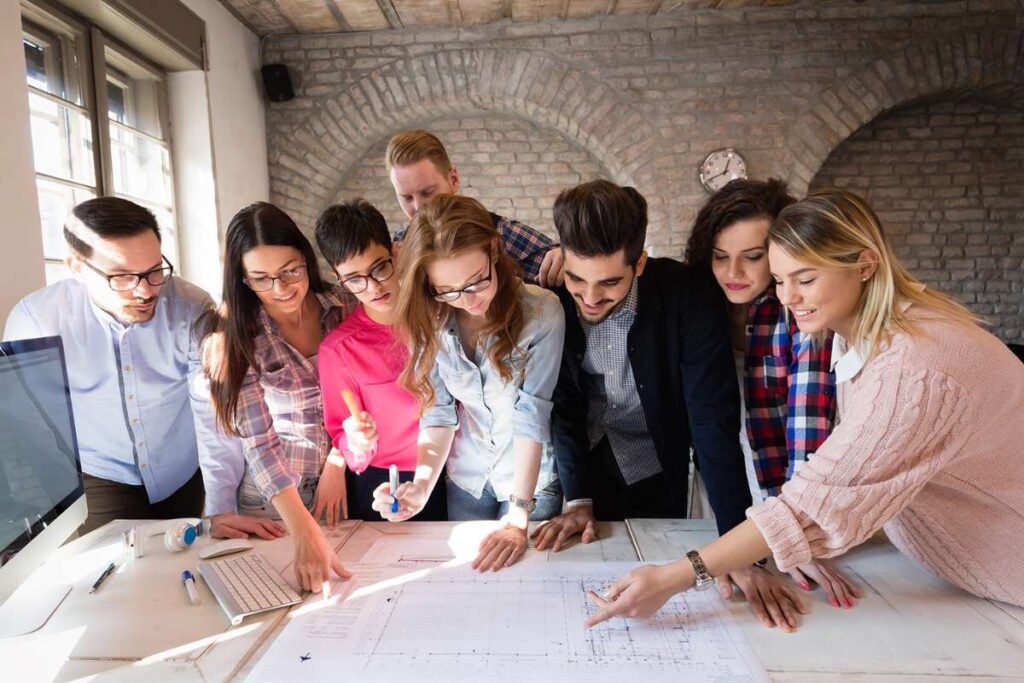
Experiential learning helps students learn through real activities and hands-on experience instead of only memorizing lessons. This blog explains its benefits, learning cycle, types, history, real-world examples, challenges, and how practical learning helps students build confidence, teamwork, and problem-solving skills for modern education and future careers.
Many students can remember studying all night before a test, only to forget most of the lesson a few days later. Reading from textbooks may help during exams, but it does not always prepare students for real situations. A student may learn about teamwork in class, but understand it better while working on a group project or internship.
Today, schools and workplaces want people who can think clearly, solve problems, and use skills in daily life. Because of this, many teachers now use science labs, classroom activities, role-play, field projects, and practical tasks during lessons.
Experiential learning helps students learn through real action instead of only memorizing facts. When students take part in activities directly, they often understand ideas faster and remember them longer. This approach is becoming an important part of modern education.
The Meaning and Importance of Experiential Learning
It is a way of learning through real activities and direct experience. Instead of only reading books or listening to lectures, students take part in tasks that help them understand ideas in a practical way. This method is often called “learning by doing” because students learn while actively working on something.
For example, students may perform science experiments, join role-play activities, work on projects, or solve real-life problems in groups. After the activity, they think about what happened, understand the lesson, and try to improve their skills. This process helps students connect classroom learning with real situations.
Traditional learning is usually focused on listening and memorizing. Active learning gives students a chance to participate, ask questions, and practice skills directly. Many schools now use an experiential way of learning to help students become more confident, engaged, and prepared for everyday challenges.
| Traditional Learning | Experiential Learning |
| Listening to lectures | Doing activities |
| Memorizing facts | Solving real problems |
| Teacher-led | Student participation |
| Theory-focused | Practice-focused |
This shift from passive learning to active participation is changing how students learn in classrooms around the world. Instead of simply trying to remember information for exams, students get a chance to use what they learn in meaningful and practical ways.
Why Experiential Learning Matters in Modern Education?
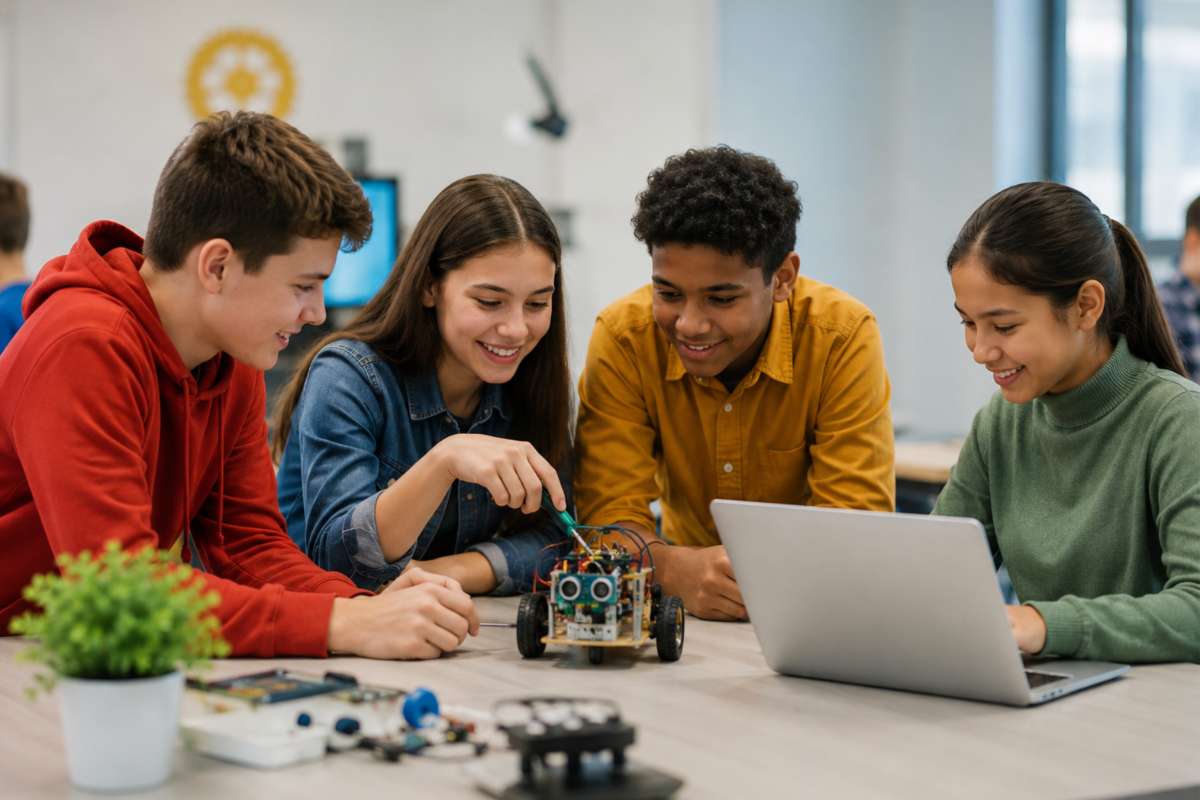
Education today is not only about getting good marks in exams. Schools and colleges also want students to build real skills they can use in daily life and future jobs. Communication, teamwork, problem-solving, and critical thinking are now important in almost every career. As technology changes workplaces quickly, students need more than textbook knowledge to stay prepared.
It helps students become active participants in the learning process. Instead of sitting quietly through long lectures, students work on projects, join discussions, solve practical problems, and learn from real experiences. These activities often improve attention and make lessons more meaningful. Students also feel more confident when they can apply what they learn in real situations.
Why do Students Forget Passive Learning Faster?
Students often forget lessons when they only listen and memorize information for tests. A 2024 active learning study found that students in highly interactive learning sessions showed up to 54% better knowledge retention compared to traditional lecture-based learning.
Active participation helps the brain remember ideas more clearly. Real-world activities create a stronger understanding because students connect learning with action, experience, and reflection.
Why is Experiential Learning Effective?
People often remember experiences more clearly than facts from a textbook. A student may forget a chapter from class but still remember a science experiment or group project months later. The brain usually learns better through action than passive listening.
It is effective because students connect lessons with real actions and emotions. When students solve problems, build something, or work with others, the learning feels more meaningful. Reflection also plays an important role. Students think about what worked, what went wrong, and how they can improve next time. Even mistakes help build deeper understanding.
Hands-on activities also support multi-sensory learning. Students may see, hear, discuss, and perform tasks at the same time. This often improves memory and helps students recall lessons more easily through practice.
What Happens During Active Learning?
- Observe what is happening.
- Act by taking part in the task.
- Reflect on the experience.
- Improve through practice and feedback.
Experiential Learning Cycle
Education expert David Kolb explained learning as a cycle made up of four simple stages. Students move through each stage as they learn from experience and improve over time.
1. Concrete Experience
This is the first step where students do an activity directly. It could be a science experiment, a classroom project, an internship, or a group task.
2. Reflective Observation
After the activity, students think about what happened. They notice what worked well, what felt difficult, and what they learned from the experience.
3. Abstract Conceptualization
In this stage, students connect the activity with ideas and lessons. They begin to understand the meaning behind what they did.
4. Active Experimentation
Students apply what they learned by trying again with improvements. This helps build confidence and stronger skills over time.
| Stage | Meaning |
| Experience | Doing something |
| Reflection | Thinking about it |
| Concept | Understanding the lesson |
| Experiment | Applying the new idea |
Why the Cycle Keeps Repeating
Learning does not stop after one activity. Each new experience gives students another chance to reflect, improve, and apply better ideas. This repeated process is one reason that the experiential way of learning helps students develop a deeper understanding over time.
Key Benefits of Experiential Learning
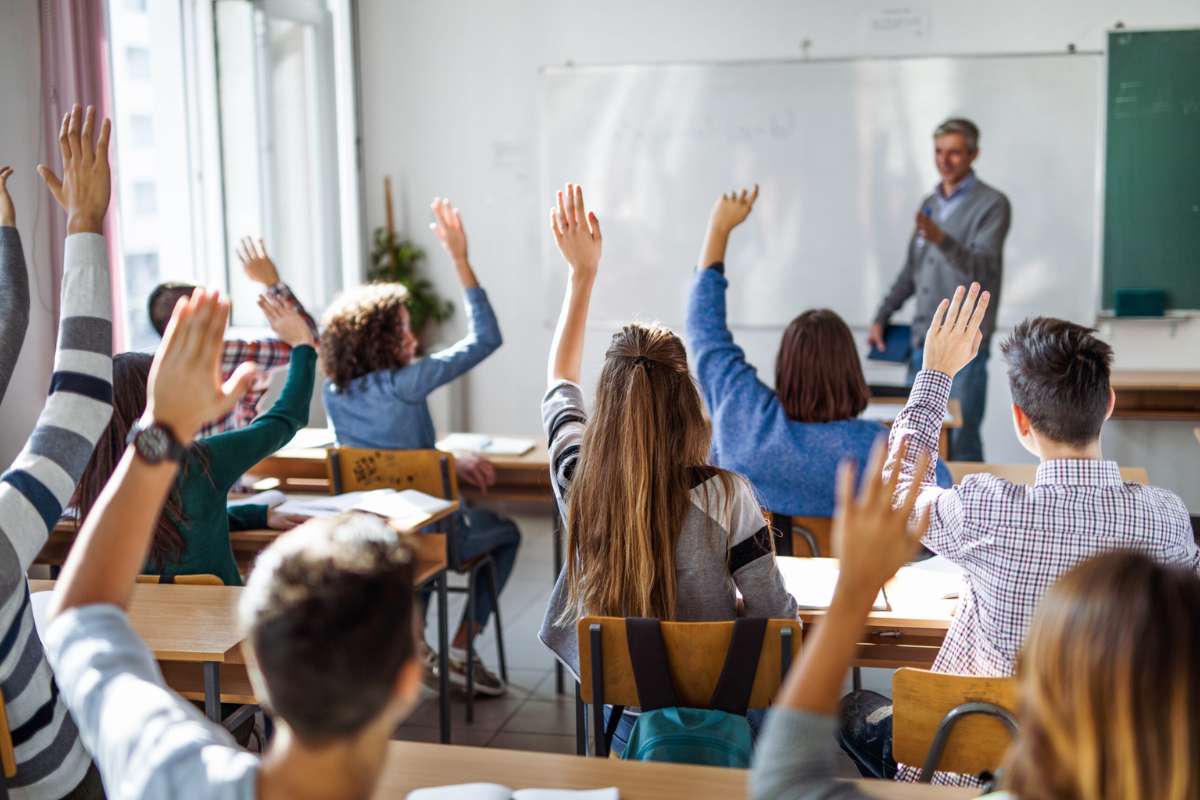
Students learn in different ways, but many understand lessons better when they actively take part in the process. Practical activities can make learning more meaningful, easier to remember, and more useful in daily life. Over time, this approach also helps students build important personal and social skills that support them both inside and outside the classroom.
1) Better Memory Retention:
Students often remember hands-on activities longer than textbook lessons because they directly take part in the experience.
2) Higher Student Engagement:
Activities make lessons feel more interesting and help students stay focused for longer periods.
3) Stronger Problem-Solving Skills:
Students learn how to think carefully, make decisions, and handle challenges in real situations. Practical learning also helps them learn from mistakes and improve over time.
4) Improved Teamwork and Communication:
Group activities teach students how to share ideas, listen to others, and work together effectively.
5) More Confidence:
Trying new tasks and improving through practice can help students feel more confident in their abilities.
Benefits Beyond the Classroom
The value of practical learning does not end at school. Many employers look for people who can work well in teams, solve problems calmly, and adjust to new situations without needing constant guidance. Students who learn through real activities often become more comfortable speaking, making decisions, and handling responsibility. These skills can help during internships, job training, and everyday workplace tasks.
Understanding the Real-World Methods of Experiential Learning
Practical learning can happen in many different ways. Some activities take place inside classrooms, while others happen in workplaces, communities, or outdoor settings. Each type gives students a chance to learn through action instead of only reading or listening.
| Type | How It Helps Students Learn |
| Internships | Students work in real companies or organizations to understand how workplaces function in daily life. |
| Simulations | Students practice real-world situations in a safe environment before facing them in reality. |
| Field Trips | Visiting museums, farms, factories, or science centers helps students connect lessons with real experiences. |
| Service Learning | Community projects help students learn while supporting and helping other people. |
| Project-Based Learning | Students research, create, solve problems, and complete long-term practical assignments. Experiential learning is often used heavily in these projects. |
| Role-Playing Activities | Students act out real situations such as interviews, debates, or customer interactions to improve communication skills. |
Which Type Works Best for Different Age Groups?
| Age Group | Most Effective Activities |
| Young Children | Games, storytelling, and role-play activities |
| Teenagers | Science labs, group projects, and problem-solving tasks |
| College Students | Internships, research work, and field experience |
Not every student learns in the same way. Some understand lessons better during group activities, while others learn more from real-world experience or hands-on projects. Using different learning methods can help classrooms feel more active, practical, and easier for students to connect with
History of Experiential Learning
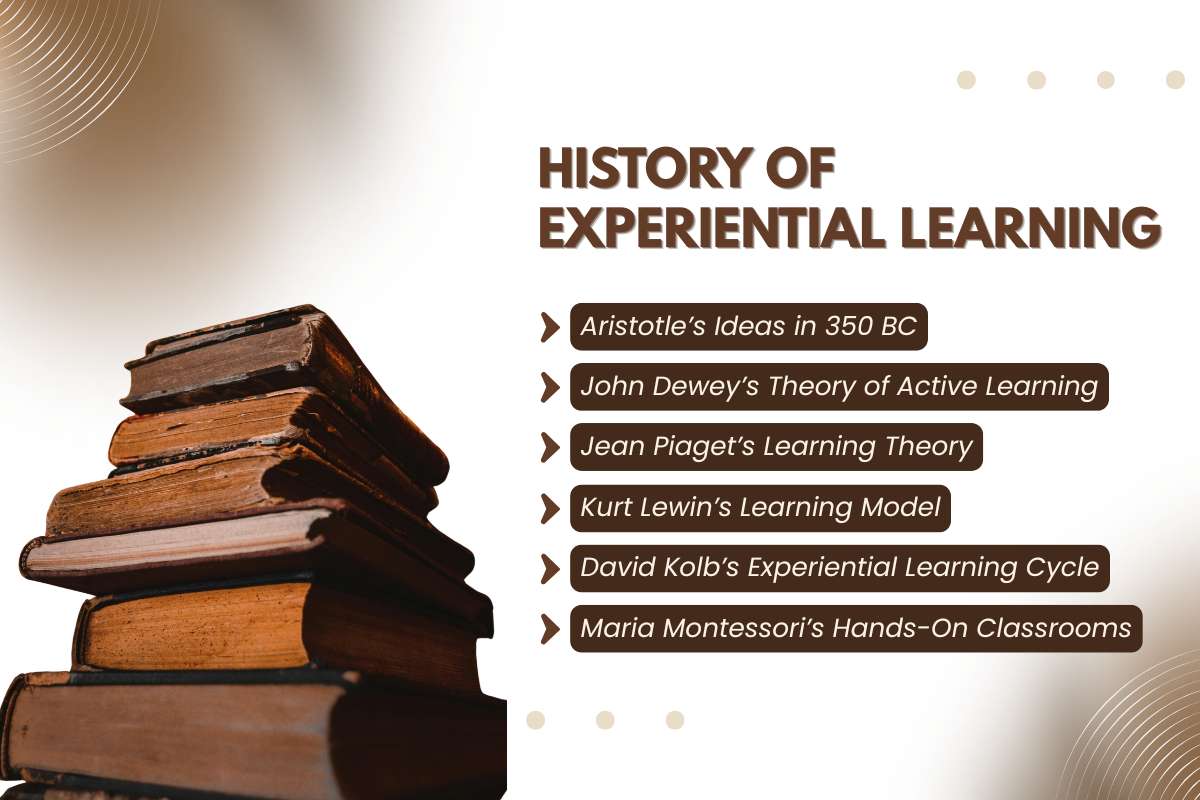
Learning through experience is not a new idea. People have been learning through practice, observation, and real-life experiences for centuries. Before modern schools became common, children often learned daily skills by watching adults and trying tasks on their own. Farming, cooking, trade work, and craftsmanship were usually taught through direct experience instead of written lessons.
Over time, many educators and researchers developed theories that explained why learning through action works so well. Their ideas helped shape the modern understanding of practical and active learning used in schools today.
1. Aristotle’s Ideas in 350 BC
One of the earliest ideas connected to experiential learning came from the Greek philosopher Aristotle. He believed people learn better by doing things instead of only studying theories or listening to instructions.
His ideas focused on practice, repetition, and real experience. Aristotle believed knowledge grows stronger when people apply what they learn in everyday life.
2. John Dewey’s Theory of Active Learning
In the early 1900s, John Dewey explained that education should connect closely with real life. He believed students should actively take part in learning instead of only memorizing facts from books.
Dewey also believed reflection was important. Students should think about their experiences, understand what happened, and use those lessons to improve future learning.
3. Jean Piaget’s Learning Theory
Jean Piaget studied how children think and learn as they grow. He believed children learn best by exploring, asking questions, and interacting with the world around them.
His work showed that children build knowledge through active discovery instead of passive listening. These ideas strongly influenced modern classroom activities and hands-on learning methods.
4. Kurt Lewin’s Learning Model
Kurt Lewin focused on the relationship between experience, observation, and change. He believed learning happens when people reflect on actions and use those reflections to improve.
His work later influenced many modern learning models. The idea of learning through action and reflection became an important part of active education methods.
5. David Kolb’s Experiential Learning Cycle
In 1984, David Kolb introduced a four-stage learning cycle based on experience, reflection, understanding, and experimentation. His model explained learning as a continuous process instead of a single event.
Kolb’s theory became one of the most widely used frameworks in education and workplace training. Many schools still use his ideas to design practical learning activities today.
6. Maria Montessori’s Hands-On Classrooms
Maria Montessori created learning environments where children could move freely and learn through practical activities. She believed students become more independent when they explore and learn at their own pace.
Her classrooms used hands-on materials instead of only lectures and memorization. Many Montessori teaching methods are still used around the world today.
How Experiential Learning Changed Over Time?
| Time Period | Main Focus |
| Early education models | Observation and practice |
| Industrial era | Classroom memorization |
| Modern education | Skill-based learning |
Over time, teaching methods changed as schools started focusing more on practical skills instead of only memorization. Today, many schools use practical learning to help students gain both knowledge and real-life skills.
Experiential Learning in Different Education Sectors
Learning through experience is now used across many parts of education. From classrooms to workplaces, practical activities help people build skills through direct participation and real-world experience.
| Education Sector | Common Activities |
| Schools | Science experiments, group projects, educational games |
| Colleges and Universities | Internships, labs, workshops, case studies |
| Corporate Training | Simulations, role-play, workplace training |
| Online Education | Virtual labs, interactive projects, and gamified lessons |
How Digital Tools Support Hands-On Learning?
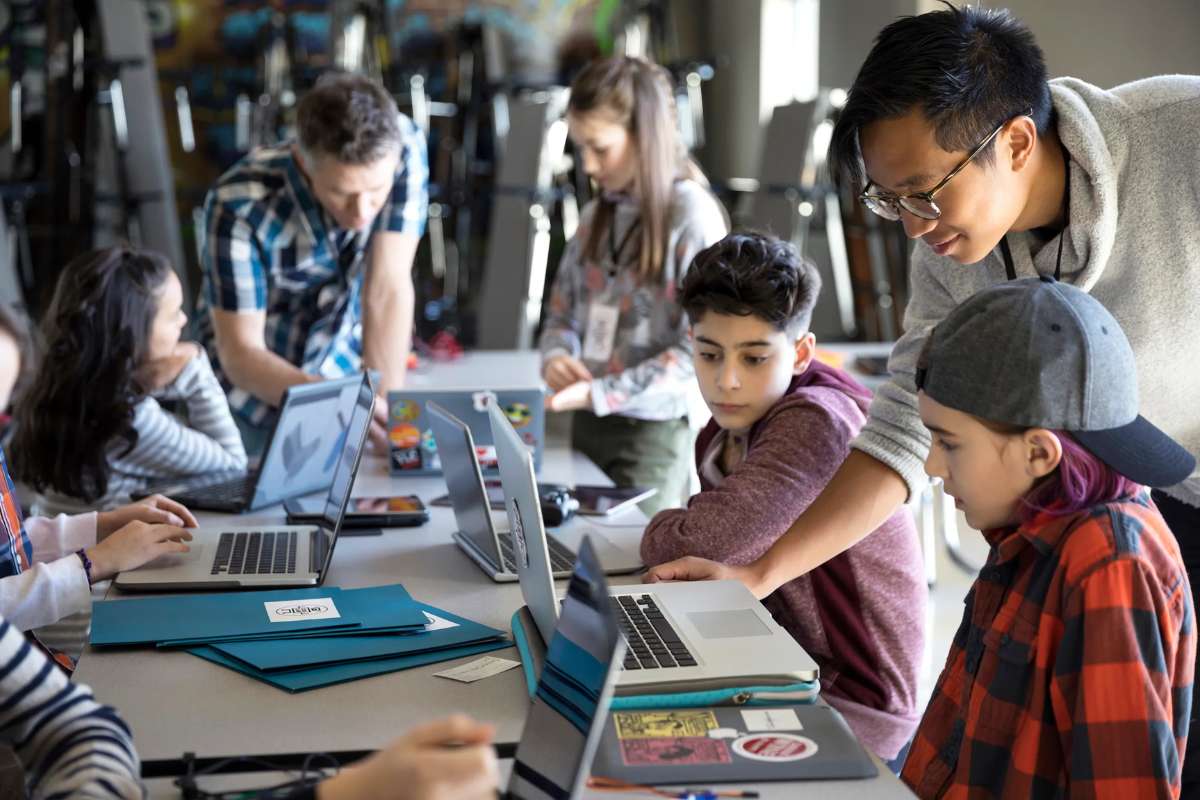
Digital tools are making practical learning easier and more accessible. A 2024 study found that students using virtual reality learning tools showed 29.2% better learning outcomes than students in traditional classroom-only settings.
Virtual reality (VR) allows students to explore realistic environments safely, while interactive simulations help them practice skills step by step. Online collaboration tools also make it easier for students to work together on projects from different locations.
Examples of Experiential Learning
Learning through experience can be used in simple classroom activities as well as large real-world projects. These experiences help students apply ideas, solve problems, and learn through direct action.
| Activity | What Students Learn |
| Science Lab Experiment | Students test chemical reactions and understand scientific concepts through observation. |
| Mock Business Activity | Students run a small classroom business and learn budgeting, teamwork, and decision-making. |
| Community Cleanup Project | Students develop responsibility, teamwork, and awareness about their environment. |
| Medical Simulation | Nursing students safely practice patient care and emergency response skills. |
| Robotics Competition | Students work together to solve engineering and coding challenges. |
Simple Activities Teachers Can Start Quickly
Teachers do not always need expensive tools or large programs to use practical learning methods. Simple activities like classroom debates, role-play exercises, science demonstrations, group problem-solving tasks, or short field observations can make lessons more active and engaging. Even small hands-on activities can help students understand topics more clearly and stay involved during class.
Challenges in Implementing Experiential Learning
Although practical learning has many benefits, schools can still face challenges while using it regularly in classrooms. Some activities require extra planning, materials, and teacher support, which may not always be available.
Many schools struggle with limited budgets, large classroom sizes, and a lack of teacher training. Time can also become a challenge because practical activities often take longer than regular lectures. In some cases, teachers may also find it difficult to measure learning outcomes clearly. Even though practical learning is effective, it can be harder to organize in busy academic schedules without proper planning.
Common Mistakes Schools Make
Some schools focus too much on making activities fun without connecting them to learning goals. In other cases, students complete activities but do not spend time reflecting on what they learned. A lack of feedback after activities can also reduce the overall learning experience.
| Challenge | Possible Solution |
| Limited resources | Use low-cost projects and classroom activities |
| Large classes | Divide students into smaller groups |
| Lack of time | Use short practical exercises during lessons |
With proper planning and support, even small hands-on activities can make classroom learning more meaningful and effective.
Conclusion
Learning becomes more meaningful when students actively take part in the process instead of only memorizing information from books. Practical activities help students understand lessons better, remember concepts longer, and build confidence through real experience. From science labs and internships to group projects and simulations, hands-on learning supports important skills like communication, teamwork, problem-solving, and adaptability.
As education and workplaces continue to change, students need more than theoretical knowledge to succeed. Schools that combine active participation with classroom teaching can better prepare students for real-life situations and future careers. In many ways, experiential learning helps turn knowledge into skills that students can actually use beyond the classroom.
FAQs
1. What is experiential learning in simple words?
It means learning through real activities, direct experience, and practical tasks instead of only reading or listening.
2. Why is practical learning important?
It helps students understand lessons more clearly and remember information for a longer time through active participation.
3. What are examples of learning through experience?
Common examples include internships, science lab experiments, role-play activities, field trips, and group projects.
4. Who created the experiential learning theory?
David Kolb developed the modern experiential or practical learning cycle in 1984.
5. What are the main stages of learning through experience?
The main stages are experience, reflection, understanding, and experimentation.