
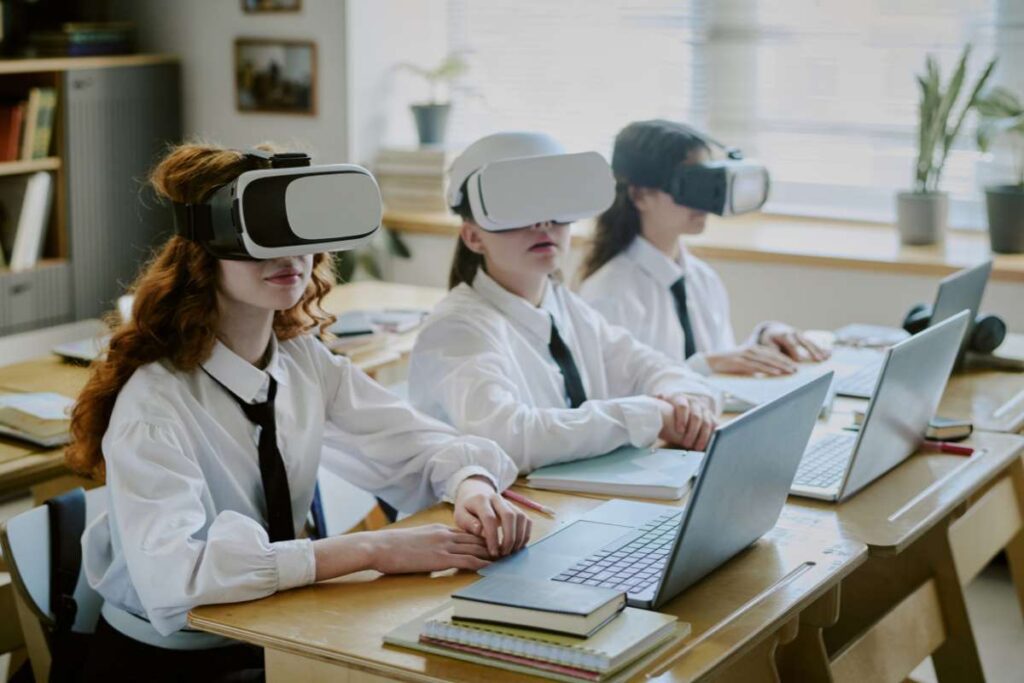
What if you could put on a headset and step inside a 3D world where you can explore history, science, or art like never before?
The ability to teleport into another world is made possible through VR. This technology is transforming the way various industries operate. Virtual Reality in Education is changing the way students learn and teachers teach. This technology makes learning more exciting and memorable.
With Virtual Reality (VR), students can go on virtual field trips, perform science experiments safely, or even explore outer space. They can do all of this without leaving the classroom.
It helps learners understand complex topics by turning lessons into real experiences. In this article, we will be looking at how the future of education is becoming more interactive and engaging. First, we will start by understanding exactly how VR works in education.
What is Virtual Reality in Education?
VR is a special computer technology that lets people enter a world that feels real. By wearing VR headsets or goggles, students can look around, move, and interact with things in a 3D space. It is like stepping inside a game or a movie, but they can also learn while exploring.
Virtual Reality in education makes lessons more exciting and easier to understand. Students can take virtual trips to space, visit ancient cities, or explore the human body. They can see and touch things they usually cannot in a classroom. This hands-on learning helps them remember lessons better.
VR is also useful for training in jobs like medicine, science, or engineering. Students can practice real skills safely without any risk. By using VR, learning becomes more fun, interesting, and helpful for students of all ages.
Benefits of Virtual Reality in Education
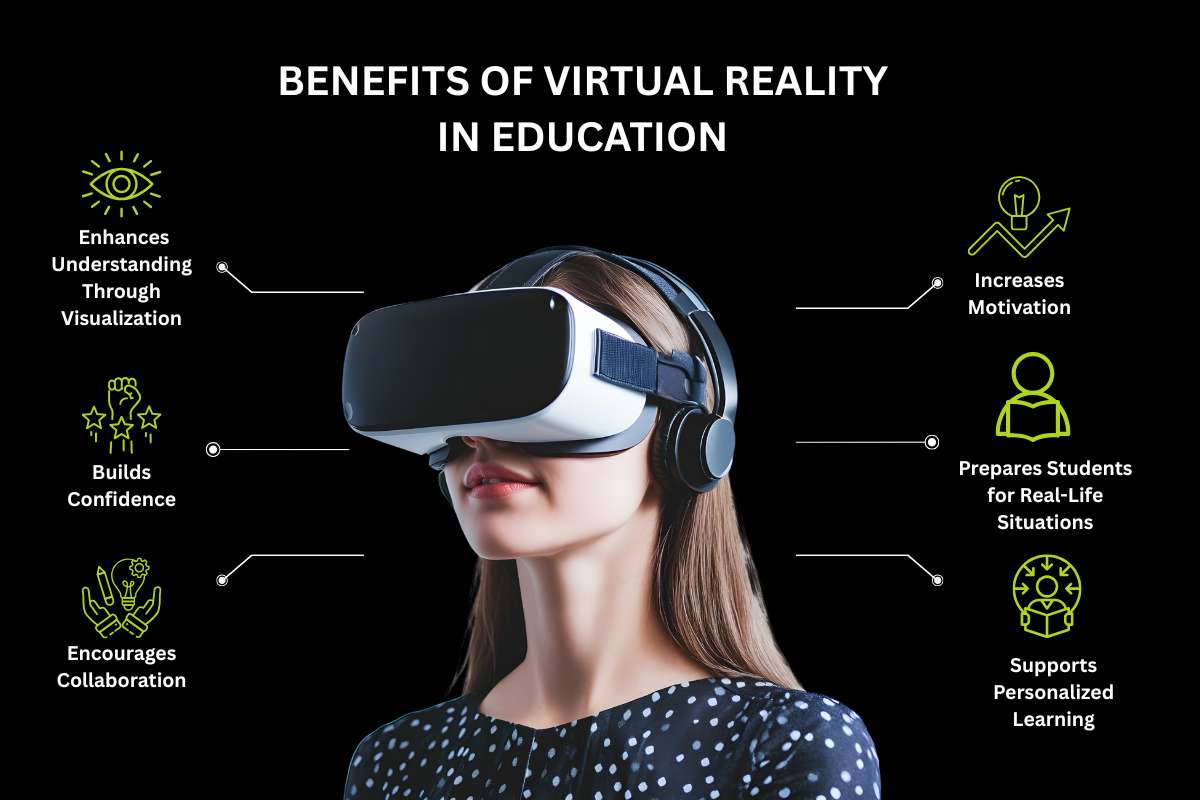
VR is changing classrooms by giving students new ways to learn. Here are five important benefits of VR in education:
1. Enhances Understanding Through Visualization:
Using virtual reality in education helps students see things they cannot easily imagine. For example, they can explore the solar system, walk through a volcano, or study the human body in 3D. This makes complex topics easier to understand.
2. Increases Motivation:
Many students feel more excited about learning when using VR. The immersive experience encourages them to explore and discover on their own, boosting their motivation to study. According to a study published in the National Library of Medicine, 80% of the students rated VR sessions as “highly engaging” compared to standard instruction.
3. Builds Confidence:
VR lets students practice skills privately in a safe environment. For example, they can give presentations, solve problems, or perform tasks without fear of mistakes, which builds self-confidence. According to a study published in the JALT CALL Journal, 18-22% students self-reported an increase in confidence
4. Encourages Collaboration:
Some Virtual Reality tools allow students to work together in virtual spaces. They can solve challenges, create projects, or complete tasks as a team, improving teamwork and communication skills.
5. Prepares Students for Real-Life Situations:
Virtual Reality in Education can simulate real-world environments and scenarios. Students can experience jobs, travel to faraway places, or practice safety procedures, giving them practical knowledge and preparation for the future.
Also Read: Social Learning Platforms: Revolutionizing Education in the Digital Age
What are the Types of VR that are Changing Classrooms
There are numerous ways in which Virtual Reality in Education can be utilized to teach and inspire students. It can be a very flexible method of
1. Immersive VR:
Students use VR headsets to explore 3D environments such as the solar system, ancient cities, or virtual science labs. This helps them understand complex topics by experiencing them directly.
2. Non-Immersive VR:
This type uses computers or tablets instead of headsets. Students can interact with virtual objects while still seeing the real world around them, making it easier to combine real and digital learning.
3. Collaborative VR:
Multiple students connect in the same virtual environment. It encourages teamwork and lets learners solve problems together in shared digital spaces.
4. Mobile VR:
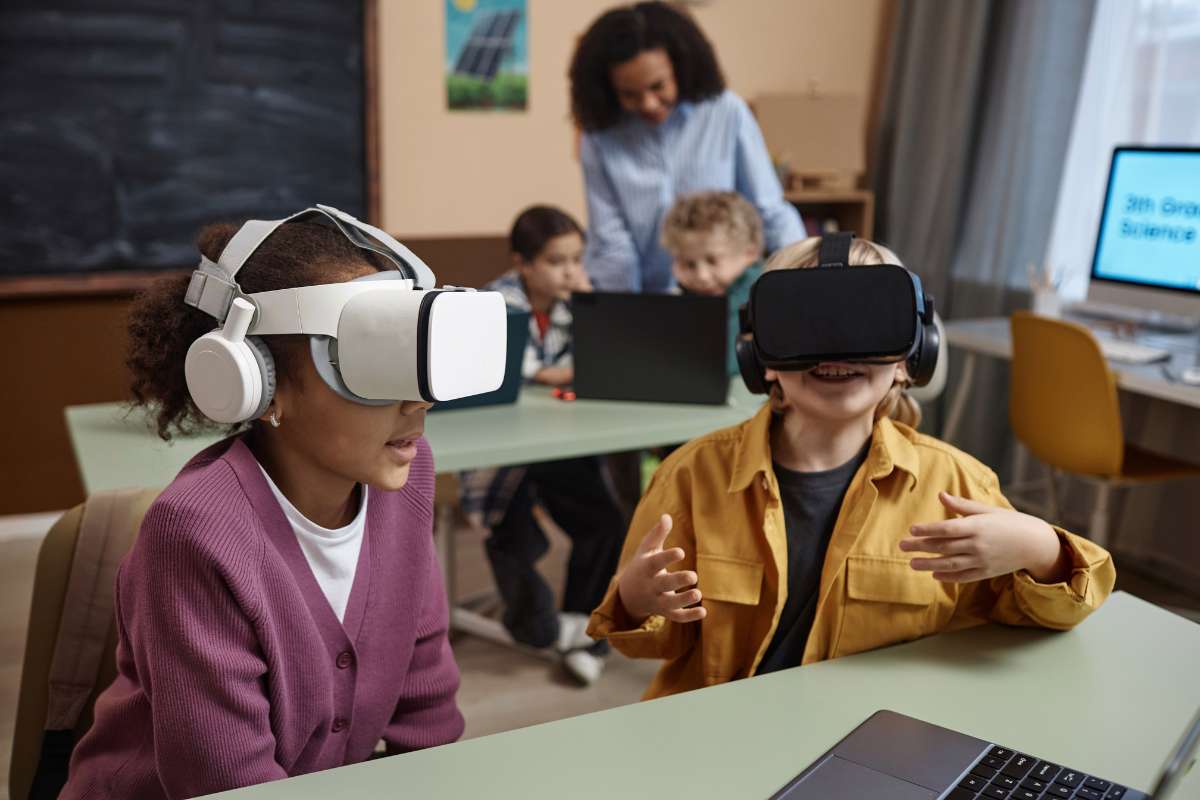
Schools use smartphones and affordable headsets like Google Cardboard to make VR accessible. It offers interactive learning experiences at a lower cost.
5. Augmented VR:
This blends virtual elements with the real world. It helps teachers enhance classroom lessons by adding 3D visuals or interactive simulations.
Virtual Reality Tools for Education That Teachers Can Implement
Virtual Reality tools are helping teachers make lessons more fun and interactive. Here are some popular VR tools and how they can be used in schools:
1. History Verse:
Key Feature: Immersive 3D recreations of historical events and landmarks.
This tool lets students explore historical events and places in 3D. Teachers can take students on virtual trips to famous landmarks or important battlefields. It helps students understand history better by seeing it instead of just reading about it.
2. Panoform:
Key Feature: Converts 2D drawings into 3D virtual environments.
Panoform turns paper drawings into 3D VR experiences. Students can create maps, charts, or designs and then explore them in VR. This makes learning more hands-on and helps develop creativity and spatial thinking.
3. Tour Creator:
Key Feature: Let users build customized virtual tours.
Tour Creator allows teachers and students to build virtual tours. They can create journeys through cities, museums, or even imaginary worlds. It is useful for subjects like geography, art, and literature.
4. Story Spheres:
Key Feature: Combines 360° images with text and audio storytelling.
Story Spheres lets students make 360-degree stories with images, text, and audio. Students can present projects or tell stories in a fully immersive way. This improves communication skills and makes presentations more exciting.
5. Google Expeditions:
Key Feature: Provides guided virtual trips around the world and beyond.
This tool gives students virtual trips to oceans, mountains, space, and more. Teachers can guide students while they explore different environments, making science and geography lessons more interactive and memorable.
How can VR be used at different levels of education?
The flexibility of VR is evident when you look at how it benefits students, no matter where they are in their educational journey.
1. Primary Education:
VR makes learning fun and interactive for young children. Students can explore virtual zoos, travel through space, or dive under the ocean, all from the classroom. It helps them understand abstract topics like geography, animals, and nature through real-life visuals and experiences that build curiosity and imagination.
2. High School Education:
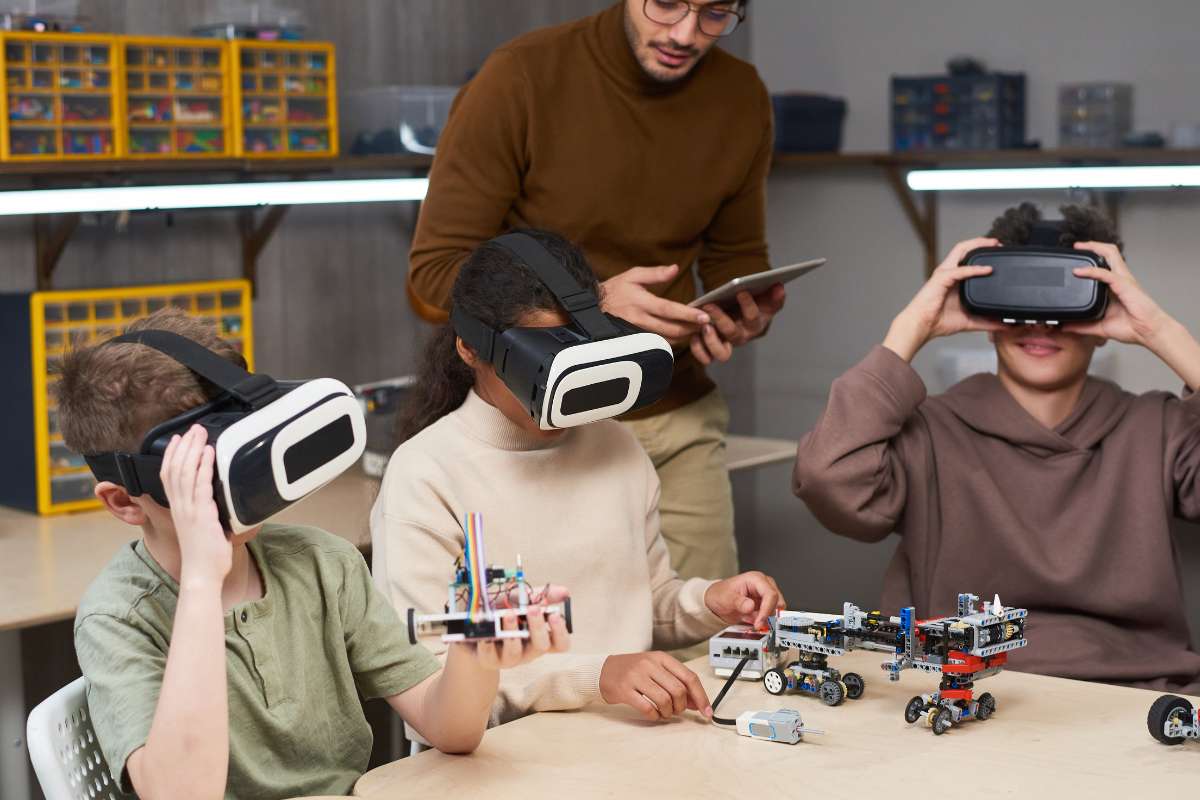
In high school, VR is used for subjects like science, history, and math. Students can perform virtual lab experiments, walk through historical landmarks, or visualize 3D math models. It also supports career-focused learning, such as virtual field trips to companies or job sites, helping students connect lessons to real-world applications.
3. College Education:
VR provides advanced, hands-on training for higher studies. Medical students can practice surgeries, engineering students can build 3D models, and architecture students can design buildings in virtual spaces. It allows realistic simulations, making learning practical, safe, and highly engaging.
Future of Virtual Reality in Education
The future of VR in education is very exciting. In the next few years, VR could change the way students learn in ways we can only imagine. Classrooms might become fully digital. Students could step into virtual worlds to explore lessons instead of just reading books or watching videos.
With better technology, VR lessons could feel more real and fun. Students might do science experiments, travel through history, or explore outer space in lifelike simulations. This will make learning more exciting and help students remember more. Teachers could also make lessons that fit each student’s speed and style. This kind of learning can help every student do well, even those who find regular classrooms hard.
Adapting virtual reality in education could also make learning fairer for all students. Kids in small towns or schools with fewer resources could get the same experiences as students in big cities. They could visit museums, labs, or cultural sites without leaving school.
Another exciting idea is using VR with other technologies, like artificial intelligence and augmented reality (AR). This could give students more ways to learn, practice, and create. They could explore real-life situations or solve problems. They can even work with students from other countries in virtual spaces.
Conclusion:
Using Virtual reality in education can transform how students experience learning. VR helps students stay curious. It bridges the gap between theory and practice, allowing them to explore and experiment. As this technology continues to grow, it promises to make education more inclusive and effective for learners everywhere.
FAQ
1. Is Virtual Reality suitable for all subjects?
Yes, VR can be used in almost any subject, like science experiments, history tours, art lessons, and even language learning. It helps bring complex or abstract topics to life.
2. How is Virtual Reality different from Augmented Reality in learning?
Virtual Reality creates a fully digital world that surrounds the learner, while Augmented Reality adds digital elements to the real world, like 3D models or animations.
3. Are there any challenges in using Virtual Reality for education?
Yes, challenges include the cost of VR equipment, limited access in some schools, and the need for teacher training. However, as technology becomes more affordable, these issues are slowly improving.
Also Read: 10 Reasons m-Learning Will Revolutionize Education