

Gamification in LMS uses game-like features, such as points, badges, challenges, and leaderboards, to make online learning more engaging. It adds clear goals, feedback, and rewards to courses without turning every lesson into a game. These features can help learners stay motivated, practice new skills, and track their progress.
However, adding points alone will not improve learning. The right approach connects each game element to a learning goal. This guide explains how gamification works, which features matter, and how to choose a platform.
What is Gamification in LMS?
Gamification adds game mechanics to non-game activities, including online courses and workplace training. It uses goals, rewards, feedback, and progress tracking to encourage learners to take part and keep going. The aim is to make learning more active while helping people build and retain knowledge.
The idea grew from game design and motivational psychology. Learning platforms now use these methods in schools, colleges, and workplaces. Unlike a full educational game, a gamified course still teaches through lessons, videos, quizzes, and tasks. Game elements simply shape how learners interact with that content.
How Does Gamification in LMS Actually Work?
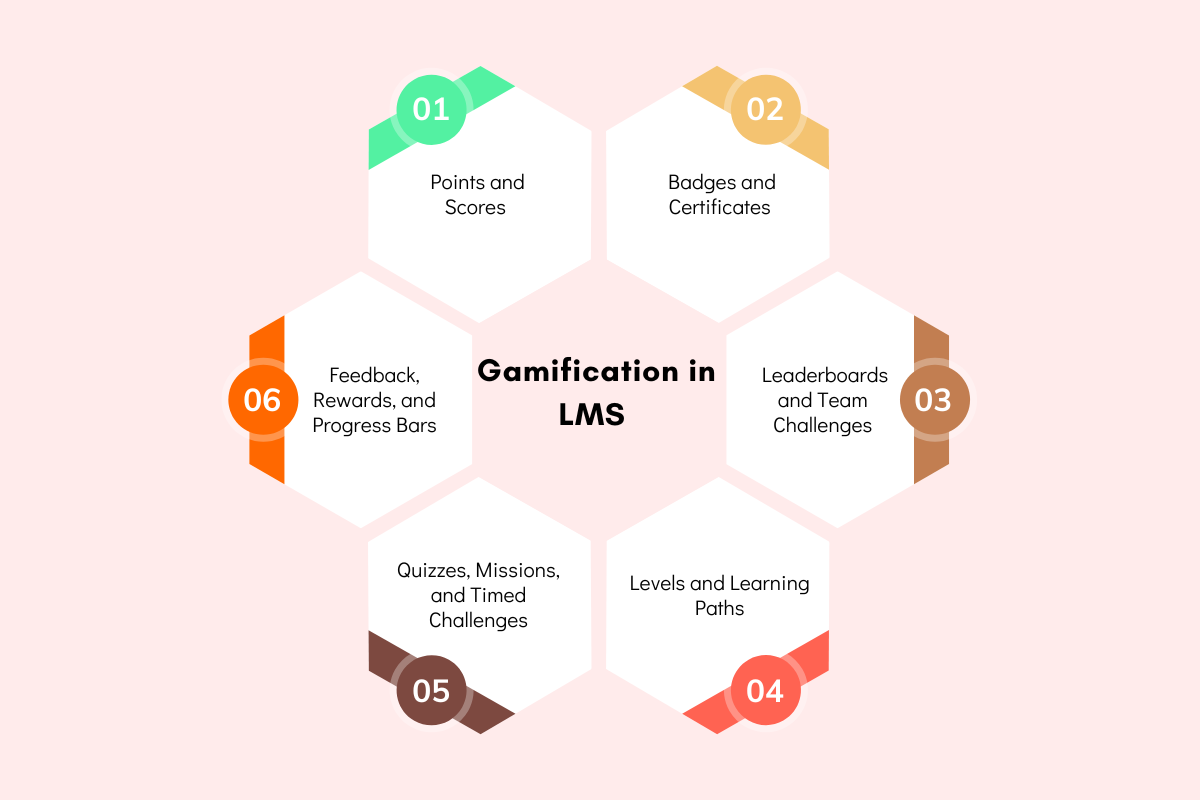
A learning platform links game features to learner actions. Completing a lesson might earn points, while passing a quiz unlocks a badge or new level. These small signals make progress visible and give learners a reason to continue. The best systems reward real effort and skill, not just time spent online.
These Learning Management System Features work in different ways, from rewarding small actions to recognizing specific skills and achievements. Here are the key gamification elements and how they support learning.
1. Points and Scores
Learners earn points for actions such as finishing lessons, passing quizzes, or taking part in discussions. Scores offer quick feedback and help learners track their progress.
For example, Armstrong Transport Group uses TalentLMS to award points for learning activities and display learner rankings on leaderboards. It also runs raffles based on leaderboard rankings, gives monthly shoutouts, and awards a rotating trophy to the top learner. These incentives encourage healthy competition and motivate employees to complete training on time.
2. Badges and Certificates
Badges mark achievements, such as mastering a topic or completing a course. They give learners a clear record of progress and can encourage them to reach the next milestone.
Deloitte Leadership Academy used gamification to increase participation in its online leadership learning portal. The company introduced badges and leaderboards through a partnership with Badgeville. Kris Duggan, Badgeville’s CEO, explained the approach: “By rewarding people, mostly by the way of purely virtual rewards, you’re able to drive a very high level of engagement that you wouldn’t otherwise see.”
3. Leaderboards and Team Challenges
Leaderboards display scores or achievements so learners can compare progress. Team challenges shift the focus from individual rankings to shared goals, which can suit group learning.
For example, a company could challenge each department to complete annual compliance training by a set date. Team progress can encourage participation without singling out employees with lower scores.
Among the gamification elements in an LMS, use leaderboards with care. Public rankings may discourage beginners or people who need more time.
4. Levels and Learning Paths
Levels divide a course into stages. Learners unlock the next stage after meeting clear requirements, such as passing a test or completing a practical task. A study on personalized adaptive learning found that 59% reported improved academic performance.
In employee development, a customer service course could start with basic product knowledge and move to complex customer scenarios. This structure gives learners a clear route from basic knowledge to advanced skills.
5. Quizzes, Missions, and Timed Challenges
Interactive quizzes and missions ask learners to apply what they know. Timed tasks can build quick recall, while scenario-based challenges help learners practice decisions in realistic settings.
Take McDonald’s Service Order Taking Game as an example. It lets learners practice taking customer orders. This type of simulation allows employees to apply their knowledge in a realistic service scenario, helping them build familiarity with the ordering process before handling customers.
6. Feedback, Rewards, and Progress Bars
Instant feedback tells learners what they did well and where they need to improve. Progress bars show how far they have come, while rewards recognize effort or mastery.
North Carolina State University’s DELTA team explains how instructors can use gamification tools in Moodle to improve student engagement and course progress. For example, instructors can add progress bars to help students track completed activities. The university also highlights Moodle’s Roadmap activity, which combines progress tracking with rewards to help students plan and monitor their learning.
What are the Best Practices for Gamification in LMS?
Good design starts with a learning problem, not a game feature. First, define the result you want, such as better course completion, stronger quiz scores, or safer work habits. Then choose features that support that result and track whether they help.
Use this problem-to-feature guide when planning a course:
| Learning problem | Feature to try | How to measure success |
| Low course completion | Progress bars and milestones | Completion rate |
| Weak knowledge recall | Quizzes and repeat challenges | Quiz scores over time |
| Low motivation | Points and badges | Participation and return visits |
| Poor teamwork | Group goals and team challenges | Team completion rate |
| Complex skill gaps | Levels and learning paths | Skill assessment results |
| Slow feedback | Instant quiz feedback | Fewer repeat errors |
| Low course participation | Small missions and rewards | Activity and task completion |
Follow these best practices to keep the experience useful:
- Set clear goals: Tie each feature to a skill, behavior, or learning outcome.
- Reward meaningful actions: Give credit for practice, progress, and mastery rather than repeated clicks.
- Offer different ways to succeed: Combine personal goals, team tasks, and optional competition.
- Keep challenges fair: Match difficulty to skill level and provide extra attempts where needed.
- Test and improve: Compare completion, assessment scores, learner feedback, and real-world performance before and after launch.
Start with one course or team. Test the features, review the results, and expand the approach only when the data supports it.
Which LMS Platforms Offer Gamification?

The right platform for gamification in LMS projects depends on your learners, budget, and training goals. Some tools provide built-in points and badges, while others rely on add-ons or integrations. Compare the features, pricing, and ease of use before choosing a system.
| Platform | Gamification elements | Capterra rating | Best for | Pricing |
| TalentLMS | Points, badges, levels, leaderboards | 4.7/5 | Employee development | From $119/month |
| Canvas LMS | Badges, points, gamification via integrations | 4.6/5 | Higher education best LMS for higher education and K–12 | Contact vendor |
| Moodle | Badges, points, progress tracking via plugins | 4.3/5 | Higher education and K–12 Best LMS for K-12 Schools | Free open-source version; hosted plans available |
Ratings and listed prices are as per October 2026 data. Pricing and features may vary by plan, user count, and hosting option.
Before buying, confirm that the features you need are included in your selected plan.
How is AI Changing LMS Gamification?
AI can make gamification in LMS more personal by adjusting content, challenges, and feedback to each learner’s needs. Instead of giving everyone the same tasks, an AI-enabled platform AI in learning management systems can suggest practice based on quiz results or past activity. It can also help trainers create quizzes, build scenarios, and spot skill gaps faster. For example, a learner who struggles with data security could receive extra practice on that topic before moving ahead.
What are the Benefits of Gamification in LMS?
When linked to clear learning goals, game features can make training easier to follow and measure. The main benefits of LMS include:
- Higher engagement: Small goals and rewards encourage learners to take part. Engagement can increase up to 47%.
- Useful data for trainers: Points and quiz attempts show where learners get stuck.
- Greater learner confidence: Low-stakes quizzes let learners practice without pressure.
- Consistent experience at scale: Automated points and badges work the same across large or remote teams.
- Stronger learning culture: Shared goals and recognition encourage learners to support each other.
These gains are not automatic. Measure knowledge, skill use, and work or academic outcomes to see whether the approach makes a real difference.
What Common Gamification Mistakes Should You Avoid?
Poor design can turn a useful learning tool into a distraction. Avoid these mistakes when setting up a gamified course:
- Overusing competition: Offer personal milestones for learners who dislike public rankings.
- Adding too many game elements: Start with a few features that support the main goal.
- Ignoring accessibility: Make sure learners can use the features with assistive tools and different devices.
Review learner feedback often in a Learning Management System. Remove features that create stress or fail to improve results, and keep the ones that help learners build skills.
Conclusion
Gamification in LMS platforms can make training more engaging when points, badges, challenges, and feedback support clear learning goals. Start by identifying a problem, selecting the right features, and measuring changes in completion, knowledge, and skill use. Choose a platform that fits your learners and budget, then test it on a small scale. Review your results and refine your approach before rolling it out more widely.
FAQs
1. What is the main purpose of gamification in an LMS?
Gamification in an LMS motivates learners through game-like rewards and challenges.
2. Does gamification in an LMS improve learning outcomes?
Yes, gamification in an LMS can improve engagement and practice when well-designed.
3. What are the most common gamification features in an LMS?
Points, badges, leaderboards, levels, quizzes, challenges, and progress bars.
4. Can gamification work for employee training and schools?
Yes, gamification in an LMS supports workplace training and school learning.
5. How do you measure the success of gamification in LMS platforms?
Track completion rates, test scores, learner feedback, and skill growth.