
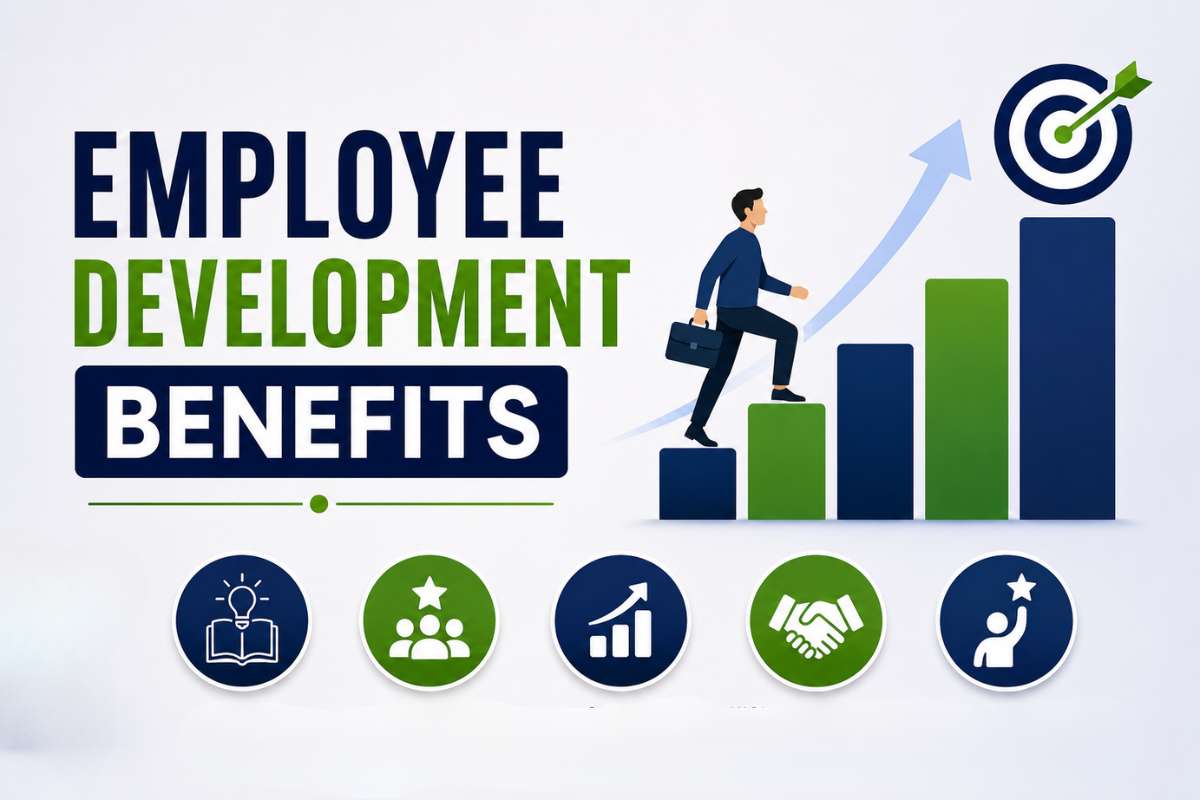
When employees log in every day just to clear a task list, enthusiasm quickly turns into routine burnout. People thrive when they feel their work serves a larger personal trajectory rather than just filling a corporate quota.
Prioritizing employee development benefits flips that dynamic by weaving continuous training, career mapping, and executive coaching directly into your company culture. Showing team members that their personal progress matters creates a powerful sense of purpose that energizes daily collaboration.
In this article, we will see how building a culture around meaningful professional growth, individual achievement, and overall business success rises together. So let us start by looking at the benefits for employees.
The 6 Employee Development Benefits for Employees and Employers

Employee development helps employees while helping companies build stronger teams. It gives people opportunities to learn, grow, and move forward in their careers. At the same time, companies can improve retention, develop talent from within, and prepare employees for changing business needs.
Benefits for Employees
Employee development offers clear benefits for both work and career growth. It helps employees build new skills, track their progress, and feel more confident in their roles. When companies support learning, employees can also see more chances to grow within the workplace.
1. Increased Job Satisfaction and Sense of Progress
Learning new skills can make work feel more rewarding. Employees can see how their abilities improve and how their work gets better over time. Clear learning goals also give them something useful to work toward. This sense of progress can make employees feel more satisfied with their jobs.
2. Stronger Skills and Career Mobility
Employee development programs help employees build skills for future roles. They can use these skills to earn promotions, take on more duties, or move into new positions. Strong skills can also help employees find better career options outside the company. This gives people more control over the direction of their careers.
3. Greater Confidence and Feeling Valued
Employees often feel more confident when they have chances to learn and improve. New skills help them handle difficult tasks and deal with new work demands. Support from the company can also make employees feel valued. They see that their growth matters and that the company wants them to succeed.
Benefits for Employers

Employee development strategies can also help companies build stronger teams. It can encourage skilled employees to stay, prepare people for future roles, and help teams handle change. These benefits can support both daily work and the company’s long-term growth.
1. Higher Employee Retention
Employees dissatisfied with career development are ~1.9x more likely to say they are extremely unlikely to stay.
Employees are more likely to stay when they can see a future with the company. Clear growth paths show people that they do not need to leave to advance their careers. This can lower employee turnover and reduce the time and cost needed to replace skilled workers.
2. Stronger Internal Talent Pipeline
Companies can prepare current employees for future roles through regular training and learning. Skilled employees can move into leadership roles or take on more complex work when needed. This reduces the need to hire from outside for every open position. Employee development benefits companies as they can keep valuable skills and work knowledge within the team.
3. A More Adaptable Workforce
Business needs can often change. Employees with a wider range of skills can learn new tools, take on different tasks, and adjust to new priorities. This gives companies a team that can respond to change with less disruption. It also reduces the need to bring in new employees whenever new skills become necessary.
The value of employee development extends beyond training sessions. When companies help employees grow, they build a workforce that feels valued and stays ready for new challenges. This creates lasting employee development benefits for both people and the organization.
How to Boost Employee Development?
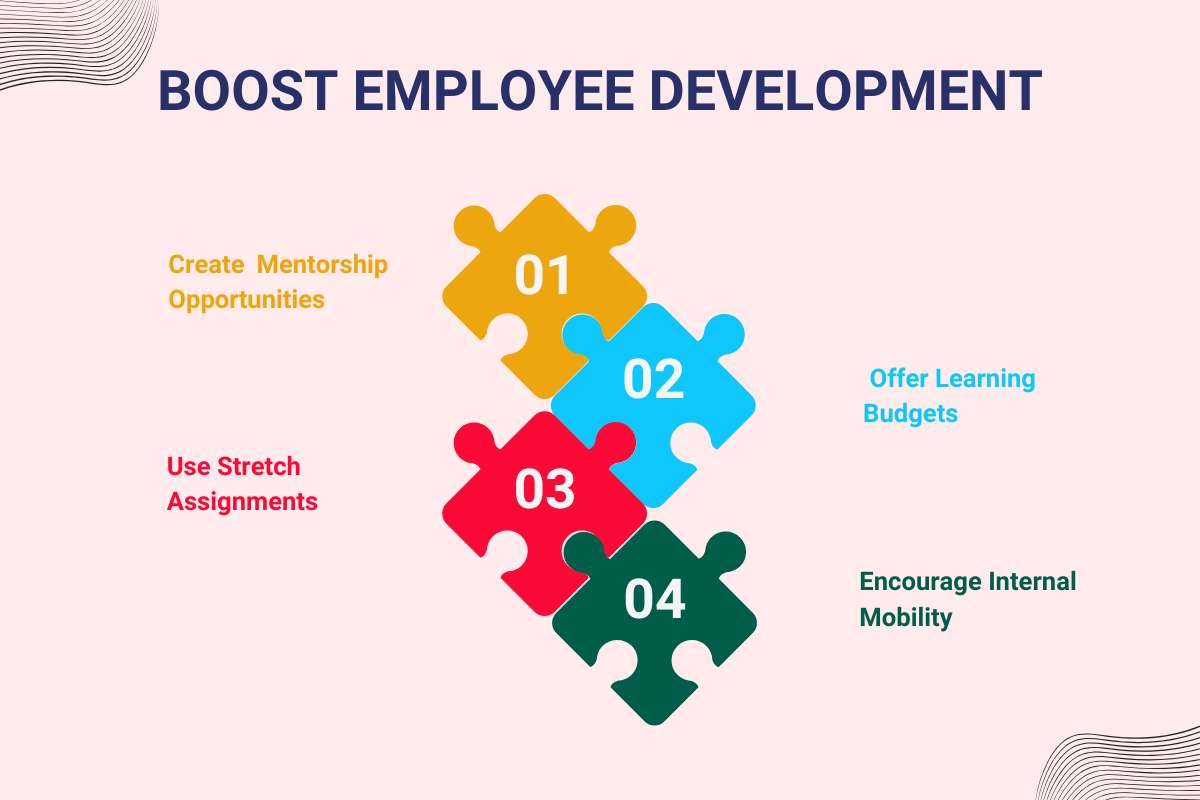
Employee development does not always need a large budget or complex program. Companies can start with simple steps that fit into regular work. These approaches give employees more chances to learn and participate in employee upskilling programs.
1. Create Mentorship Opportunities
Pair junior employees with experienced colleagues who can offer guidance and share practical knowledge. Regular check-ins can help employees learn from real work situations and ask questions they may not raise in larger groups.
2. Offer Learning Budgets
Give employees a set budget for courses, certifications, or conferences. This lets them choose learning options that match their skills and career goals. Even a small budget can support steady learning throughout the year.
3. Use Stretch Assignments
Give employees tasks that push them slightly beyond their usual work. Cross-functional projects can expose them to new skills, teams, and ways of working. These assignments can build experience without requiring employees to leave their current roles.
4. Encourage Internal Mobility
Make it easier for employees to learn about other teams and open roles. Encourage them to apply for positions that match their skills and career goals. Internal moves help employees grow while allowing companies to keep experienced talent.
Conclusion:
72% of employees feel they have the training and development needed to do their jobs
Which is why top-tier talent gravitates toward environments where their skills expand and their impact grows over time. When employees see a clear line between their daily tasks and their future career trajectory, loyalty follows naturally.
Offering targeted employee development benefits gives staff the precise resources needed to advance inside your organization. Providing these clear growth pathways elevates daily morale and strengthens overall performance across every department.
Always strive to build a culture that cultivates your team’s internal talent transforms your workforce into a self-sustaining engine. As Founder and Consultant Christine Riley VanDerVort says:
“Culture is not a statement on a wall. It is what people experience every day.”
FAQs
1. What are employee development benefits?
They are company-funded programs and resources designed to help staff expand their skills and advance their careers.
2. How do professional development benefits improve employee retention?
Employees are far less likely to job-hunt when they see clear, funded pathways for career advancement and skill expansion within their current organization.
3. What are the most popular employee development benefits offered by modern companies?
Common options include learning stipends for online courses, industry conference passes, leadership coaching, internal mentorship initiatives, and tuition assistance for advanced degrees.
4. How can small businesses offer development benefits on a tight budget?
Small businesses can provide impactful growth opportunities through peer-led lunch-and-learns, cross-department shadowing, and structured internal mentorship programs.
5. What is the ROI of investing in employee learning programs?
Companies gain reduced recruitment costs, higher internal promotion rates, improved productivity, and a more adaptable team capable of handling changing industry demands.